
NBL
RezLife Hold Their Nerve to Complete Comeback, Eliminate Sommet in Quarterfinal Decider


NBL PLAYOFFS – Three games. Three momentum swings. One historic breakthrough.
RezLife Saints are heading to their first-ever National Basketball League semifinal after producing a breathtaking late comeback to defeat Sommet BC 69-61 in Sunday’s quarterfinal decider at MTN Arena.
Trailing 61-56 with just over four minutes to play, the Saints closed the contest on a stunning 13-0 run, turning a season that was hanging in the balance into another landmark moment in the club’s steady rise through Ugandan basketball.
For a team that has methodically climbed the basketball pyramid from the lower divisions into the National Basketball League over the last few years, this was the biggest victory in the club’s history.
The series had already delivered everything playoff basketball promises.
RezLife stunned Sommet in Game One with a composed late finish. Sommet responded emphatically in Game Two to level the series and force a winner-take-all encounter. Sunday offered one final twist, and once again, RezLife proved they are at their best when the pressure is greatest.
The contest itself was every bit as tense as the series suggested.
RezLife edged the opening quarter 19-15 before Sommet wrestled back control in the second, taking a narrow 36-35 lead into halftime. The third quarter did little to separate the sides, setting up a frantic final ten minutes.
It was Sommet who looked destined to advance.
Matthew Kisakye was sensational off the bench, pouring in a game-high 20 points on an outstanding 7-of-8 shooting, including a perfect 2-for-2 from beyond the arc. Every time RezLife threatened to seize momentum, Kisakye had an answer.
When he attacked the basket to stretch Sommet’s lead to 61-56 with 4:28 remaining, the semifinal door appeared to be opening for last season’s semifinalists.
Instead, it slammed shut.
What followed was the defining sequence of RezLife’s season.
Hon Kwany, who had endured a frustrating evening from the field, buried a massive three-pointer to cut the deficit to two. Edrine Ekau attacked the rim and calmly converted two free throws to tie the game at 61-61 before Chris Basheke finished in transition off a Michael Otieno assist to hand RezLife the lead.
Ekau then sliced through the defense for a layup to make it 65-61 before knocking down another pair of free throws. Otieno fittingly delivered the final blow from the charity stripe with 28 seconds left, completing a remarkable 13-0 finish.
Just as impressive as the scoring spree was RezLife’s defense.
Over the final four minutes, Sommet failed to register a single point. Peter Cheng missed crucial jumpers, Brighton Galiwango came up empty from deep, while Dieu Thuok Kuol committed costly turnovers as the Saints turned every defensive stop into momentum. Hon Kwany also produced a huge block on Pauti Kikomba Osias during the decisive stretch, highlighting a defensive effort that ultimately decided the series.
Ekau once again led the Saints offensively with 17 points, four rebounds and five steals, continuing his outstanding postseason. Otieno orchestrated the offense with 13 points, seven rebounds and six assists, while Basheke’s energy off the bench produced 10 valuable points and four assists.
Kwany finished with 10 points on a difficult shooting night, but no basket was bigger than the three-pointer that ignited RezLife’s comeback.
For Sommet, there will be plenty of frustration.
Kisakye delivered one of the finest individual performances of the series, but found little support when he was helped off the court with an apparent ankle injury. Cheng struggled to 2-of-11 shooting, Galiwango managed just 2-of-9, and Sommet’s 20 turnovers repeatedly handed momentum back to the Saints. RezLife converted those mistakes into 18 points while also winning the rebounding battle 45-40.
If Game One showcased RezLife’s composure and Game Two highlighted Sommet’s response, Game Three ultimately revealed the quality that has defined the Saints throughout their season: resilience.
Faced with elimination and staring at a five-point deficit late in the fourth quarter, they neither rushed nor panicked. They trusted their defense, executed their offense and delivered their biggest basketball when the stakes were at their highest.
Their reward is a first National Basketball League semifinal.
For RezLife, the dream season is still very much alive. They’ll take on the City Oilers in a best of five Semifinals playoff series.
– Basketball256 Editorial.












There was something strangely fitting about the way Power Basketball Club left the National Basketball League in 2024. The five-time champions did not go down in some dramatic final-day collapse against one of the giants of Ugandan basketball. They went down at the hands of Livingstone, a club fighting for its own survival, in a 61–54 game at YMCA. Livingstone won and stayed in the NBL; Power lost and, after 29 years in the top flight, were relegated to Division One. For Power, it was the kind of defeat that seemed to demand an immediate response. Surely a club with five championships, decades of history and a name that had been part of Ugandan basketball for so long would spend a season in Division One, gather itself, and come back. Livingstone had merely survived the day while Power had suffered the misfortune of having a bad season at the wrong time. That was how the story could have been told.
Two years later, however, the story looks very different. Power have finished at the bottom of the Division One table and will now drop another level into Division Two. The fall that seemed almost inconceivable in 2024 has therefore acquired a second act, and perhaps the most uncomfortable thing about it is that it makes the first relegation look less like an aberration and more like a symptom. Power did not spend a season outside the NBL before returning to normal. They spent a season outside the NBL and then fell again. For a club that once defined what winning looked like in Ugandan basketball, the question is no longer simply how Power lost its place in the top flight. The more interesting question is what happened to the institution between the last championship and this latest relegation.
I wrote about some of this in November 2024 in an article titled Forgotten Cult. The immediate occasion was Power’s relegation, but the argument was never really about one season or one roster. It was about the erosion of the things that make a basketball club more than a collection of players assembled for a particular competition. Power had accumulated something over the years that could not be measured in championships alone: names that meant something to supporters, players who became part of the identity of the club, traditions that connected one generation to another and a reputation that made the Power jersey carry a certain expectation before a game had even started. The concern then was that while Power still possessed the history, it was becoming increasingly difficult to see how that history was being transmitted to the next generation.
The events of the past two seasons have made that question considerably harder to dismiss.
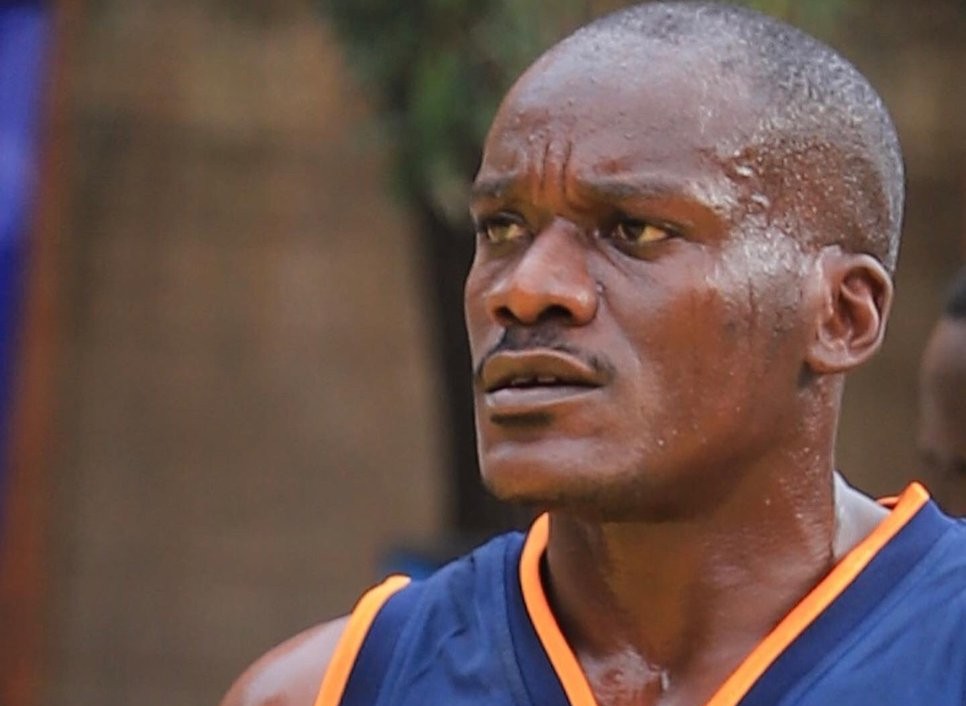
Power’s attempt to climb back from Division One was, in many ways, built around one of the last living connections to the club’s great era. Isaac Afidra, better known as Magalo, had been playing basketball for more than two decades and had become almost synonymous with Power. By the time the club entered its lower-division campaign, he was well into his forties, yet he remained the go-to player and one of the central figures around whom Power’s attempt at recovery was built. There is something admirable about that, and there is also something deeply revealing about it. A club that once produced generations of players capable of carrying its identity into the future was now asking one of its oldest surviving representatives to help carry that future himself.
Afidra deserves considerably more credit than the eventual league position might suggest. His longevity is remarkable, but longevity alone does not explain why he remained relevant. He could still play. He could still influence games. He could still produce the sort of moments that had made him valuable to Power for years. In 2022, for instance, he had a 16-point, 14-rebound, six-assist performance against Ndejje and made the decisive layup in a 69–67 victory. Even in the lower divisions, he continued to have the experience and skill to make important contributions, including a late game-winning basket against Nkumba Marines in 2025. This was not a case of Power carrying a retired player around for sentimental reasons. Magalo was still capable of helping them win basketball games.
The problem was that Power needed him to help them win too many basketball games.
There is a significant difference between having a veteran as part of a young team and having a veteran become the most dependable expression of what the team is supposed to be. At 43, Afidra was competing in a game increasingly shaped by young legs and athleticism. The lower divisions are not a retirement league, and Division One has plenty of players capable of playing at a pace that makes experience alone an insufficient advantage. A veteran can compensate for declining athleticism with positioning, anticipation, shooting, strength and an understanding of the game, but there comes a point where the physical demands of basketball cannot be negotiated with experience. The irony is that the qualities that made Afidra so valuable to Power—his experience, his familiarity with the club and his understanding of winning—were precisely the qualities that should have made him a mentor to the next generation rather than the primary vehicle through which Power attempted to return to the NBL.
That is why I find Magalo’s role in this story so fascinating. If you wanted to demonstrate the difference between remembering a culture and reproducing a culture, you could hardly construct a better example. Afidra had lived Power’s history. He was not somebody who had watched old championship footage and been told what the club used to mean. He had been part of it. He represented a continuity that had become increasingly difficult to find elsewhere. But an institution cannot depend indefinitely on one person to be the bridge between its past and its future. At some point the bridge has to lead somewhere.
Perhaps that is what Power’s two relegations are telling us.
The club did not lack a connection to its past. It may have lacked the mechanism for turning that past into its future.
That distinction is important because it would be too easy, and frankly unfair, to make Afidra the villain of this story. If anything, his continued presence is one of the more admirable aspects of it. A 43-year-old still turning out for a club he has represented for most of his adult life is not evidence of the problem; it is evidence of the loyalty that still exists around Power. If Magalo was still doing the most he could at that age, perhaps the question should not be why he could not carry the club back to the NBL. The question should be why a club of Power’s historical stature needed him to carry so much of it in the first place.
That brings us back to the original Forgotten Cult argument. Power’s five championships were not created by nostalgia. The trophies were the visible outcome of a functioning basketball culture: players came through, established themselves, became leaders and eventually became part of the history that younger players inherited. The point of remembering Wilbrod Oketcho, Ken Balyejjusa, Marvin Banks, Julius Wapera, David Kiberu, Peter Mubanda and the other figures associated with Power’s great years was never that young players should spend their time worshipping old players. It was that a club should know where it came from well enough to understand what it needs to reproduce.
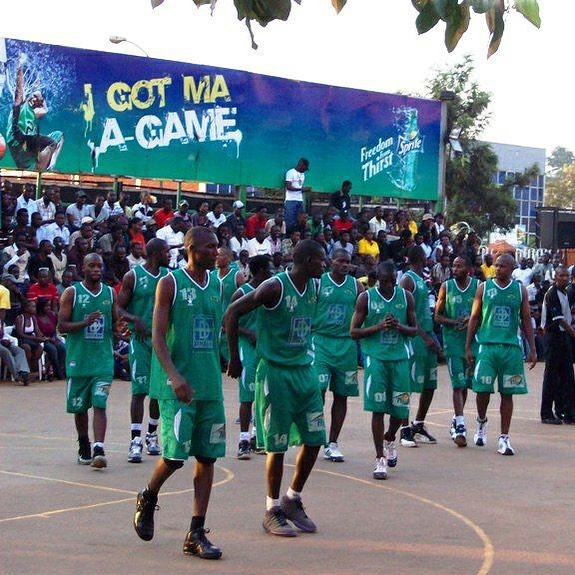
That is where Power’s situation becomes particularly difficult. There is no shortage of history to draw from. The club’s championship years are well documented, its former players are still around, and Afidra himself is a living archive. Yet history is only useful to an institution when it is passed on. A retired number, an old photograph or a championship banner can preserve a memory, but none of those things can teach a young player how to become the next leader. That requires people, structures and a deliberate effort to make the club’s identity part of the development of its players.
And then, almost as if somebody had decided that the Power story needed one final twist, there is Livingstone.
The irony is difficult to ignore. In June 2024, Livingstone beat Power 61–54 in the game that sealed Power’s relegation. Livingstone survived; Power went down. It was a neat piece of sporting symbolism: the old heavyweight was pushed aside by a club fighting to establish its own place in the top flight. Two years later, the final Division One table has put the two names together again, only this time neither club is celebrating. Power finished 12th and Livingstone 11th, and both are heading to Division Two.
In 2024, Livingstone effectively helped send Power down.
In 2026, Livingstone has joined them.
There is an almost comic cruelty to that symmetry, although neither club is likely to find it particularly funny. It also makes the broader point that relegation battles are rarely as simple as one club being “too big to fail” and another being the deserving survivor. Livingstone’s victory in 2024 was entirely legitimate and their subsequent relegation does not diminish it. They survived that season because they were better when it mattered. But surviving one crisis does not necessarily mean an institution has solved the problems that produced the crisis. Two years later, the same league has swallowed both clubs.
For Power, however, the latest relegation feels different because the club is no longer dealing with the shock of falling from the NBL. That shock has already passed. The club has had time to respond. It has had time to adjust to Division One, to develop a route back, to identify younger players and to decide what the next version of Power should look like. Instead, the result is another relegation, and that makes it much harder to argue that the problem was simply a bad NBL season.
There is also a generational question hiding in all of this. Ugandan basketball has changed considerably since Power’s championship era. The league is deeper, the style is faster and the athletic demands are different. Clubs that want to remain competitive cannot simply preserve their old identity and expect the modern game to accommodate it. The challenge is to take whatever was valuable about the old institution and build it into something capable of competing in the present.
Power cannot go back to 2010 -2011 back to back NBL Championship spat.
Nobody can.
The players are older, the game has moved on and the basketball ecosystem around the club is different. Trying to recreate the past would probably be another form of refusing to confront the present. What Power can do, however, is ask why those championship teams worked, what they gave the club beyond trophies, how they developed players, how they connected with supporters and how they created an identity strong enough that people still talk about them more than a decade later.
That is where Afidra becomes important again. Magalo should not be the symbol of Power’s inability to move forward. He should be evidence of what a properly functioning institution can preserve. Imagine what it would mean for a young Power player to learn directly from a man who has spent 26 seasons around the game and lived through the club’s most important years. Imagine if the knowledge accumulated over that career were deliberately transferred to the next generation, rather than being required primarily on the court. The goal should not be to find another Afidra. It should be to create an environment in which Afidra is no longer needed to be the answer because he has helped produce the answers.
That, ultimately, is what makes Power’s fall worth discussing beyond the club itself.
Every generation of Ugandan basketball has its institutions. Some survive because they adapt, some disappear because they don’t, and some linger long enough for us to become nostalgic about what they once were. The danger is that we mistake the continuation of a club’s name for the continuation of the institution itself. A name can survive almost indefinitely. A culture requires constant renewal.
Power now has a long road ahead of it. Division Two is not the end of the club, and there is no reason to believe that a five-time champion cannot eventually find its way back to the NBL. But the comeback cannot simply be measured by promotion. If Power wins its way back to the top division with the same structural problems, the achievement will only postpone this conversation.
The more interesting comeback would be one in which a young player becomes the new Magalo, not because he is 43 and somehow still doing the work of three generations, but because the institution has spent years preparing him to take responsibility. It would be a Power team in which the history is not something mentioned when reminiscing about the old days but something young players understand as part of their responsibility to the people who will wear the jersey after them.
Two years ago, when Power went down to Division One, I wondered whether we were witnessing the erosion of something much bigger than a basketball team. I hoped, perhaps naively, that relegation would be the shock that forced the club to confront it. Instead, Power have now gone one level lower, while Livingstone—the club that delivered the final blow in 2024—has somehow ended up beside them.
There is an irony there that basketball writers could hardly have scripted better.
But there is also a warning.
Power’s five championships are not going to disappear because the club is playing in Division Two. The names of the players who built those teams will remain part of Ugandan basketball history. Magalo’s career will remain extraordinary whether Power are in the NBL or Division Two. None of that can be relegated.
What can disappear, however, is the connection between those things and whatever comes next.
And perhaps that is the real cost of Power’s fall.
Not that one of Uganda’s great basketball clubs is going to play in Division Two.
But that a generation of players could eventually grow up knowing Power as a name, without ever understanding Power as a culture.
That is the part that should worry us.
Because when I wrote Forgotten Cult in 2024, the question was whether Power had forgotten what made it special. After another relegation, perhaps the question has become even simpler: Who is going to remember it for them?
By Cucu Brian
The views expressed herein are only the views of the author. Brian is an ardent Ugandan basketball follower, a basketball junkie and the founder of Basketball256 LLC.
Namuwongo Blazers 81–74 City Oilers (OT)
Hoima Indoor Arena | August 22, 2026
There was nowhere left to hide.
After six games, 240 minutes of basketball, two comebacks, blown leads, overtime, tactical adjustments and enough tension to fill an entire season, the 2026 National Basketball League Finals came down to one final game. And fittingly, Game 7 refused to be settled in regulation.
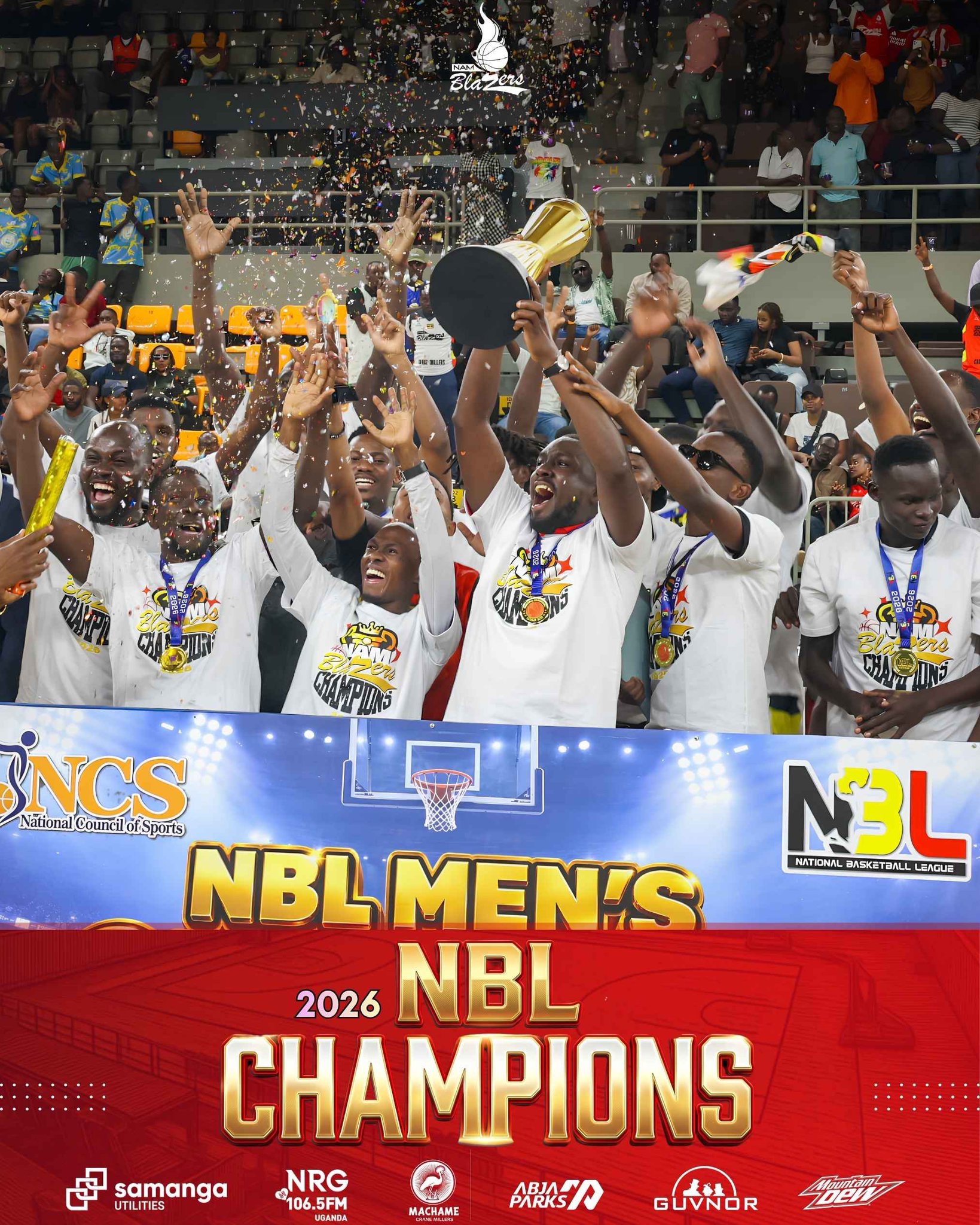
Namuwongo Blazers are back-to-back champions of Uganda, surviving City Oilers 81–74 in overtime at Hoima Indoor Arena to retain the NBL crown and close one of the most compelling championship series the league has produced in recent years.
For five minutes, the game belonged to overtime. For 40 minutes before that, it belonged to nobody.
And perhaps that was the only appropriate way for this series to end.
Hoima, the final stop
The decision to take Game 7 to Hoima gave the championship a different atmosphere. Away from the familiar surroundings of Kampala, the Oil City became the centre of Ugandan basketball for one afternoon.
Many fans made the long, tedious journey from Kampala, following their teams all the way to the end of a series that had already demanded so much from everyone involved. Inside the arena, that journey felt worthwhile. There was a sense that this was not simply another NBL fixture, but an occasion.
A championship game deserved a championship setting.
And the basketball delivered.
Oilers strike first
City Oilers looked ready for the occasion, opening the game with the urgency of a team that knew the margin for error had disappeared. They built an early advantage and finished the opening quarter ahead 16–12, forcing Namuwongo to chase.
The Blazers, however, had spent much of this series demonstrating an ability to absorb pressure without allowing it to define them.
At the centre of their response was Nyembo Fataki.
He was everywhere. He scored inside, attacked the basket, rebounded, defended and created opportunities for teammates. The Oilers could slow him down for stretches, but they could not make him disappear.
Namuwongo gradually worked their way back into the game, and by halftime the contest had become the kind of possession-by-possession struggle that Game 7s are supposed to be.
Oilers led 34–32.
Two points separated the teams.
There was still nothing between them.
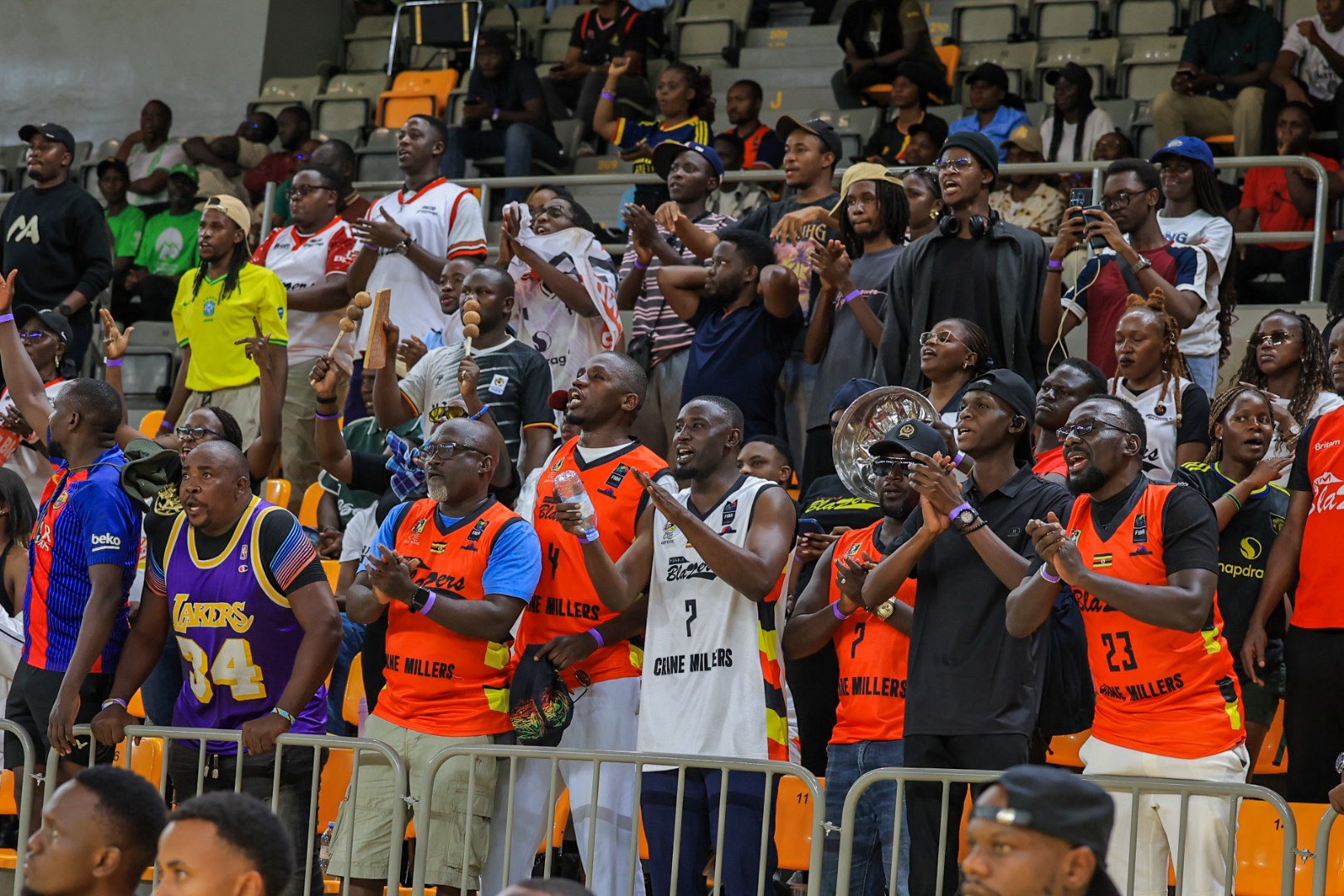
Namuwongo Blazers fans that traveled to Hoima for Game 7
Nyembo and Rembert trade blows
The individual duel was becoming impossible to ignore.
Nyembo eventually finished with 35 points on 13-of-21 shooting, adding eight rebounds, six assists, four steals and two blocks. It was an exceptional championship performance and arguably the defining individual performance of the entire series.
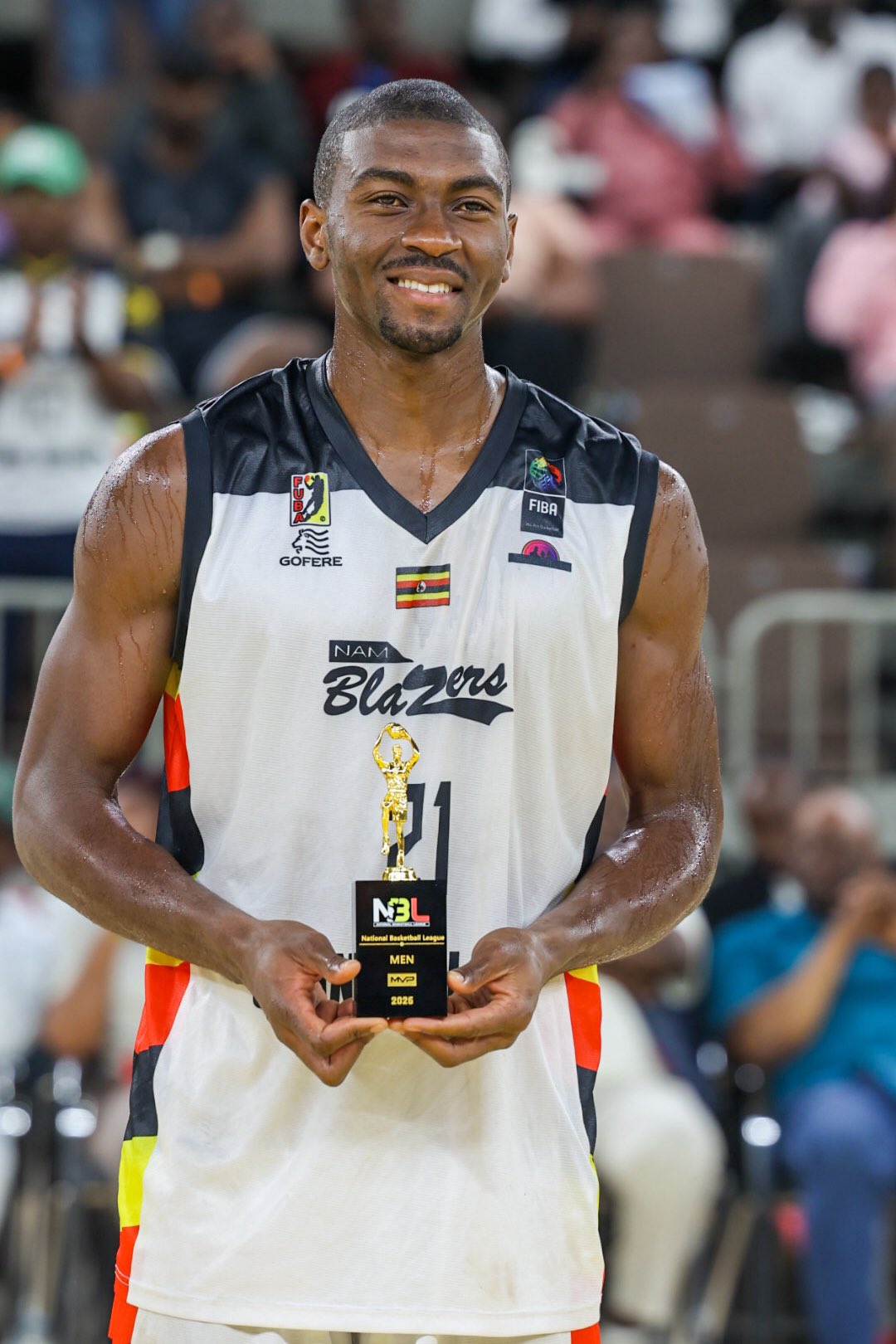
Franck Fataki Nyembo was deservedly voted the Finals MVP
But on the other side, Patrick Rembert was refusing to surrender the stage.
Rembert scored 27 points, playing almost 42 minutes and carrying a huge offensive workload for Oilers. He shot 8-of-23 from the field, but the volume tells part of the story: whenever Oilers needed someone to take responsibility for a possession, Rembert was usually the man taking the shot.
This was not Nyembo against nobody.
It was Nyembo against Rembert, with a championship sitting between them.
The Blazers find another gear
Namuwongo came out of halftime with renewed purpose and began to create some separation.
Their advantage was not built around three-point shooting. The Blazers finished just 3-of-15 from beyond the arc, but they repeatedly attacked where they were strongest. They scored 46 points in the paint, produced 29 fast-break points and converted 28 points off Oilers turnovers.
They also controlled the glass, finishing with 55 rebounds to Oilers’ 48, while their 30 assists spoke to a team that was still willing to make the extra pass even when the pressure was becoming unbearable.
For a moment, Namuwongo looked like they might finally break the game open.
But City Oilers had been here too many times before.
They came back.
The fourth quarter becomes a championship fight
The fourth quarter was less basketball game and more survival test.
Namuwongo created separation, only for Oilers to erase it. Oilers would make a play, and the Blazers would answer.
Fayed Baale was particularly important for City Oilers, producing the kind of shot-making that can change the temperature of a game almost instantly. His ability to create and convert difficult shots kept Oilers within touching distance.
But Baale’s night eventually ended with him fouling out, removing one of Oilers’ most dangerous offensive weapons just as the game was entering its most consequential possessions.
For Namuwongo, meanwhile, experience mattered.
Jimmy Enabu’s numbers—12 points, four rebounds and four assists—do not fully explain his influence. With the game tightening, Enabu delivered a huge three-pointer to tie the contest at 58–58, and throughout the closing stages his composure was visible in the moments when the game threatened to become chaotic.
This is what years of playing high-pressure basketball can give a player.
Sometimes it is not the spectacular play.
Sometimes it is simply knowing what the moment requires.
66–66
With neither team prepared to blink, the final minutes became a sequence of small victories.
Arthur Wanyoto came up with timely contributions. Anthony Chukwubuka battled around the basket. Nyembo continued to create opportunities even as the Oilers defence concentrated on him.
Oilers kept answering.
Namuwongo kept answering back.
Eventually, regulation ran out with the scoreboard reading 66–66.
Forty minutes had not been enough.
Game 7 needed five more.
Five minutes for a championship
Overtime began with Oilers striking first.
Rembert put City Oilers ahead 67–66, and for a brief moment the momentum seemed to have swung back toward the defending runners-up.
Then Arthur Wanyoto answered.
It was a fitting contribution from a player whose impact throughout the game had gone beyond the headline numbers. Wanyoto finished with eight points, six rebounds and two assists, but his +18 was the best plus/minus on either team.
Namuwongo had the lead again.
Then the game became a test of nerve.
Malual Dier hit a three to keep Oilers alive. Anthony Chukwubuka answered with a basket. Rembert responded again. The difference remained only a possession.
Then Nyembo intervened.
He stole the ball from Fayed Baale, turned defence into offence and helped create the next Namuwongo score. Arthur Wanyoto added another basket, and suddenly the Blazers had begun to build the separation they had been searching for all night.
Chukwubuka then hit another crucial jumper.
Oilers were running out of answers.
The final minutes belonged to Namuwongo.
Nyembo added another driving layup. Enabu made a free throw. Another Oilers turnover followed. The Blazers had finally managed to turn a one-possession game into something more.
When the final horn sounded, Namuwongo had won overtime 15–8.
The final score read:
Namuwongo Blazers 81, City Oilers 74.
The crown was staying in Namuwongo.
A championship built on more than one player
It would be easy to write this as the Nyembo Fataki game.
And perhaps, statistically, it was.
Thirty-five points in a Game 7 is extraordinary.
But championships are rarely won by one player alone.
Namuwongo got 12 points from Anthony Chukwubuka, who became particularly important in overtime. Enabu contributed his experience when the game became a pressure cooker. Wanyoto supplied timely scoring and an outstanding two-way performance. Tony Drileba made defensive plays at crucial moments. And even when the shots were not falling, the Blazers continued to defend, rebound and run.
They had 11 steals, forced 30 Oilers fouls and turned those defensive moments into transition opportunities.
That became one of the defining characteristics of the night.
When the game became frantic, Namuwongo were able to turn chaos into points.
Oilers fall short again
For City Oilers, the defeat is painful precisely because they were close.
Rembert gave them 27. Baale supplied 14 before fouling out. Jonathan Komagum had 12 rebounds alongside eight points. Landry Ndikumana added 10 including two pressure free-throws that sent Oilers to overtime.
The Oilers also received 32 points from their bench, compared to Namuwongo’s 20.
They had opportunities.
They had leads.
They had a chance to finish the series in overtime.
But when the final five minutes arrived, Namuwongo were simply better.
The margin was not enormous. It rarely was in this series.
That may be the most frustrating part for City Oilers.
They did not lose because they were blown out.
They lost because, after seven games, Namuwongo found a little more.
Back-to-back
And so, after all the talk of dynasty and transition, experience and youth, old Oilers players now wearing Blazers colours and new Oilers players trying to replace what had been lost, the 2026 NBL Finals ends with a new reality.
Namuwongo Blazers are champions again.
They have defended their crown.
They have survived City Oilers in seven games.
They have won Game 7 in overtime.
And they have done it in Hoima, in front of a crowd that travelled the long road from Kampala because this was the game you simply had to see.
There is something fitting about the way this series ended. The teams could not separate themselves over six games. They could not separate themselves after 40 minutes of Game 7. It took overtime to finally decide who would lift the trophy.
And when the extra five minutes arrived, Namuwongo had Nyembo.
They had Enabu’s experience.
They had Wanyoto’s timely contribution.
They had Anthony’s overtime composure.
They had just enough.
Seven games. Forty-five minutes of Game 7. One champion.
Namuwongo Blazers remain at the summit of Ugandan basketball.
-Basketball256 Editorial

Namuwongo Blazers and City Oilers have taken the long way to the only game that matters now.
There is something fitting about the 2026 National Basketball League Finals ending where they have ended up: in Game 7.
For six games, City Oilers and Namuwongo Blazers have taken turns answering one another. Every time one side appeared to have found the formula, the other changed the question. Leads have disappeared, momentum has shifted, stars have taken turns carrying their teams, and games have repeatedly been decided in the smallest margins.
Now, after nearly three weeks of basketball, the championship has been reduced to 40 minutes in Hoima City.
But before the final chapter is written, there is a road worth remembering.
GAME 1 — BLAZERS DRAW FIRST BLOOD
Namuwongo Blazers 73–67 City Oilers
The series began with Namuwongo doing something few teams have managed against City Oilers in recent years: making the defending champions look uncomfortable from the opening tip.
Blazers won 73–67, taking the first game and, more importantly, establishing the tone for what would become an extraordinarily competitive series. This was not simply a case of Namuwongo winning Game 1. It was the first indication that this Finals series would not follow the usual script.
The Blazers had come through the playoffs unbeaten, sweeping their way through the quarterfinals and semifinals, and they carried that confidence into the Finals. City Oilers, meanwhile, were renewing a championship quest they had been denied by Namuwongo a year ago, with the weight of history behind them.
The first blow belonged to Namuwongo.
But City Oilers have survived long enough in Ugandan basketball to know that one game is rarely the story.
GAME 2 — OILERS ANSWER
City Oilers level series 1–1
If Game 1 belonged to the Blazers, Game 2 was the Oilers reminding everyone why they had reached a twelfth consecutive Finals.
Namuwongo pushed City Oilers hard and mounted a late fightback that threatened to completely change the complexion of the game, but the Oilers survived.
The victory levelled the series at 1–1 and restored the balance. More importantly, it introduced one of the defining characteristics of these Finals: neither team was going to be allowed to dictate terms for very long.
The Oilers had their answer. The series was tied.
And then came Game 3.
GAME 3 — THEATRE IN OVERTIME
City Oilers 76–72 Namuwongo Blazers (OT)
Game 3 was where this stopped feeling like an ordinary Finals series.
It had everything. Patrick Rembert was at the centre of the Oilers’ attack, while Franck Nyembo produced one of the most memorable moments of the series when his circus three-pointer forced overtime.
At the end of regulation, neither side could separate itself. The game was tied 64–64, and the additional five minutes became another battle of nerve.
The Oilers eventually prevailed 76–72.
But the score barely tells the story.
This was the game that demonstrated just how little separated these teams. It was also a reminder that in a series this tight, a single possession, a single shot or a single defensive stop could become the difference between celebration and heartbreak.
City Oilers had now won two in succession.
For the first time, the 10 times champions had their noses in front.
GAME 4 — BLAZERS FIND ANOTHER ANSWER
Namuwongo Blazers 74–70 City Oilers
The response came quickly.
Namuwongo refused to allow the series to become an Oilers procession and found another answer in Game 4, winning 74–70 to level the Finals at 2–2.
The game reflected much of what had already become familiar in the series: physical defence, pressure, adjustments and a finish that remained uncertain until late.
Anthony Chukwubuka, James Okello, Franck Nyembo and Jimmy Enabu all contributed for the Blazers, while Patrick Rembert again led the Oilers with 19 points.
The important number, however, was not 19.
It was two.
Two wins apiece.
After four games, neither team had managed to win consecutive games. Every advantage had been answered. Every lead in the series had been temporary.
And that made Game 5 enormous.
GAME 5 — OILERS WIN ANOTHER GAME OF INCHES
City Oilers 78–73 Namuwongo Blazers
By Game 5, the Finals had become a game of inches.
City Oilers won 78–73 and moved within one victory of the championship, taking a 3–2 series lead.
Patrick Rembert produced one of his defining performances of the Finals, scoring 28 points and repeatedly putting pressure on the Blazers’ defence. Joel Lukoji added 14, while Titus Lual and Jonathan Komagum contributed 10 apiece.
The Oilers had done what champions are supposed to do: when the series reached its most consequential point, they found a way to win.
For Namuwongo, however, the situation was brutally simple.
Lose Game 6 and the season was over.
Both teams had spent the entire series refusing to give the other any breathing room.
Now it was Blazers turn to do it – Only this time, elimination was staring them directly in the face.
GAME 6 — NAMUWONGO REFUSE TO DIE
Blazers force a deciding Game 7
And once again, Namuwongo found an answer.
With the series on the line, the Blazers refused to allow the Oilers to close it out. They took Game 6 and dragged the Finals all the way to the place nobody could have known for certain it would reach three weeks earlier.
Game 7.
It is perhaps the most fitting conclusion to a series in which neither team has been able to stay ahead for long.
City Oilers went 1–0 down.
Then 2–1 up.
Namuwongo levelled it.
Oilers moved to 3–2.
And with their season on the line, the Blazers levelled it again.
The series has been a pendulum.
Now there is nowhere left for it to swing.
GAME 7 — EVERYTHING THAT’S LEFT
City Oilers vs Namuwongo Blazers | Hoima City
There is no more tactical cushion now. No tomorrow to correct a mistake. No next game to recover from a poor shooting night, a missed rotation or a costly turnover.
One game.
One winner.
One champion.
For City Oilers, Game 7 is an opportunity to extend a remarkable era. They entered these Finals as ten-time champions and are now one game away from another title.
For Namuwongo, it is an opportunity to defend the title they took from the Oilers last season and also make the statement that they did not beat the king once – they became the new king.
But perhaps the most interesting part is that neither team has truly been able to solve the other.
The Oilers have Rembert, whose scoring has repeatedly kept them alive in tight games. The Blazers have repeatedly found answers through a collective that has refused to allow the series to settle into a predictable rhythm. Nyembo has already produced one of the defining shots of the Finals. Enabu has provided veteran poise. Lukoji, Lual, Okello, Chukwubuka and the supporting casts on both sides have ensured that this has never been a one-man series.
And then there is Hoima.
The Finals began with all the familiar surroundings of Kampala basketball. It now ends away from the capital, with the entire season travelling west for the final game.
That feels appropriate.
Because this series has already travelled far beyond the simple question of who wins the championship.
It has become a test of adjustment, resilience and nerve.
Six games have produced three different series leads, two ties, an overtime classic, late comebacks and countless possessions decided by fractions.
Now, finally, there is no more answer to find.
There is only Game 7.
The road ends in Hoima.
By Cucu Brian.
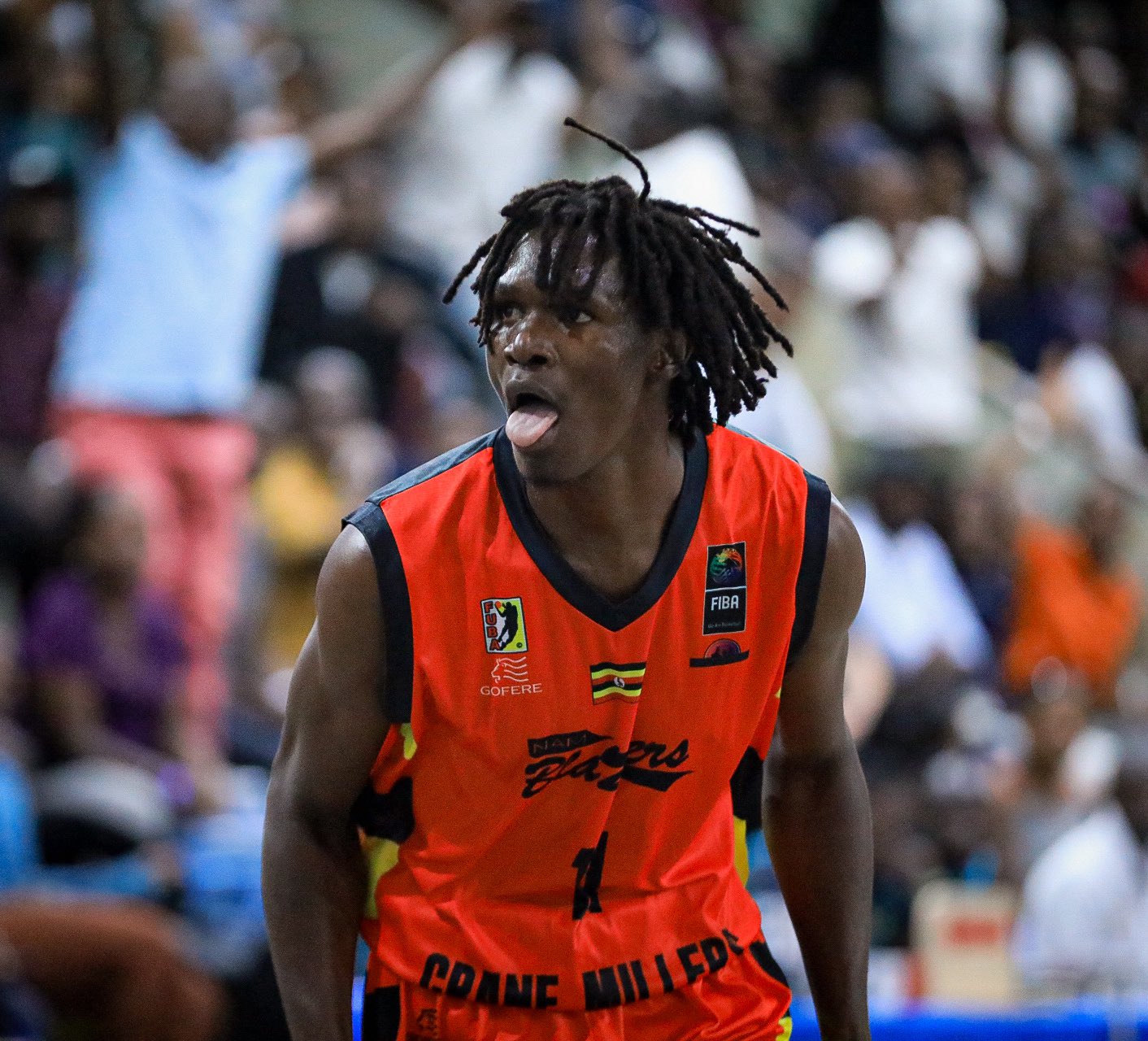
Namuwongo Blazers 82–64 City Oilers
There are many ways to win a basketball game, but there are very few ways to win a championship elimination game. Namuwongo Blazers found one on Wednesday night, and it was emphatic. With their season, and their championship hopes, hanging by a thread, the Blazers dismantled City Oilers 82–64 at MTN Arena to drag the 2026 NBL Finals all the way to the best two words in basketball: Game Seven.
For the first ten minutes, however, there was little indication that this would become the night Namuwongo seized control. Oilers opened with the first basket and, although the lead changed hands repeatedly, the game remained a possession-by-possession affair. Peter Obleng was already beginning to make his presence felt for the Blazers, while Jonathan Komagum provided Oilers with much of their early resistance. When the first quarter finally closed, Namuwongo had only a 14–12 advantage.
Then came the second quarter, and with it came the game.
The quarter that changed everything
Namuwongo did not simply win the second quarter. They took the game away.
The Blazers opened the period by extending their advantage, but Oilers briefly threatened to turn the contest back into the kind of close game that has defined this series. At one stage, City had reduced the deficit to just two points, 17–19, after Joel Kayiira’s turnaround jumper.
That was as close as Oilers would get.
Henry Ssebagala immediately answered with a basket, and then Landry Ndikumana briefly kept Oilers within striking distance with a three. But Obleng responded with another three, and suddenly the Blazers were creating separation.
The decisive sequence came after that. Ssebagala hit consecutive threes, while Kevin Nyemeck repeatedly attacked the paint. Drileba Tonny was finding cutters and bigs with precision, and Namuwongo’s offence began to look less like a team desperately trying to stay alive and more like a team that had discovered something Oilers could not solve. By the time Obleng buried another three with 1:54 remaining, the Blazers had opened a 16-point lead.
Oilers did find brief answers through Komagum and Rembert, but every attempted response was met by another Namuwongo possession. Nyemeck scored inside, Obleng continued to punish from outside, and Ssebagala added yet another three.
At halftime, the scoreboard read 45–29.
A 31–17 second quarter had transformed a two-point game into a 16-point problem.
And, importantly, it wasn’t one player doing all the damage.
Obleng, Ssebagala and the bench that changed the game
Peter Obleng finished with 22 points, shooting 8-for-15 from the field and an extraordinary 4-for-5 from three. Henry Ssebagala added 15, including three three-pointers, while Nyemeck contributed 13 and Nyembo Fataki finished with 18. That is four players producing in four different ways, and it was precisely the kind of collective performance Namuwongo needed with their backs against the wall.
But the most revealing number in the boxscore may be the 52 bench points.
City Oilers managed only 25.
That 27-point difference is difficult to overcome in any game, let alone a championship game. Namuwongo’s reserves weren’t merely filling minutes; they were driving the game. Obleng’s shooting, Ssebagala’s scoring and Nyemeck’s interior work gave Stephen Nyeko the luxury of continually putting fresh problems in front of Andrew Tendo’s Oilers. The depth advantage became a story in itself.
Tonny Drileba was another quiet architect of the victory. He scored no points, going 0-for-3 from the field, but finished with 11 rebounds and 11 assists. His fingerprints were all over the Blazers’ offensive rhythm. He assisted Nyemeck’s basket late in the second quarter, helped create Obleng’s scoring opportunities and repeatedly kept the ball moving.
This was not a night when Namuwongo needed every star to score. They needed everybody to contribute.
Oilers never found the comeback
The third quarter offered City Oilers one final opportunity to make the game uncomfortable.
They never got it.
Komagum continued to battle, Rembert found a few baskets and Baale knocked down a three early in the quarter, but Namuwongo’s lead remained stubbornly large.
Every time Oilers appeared to have a chance to build momentum, the Blazers answered. Nyembo scored inside. Ssebagala went to the line. Enabu found the basket. Nyemeck cleaned up second chances. And when Komagum tried to keep Oilers alive, Namuwongo simply kept scoring.
At 8:38 of the third, Nyemeck followed up his own offensive rebound to stretch the lead to 22 points, 51–29.
That was the moment Game Seven began to feel less like a possibility and more like an inevitability.
Oilers entered the fourth quarter down 64–48.And while the fourth quarter was technically competitive, it was never really in doubt.
Rembert had no Game 5 encore
Patrick Rembert had been spectacular in Game 5, carrying Oilers with a 28-point performance that had put them within one victory of another championship.
Game 6 was different.
Rembert finished with 14 points, but needed 16 shots to get there, going just 1-for-8 from three. He did manage a late burst as Oilers attempted to make the deficit respectable, including a driving basket and a three earlier in the second half, but Namuwongo never allowed him to find the rhythm that had defined Game 5.
The same was true of Joel Lukoji, who finished scoreless on 0-for-5 shooting, while Edgar Munaba also went scoreless on 0-for-6. Oilers had stretches of good individual production—Komagum’s 18 points and 13 rebounds were particularly important—but collectively they could not generate enough offence.
Their shooting tells the story: 22-for-67 from the field and 6-for-28 from three.
Namuwongo, meanwhile, shot 29-for-67 and 8-for-25 from beyond the arc.
The Blazers also moved the ball beautifully, finishing with 30 assists to Oilers’ 16, while turning Oilers’ mistakes into 17 points and running for 28 fast-break points. Those numbers paint a picture of a team playing faster, sharing the ball better and consistently getting itself into advantageous situations.
One more game
By the final minutes, the only question was whether Namuwongo could complete the job. Nyembo provided the exclamation point, throwing down a dunk with 1:27 remaining after another Drileba assist to push the lead back to 20.
Moments later, the starters began leaving the floor. Namuwongo had done what it needed to do.
The final score read 82–64.
The series, once seemingly on the verge of belonging to City Oilers at 3–2, was suddenly level again.
Three wins apiece.
One game left.
One team will walk away with the 2026 championship. The other will spend the offseason wondering how close it came.
And perhaps that is the most fitting way for this particular series to arrive at its conclusion. Nothing about these Finals has been straightforward. Coaches have adjusted. Players have answered. Leads have disappeared. Momentum has changed hands. Heroes have emerged and disappeared from one game to the next.
Now there is nowhere left to hide.
Game Seven.
The best two words in basketball.
And for City Oilers and Namuwongo Blazers, they are the only two words that matter now. Game 7 will be played in Hoima Arena in Western Uganda with no team claiming homecourt.
-Basketball256 Editorial

-
 BLOG1 year ago
#LegendsUG: MONEY IN THE BANK WILBROD ‘OKS’ OKETCHO
-
 THOROUGH7 years ago
When Uganda dared Russia in a 1972 Basketball game & the humble roots of the game.
-
 BLOG6 years ago
Video: UCU Canons guard Bale Fayed talks to CeeBee about his NBL Rookie season and more.
-

 NBL2 years ago
Forgotten Cult: Erosion of the footprint of a budding basketball Culture.
-
 AFRICA5 years ago
Uganda Silverbacks Ishmail Wainright agrees to a two year deal with NBA’s Toronto Raptors.
-

 DIV I3 years ago
LIVINGSTONE, FUBA DIVISION 1 CHAMPIONS 2023.
-

 AFRICA5 years ago
Senegal blow out Uganda in Afrobasket Group D Opener
-
 BLOG1 year ago
LEGENDSUG: THE BIG ARISTOTLE – THE OKS STORY PART TWO.