
DIV I
POWER FALLS AGAIN

There was something strangely fitting about the way Power Basketball Club left the National Basketball League in 2024. The five-time champions did not go down in some dramatic final-day collapse against one of the giants of Ugandan basketball. They went down at the hands of Livingstone, a club fighting for its own survival, in a 61–54 game at YMCA. Livingstone won and stayed in the NBL; Power lost and, after 29 years in the top flight, were relegated to Division One. For Power, it was the kind of defeat that seemed to demand an immediate response. Surely a club with five championships, decades of history and a name that had been part of Ugandan basketball for so long would spend a season in Division One, gather itself, and come back. Livingstone had merely survived the day while Power had suffered the misfortune of having a bad season at the wrong time. That was how the story could have been told.
Two years later, however, the story looks very different. Power have finished at the bottom of the Division One table and will now drop another level into Division Two. The fall that seemed almost inconceivable in 2024 has therefore acquired a second act, and perhaps the most uncomfortable thing about it is that it makes the first relegation look less like an aberration and more like a symptom. Power did not spend a season outside the NBL before returning to normal. They spent a season outside the NBL and then fell again. For a club that once defined what winning looked like in Ugandan basketball, the question is no longer simply how Power lost its place in the top flight. The more interesting question is what happened to the institution between the last championship and this latest relegation.
I wrote about some of this in November 2024 in an article titled Forgotten Cult. The immediate occasion was Power’s relegation, but the argument was never really about one season or one roster. It was about the erosion of the things that make a basketball club more than a collection of players assembled for a particular competition. Power had accumulated something over the years that could not be measured in championships alone: names that meant something to supporters, players who became part of the identity of the club, traditions that connected one generation to another and a reputation that made the Power jersey carry a certain expectation before a game had even started. The concern then was that while Power still possessed the history, it was becoming increasingly difficult to see how that history was being transmitted to the next generation.
The events of the past two seasons have made that question considerably harder to dismiss.
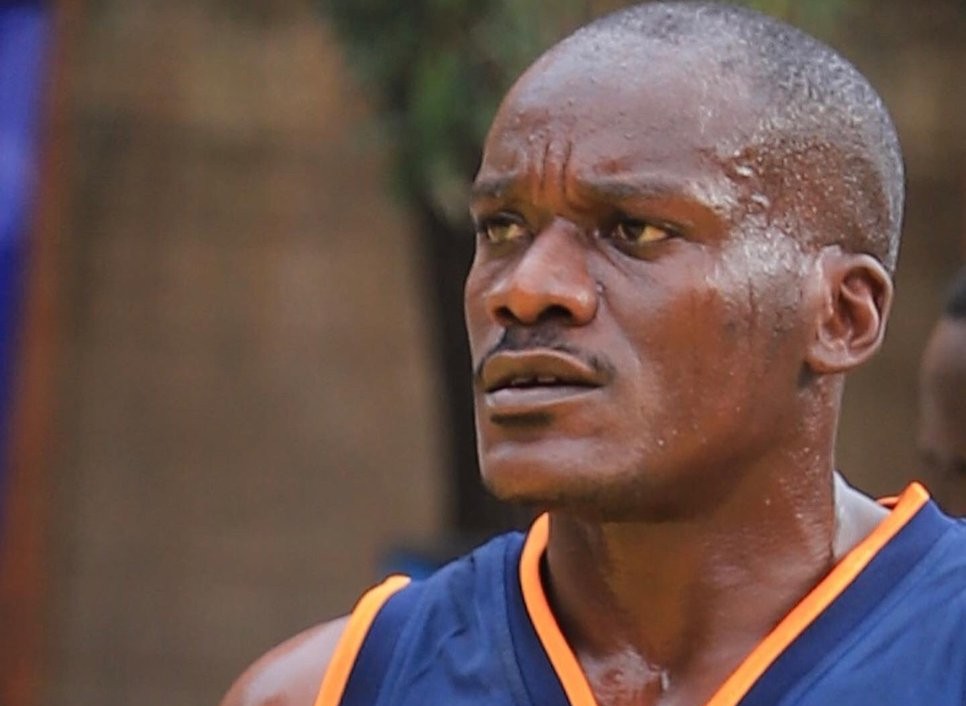
Power’s attempt to climb back from Division One was, in many ways, built around one of the last living connections to the club’s great era. Isaac Afidra, better known as Magalo, had been playing basketball for more than two decades and had become almost synonymous with Power. By the time the club entered its lower-division campaign, he was well into his forties, yet he remained the go-to player and one of the central figures around whom Power’s attempt at recovery was built. There is something admirable about that, and there is also something deeply revealing about it. A club that once produced generations of players capable of carrying its identity into the future was now asking one of its oldest surviving representatives to help carry that future himself.
Afidra deserves considerably more credit than the eventual league position might suggest. His longevity is remarkable, but longevity alone does not explain why he remained relevant. He could still play. He could still influence games. He could still produce the sort of moments that had made him valuable to Power for years. In 2022, for instance, he had a 16-point, 14-rebound, six-assist performance against Ndejje and made the decisive layup in a 69–67 victory. Even in the lower divisions, he continued to have the experience and skill to make important contributions, including a late game-winning basket against Nkumba Marines in 2025. This was not a case of Power carrying a retired player around for sentimental reasons. Magalo was still capable of helping them win basketball games.
The problem was that Power needed him to help them win too many basketball games.
There is a significant difference between having a veteran as part of a young team and having a veteran become the most dependable expression of what the team is supposed to be. At 43, Afidra was competing in a game increasingly shaped by young legs and athleticism. The lower divisions are not a retirement league, and Division One has plenty of players capable of playing at a pace that makes experience alone an insufficient advantage. A veteran can compensate for declining athleticism with positioning, anticipation, shooting, strength and an understanding of the game, but there comes a point where the physical demands of basketball cannot be negotiated with experience. The irony is that the qualities that made Afidra so valuable to Power—his experience, his familiarity with the club and his understanding of winning—were precisely the qualities that should have made him a mentor to the next generation rather than the primary vehicle through which Power attempted to return to the NBL.
That is why I find Magalo’s role in this story so fascinating. If you wanted to demonstrate the difference between remembering a culture and reproducing a culture, you could hardly construct a better example. Afidra had lived Power’s history. He was not somebody who had watched old championship footage and been told what the club used to mean. He had been part of it. He represented a continuity that had become increasingly difficult to find elsewhere. But an institution cannot depend indefinitely on one person to be the bridge between its past and its future. At some point the bridge has to lead somewhere.
Perhaps that is what Power’s two relegations are telling us.
The club did not lack a connection to its past. It may have lacked the mechanism for turning that past into its future.
That distinction is important because it would be too easy, and frankly unfair, to make Afidra the villain of this story. If anything, his continued presence is one of the more admirable aspects of it. A 43-year-old still turning out for a club he has represented for most of his adult life is not evidence of the problem; it is evidence of the loyalty that still exists around Power. If Magalo was still doing the most he could at that age, perhaps the question should not be why he could not carry the club back to the NBL. The question should be why a club of Power’s historical stature needed him to carry so much of it in the first place.
That brings us back to the original Forgotten Cult argument. Power’s five championships were not created by nostalgia. The trophies were the visible outcome of a functioning basketball culture: players came through, established themselves, became leaders and eventually became part of the history that younger players inherited. The point of remembering Wilbrod Oketcho, Ken Balyejjusa, Marvin Banks, Julius Wapera, David Kiberu, Peter Mubanda and the other figures associated with Power’s great years was never that young players should spend their time worshipping old players. It was that a club should know where it came from well enough to understand what it needs to reproduce.
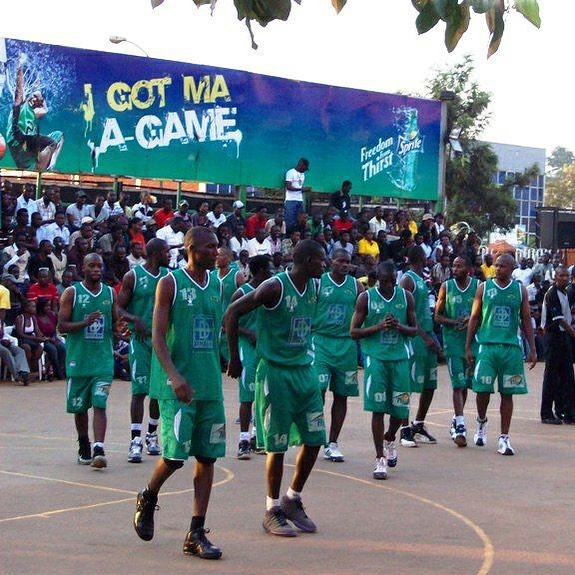
That is where Power’s situation becomes particularly difficult. There is no shortage of history to draw from. The club’s championship years are well documented, its former players are still around, and Afidra himself is a living archive. Yet history is only useful to an institution when it is passed on. A retired number, an old photograph or a championship banner can preserve a memory, but none of those things can teach a young player how to become the next leader. That requires people, structures and a deliberate effort to make the club’s identity part of the development of its players.
And then, almost as if somebody had decided that the Power story needed one final twist, there is Livingstone.
The irony is difficult to ignore. In June 2024, Livingstone beat Power 61–54 in the game that sealed Power’s relegation. Livingstone survived; Power went down. It was a neat piece of sporting symbolism: the old heavyweight was pushed aside by a club fighting to establish its own place in the top flight. Two years later, the final Division One table has put the two names together again, only this time neither club is celebrating. Power finished 12th and Livingstone 11th, and both are heading to Division Two.
In 2024, Livingstone effectively helped send Power down.
In 2026, Livingstone has joined them.
There is an almost comic cruelty to that symmetry, although neither club is likely to find it particularly funny. It also makes the broader point that relegation battles are rarely as simple as one club being “too big to fail” and another being the deserving survivor. Livingstone’s victory in 2024 was entirely legitimate and their subsequent relegation does not diminish it. They survived that season because they were better when it mattered. But surviving one crisis does not necessarily mean an institution has solved the problems that produced the crisis. Two years later, the same league has swallowed both clubs.
For Power, however, the latest relegation feels different because the club is no longer dealing with the shock of falling from the NBL. That shock has already passed. The club has had time to respond. It has had time to adjust to Division One, to develop a route back, to identify younger players and to decide what the next version of Power should look like. Instead, the result is another relegation, and that makes it much harder to argue that the problem was simply a bad NBL season.
There is also a generational question hiding in all of this. Ugandan basketball has changed considerably since Power’s championship era. The league is deeper, the style is faster and the athletic demands are different. Clubs that want to remain competitive cannot simply preserve their old identity and expect the modern game to accommodate it. The challenge is to take whatever was valuable about the old institution and build it into something capable of competing in the present.
Power cannot go back to 2010 -2011 back to back NBL Championship spat.
Nobody can.
The players are older, the game has moved on and the basketball ecosystem around the club is different. Trying to recreate the past would probably be another form of refusing to confront the present. What Power can do, however, is ask why those championship teams worked, what they gave the club beyond trophies, how they developed players, how they connected with supporters and how they created an identity strong enough that people still talk about them more than a decade later.
That is where Afidra becomes important again. Magalo should not be the symbol of Power’s inability to move forward. He should be evidence of what a properly functioning institution can preserve. Imagine what it would mean for a young Power player to learn directly from a man who has spent 26 seasons around the game and lived through the club’s most important years. Imagine if the knowledge accumulated over that career were deliberately transferred to the next generation, rather than being required primarily on the court. The goal should not be to find another Afidra. It should be to create an environment in which Afidra is no longer needed to be the answer because he has helped produce the answers.
That, ultimately, is what makes Power’s fall worth discussing beyond the club itself.
Every generation of Ugandan basketball has its institutions. Some survive because they adapt, some disappear because they don’t, and some linger long enough for us to become nostalgic about what they once were. The danger is that we mistake the continuation of a club’s name for the continuation of the institution itself. A name can survive almost indefinitely. A culture requires constant renewal.
Power now has a long road ahead of it. Division Two is not the end of the club, and there is no reason to believe that a five-time champion cannot eventually find its way back to the NBL. But the comeback cannot simply be measured by promotion. If Power wins its way back to the top division with the same structural problems, the achievement will only postpone this conversation.
The more interesting comeback would be one in which a young player becomes the new Magalo, not because he is 43 and somehow still doing the work of three generations, but because the institution has spent years preparing him to take responsibility. It would be a Power team in which the history is not something mentioned when reminiscing about the old days but something young players understand as part of their responsibility to the people who will wear the jersey after them.
Two years ago, when Power went down to Division One, I wondered whether we were witnessing the erosion of something much bigger than a basketball team. I hoped, perhaps naively, that relegation would be the shock that forced the club to confront it. Instead, Power have now gone one level lower, while Livingstone—the club that delivered the final blow in 2024—has somehow ended up beside them.
There is an irony there that basketball writers could hardly have scripted better.
But there is also a warning.
Power’s five championships are not going to disappear because the club is playing in Division Two. The names of the players who built those teams will remain part of Ugandan basketball history. Magalo’s career will remain extraordinary whether Power are in the NBL or Division Two. None of that can be relegated.
What can disappear, however, is the connection between those things and whatever comes next.
And perhaps that is the real cost of Power’s fall.
Not that one of Uganda’s great basketball clubs is going to play in Division Two.
But that a generation of players could eventually grow up knowing Power as a name, without ever understanding Power as a culture.
That is the part that should worry us.
Because when I wrote Forgotten Cult in 2024, the question was whether Power had forgotten what made it special. After another relegation, perhaps the question has become even simpler: Who is going to remember it for them?
By Cucu Brian
The views expressed herein are only the views of the author. Brian is an ardent Ugandan basketball follower, a basketball junkie and the founder of Basketball256 LLC.












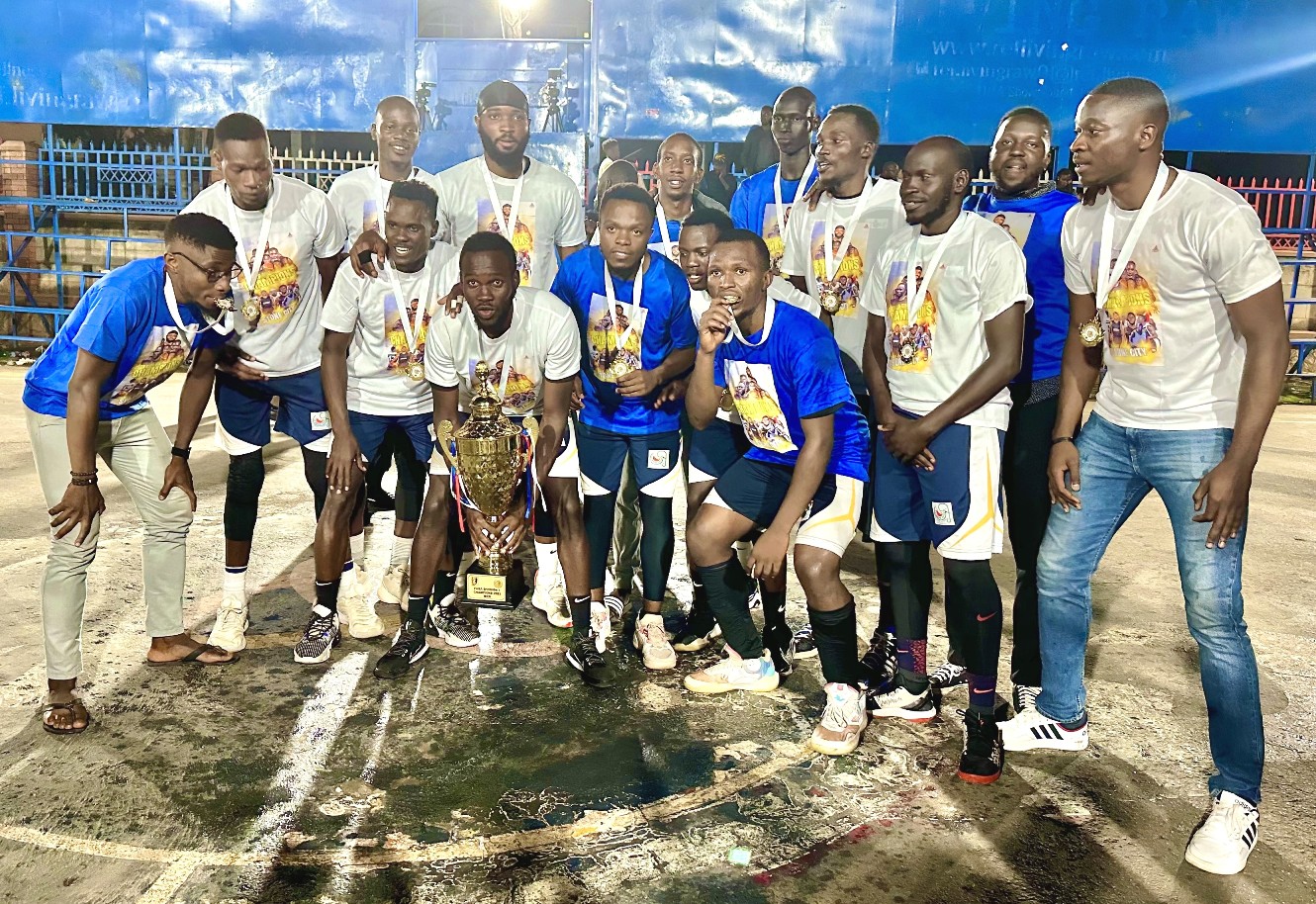
Livingstone is the FUBA Division 1 Champion of 2023. Livingstone dominated JT Jaguars in the tie breaking game five to win 65-53. The FUBA Division 1 Finals are a best of five series that Livingstone won 3-2. Despite winning game one in overtime, Livingstone lost game two and three marginally. Jaguars will forever wonder how they smoked game four when they led by up 16 points in the fourth quarter only for Livingstone to win 69-67. When Livingstone had turned that corner of overcoming a 16 point deficit in the fourth quarter of game four, the gap between the possible and the aspirational had narrowed significantly, they came into game five very confident and assertive in exact contrast to the Jaguars who’d gotten very cautious and perhaps dampened by the game four loss.
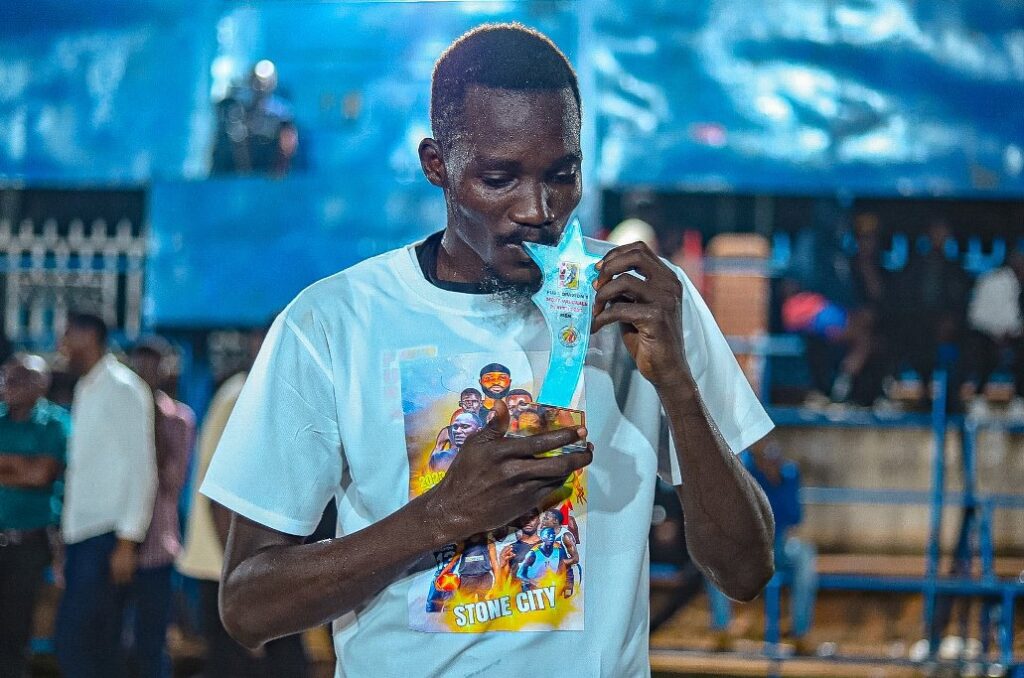
Livingstone talisman Bismarck Omoya was awarded the season’s Most Valuable Player award with his season tally of 13.4 points per game , 8.4 rebounds per game and 5.3 steals per game while shooting 47.7 percent in the 2FG range. Omoya won his second MVP award in three years having been voted MVP while Livingstone won the Division 2 Championship in 2021. Oscar Byomuhangi, the Livingstone pointguard was named the FUBA Division 1 Point Guard of the year.
“The guys worked so hard, we have won two championships in three years. This feels great.” – Ahmed Pai Kamoga, the Livingstone Patron said after their championship game.
The NBL will offer yet another opportunity for these two teams to bolster their now brewed rivalry. The wait may not be very long since the new season is tipped to start in January of 2024. Until then, both teams must make the desirable adjustments for coping in the NBL. It’s on record that over 90 percent of teams that earn qualification to the NBL from Division 1 , get relegated back within their first season.
By Cucu Brian | brian@basketball256.net | Twitter: @Cucubrian
Basketball
Livingstone and JT Jaguars to square up in a tie breaking game 5 for the Div 1 Championship.

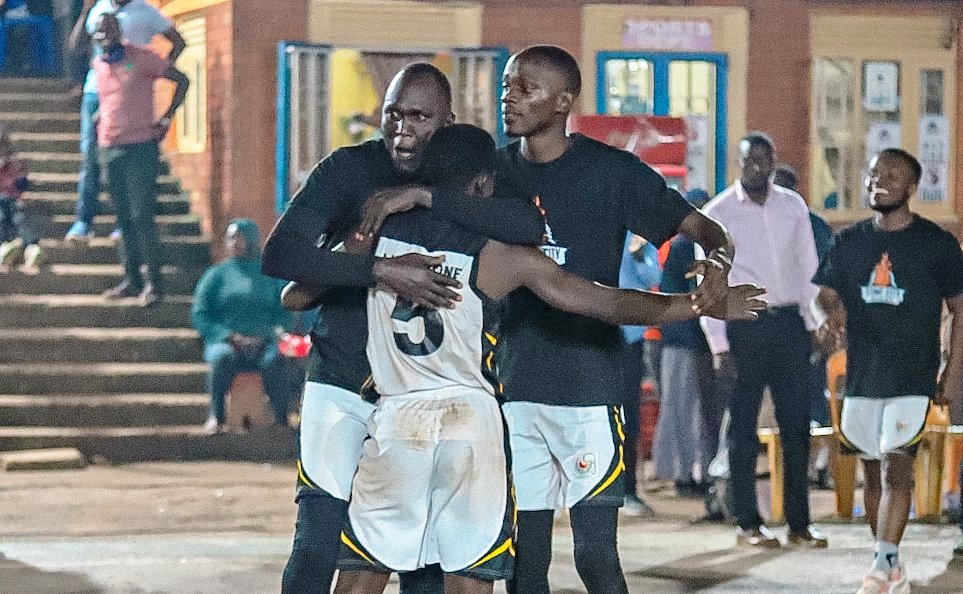
In a show of wits, character and perhaps a stroke of serendipity, Livingstone Basketball Club overcame a 15 points deficit in the fourth quarter to force the tie breaking game five in the FUBA Division 1 Finals. The epic game four encounter of the best of five Finals series that transpired at the YMCA Wandegeya courts was a testament to that old saying that “its never over until the fat lady sings” and to the unpredictability of the competition in the Uganda Division 1. The Jaguars had been off to a steady start winning Q1 marginally 16-15 and going into the half time break with a 7 points advantage (33-26). As it has been thus far in this series, Livingstone third quarter woes continued to haunt and they’d fall back a whopping 15 points going into the fourth quarter.
Pressed against the wall, with the trophy on the line and perhaps nuggets of desperation, Livingstone resorted to pressure defense and quick offense but seemingly, Jaguars were not yielding. Bismarck Omoya (18 points, 11 Rebs) came up clutch providing the leadership Livingstone needed in desperate times. But it’s Forward Diopa Durocher who did the most scoring damage ramping up 25 points and collecting 7 Rebs. Point guard Joshua Namutegere shot the biggest three pointer of his young career to secure the wild ending win for Livingstone. Joshua would finish with a tally of 17 points and 3 Assists.
JT Jaguars will continue to wonder how they smoked up to a 16 point lead in Q4. The Jaguars coached by Sudi Ulanga played awesomely the entire game but found themselves in a TimeOut-less conundrum in the end game. Nightly notable for the JT Jaguars even in defeat was Benjamin Shango’s double-double of 18 points and 11 Rebs, Were Mark and Ian Lubwama combined for 29 points with 17 points and 12 points respectively. Veteran point guard Yesman Bushiri scored the three-pointer on the horn that called Jaguars game 3 victory, finished with 8 points.

Whereas both JT Jaguars and Livingstone by virtue of being in the Div 1 Finals earned qualification to the Uganda NBL – the highest league in the country, their odysseys could never have been more parallel. It’s taken only 2 years for JT Jaguars to get to the NBL; Last season they panned up Div 2 Champions to earn qualification to Div 1 and this season earning simultaneous qualification this time to the most prestigious league in the country – an historic feat that has only been achieved by the City Oilers. On the contrary, it’s been a two decade long journey for LivingStone to get to the NBL but the team has seen tremendous success for the past three years under the stewardship of their Chairman Ahmed Pai Kamoga and Coach Eric Matovu. And perhaps, their biggest acquisition was Bismarck ‘Oneal’ Omoya. With him, Livingstone won the Div 2 Championship and promotion to Div 1 in 2021, narrowly missed making the Div 1 Finals of 2022 with a close semi finals game 3 loss to Rez Life and finally achieving the holy grail in 2023 with the semi finals win over Nkumba Marines. Nobody draws these contrasts better than Abel Emwodu, The Livingstone O.G who has only played passionately for this one team for close to two decades.
I’ve waited for this moment for sixteen years! Sixteen years waiting for this moment –
Abel said after Livingstone’s entry into the NBL with defeat of Nkumba Marines.
The FUBA Div 1 Finals are a best of five series. With the series now tied at 2-2, Livingstone BC and JT Jaguars will now square up in the final Showdown to decide the Div 1 Champion for 2023 on Friday 1st December 2023, at 7PM, at the YMCA Wandegeya.
By Cucu Brian | Twitter: @Cucubrian | brian@basketball256.net
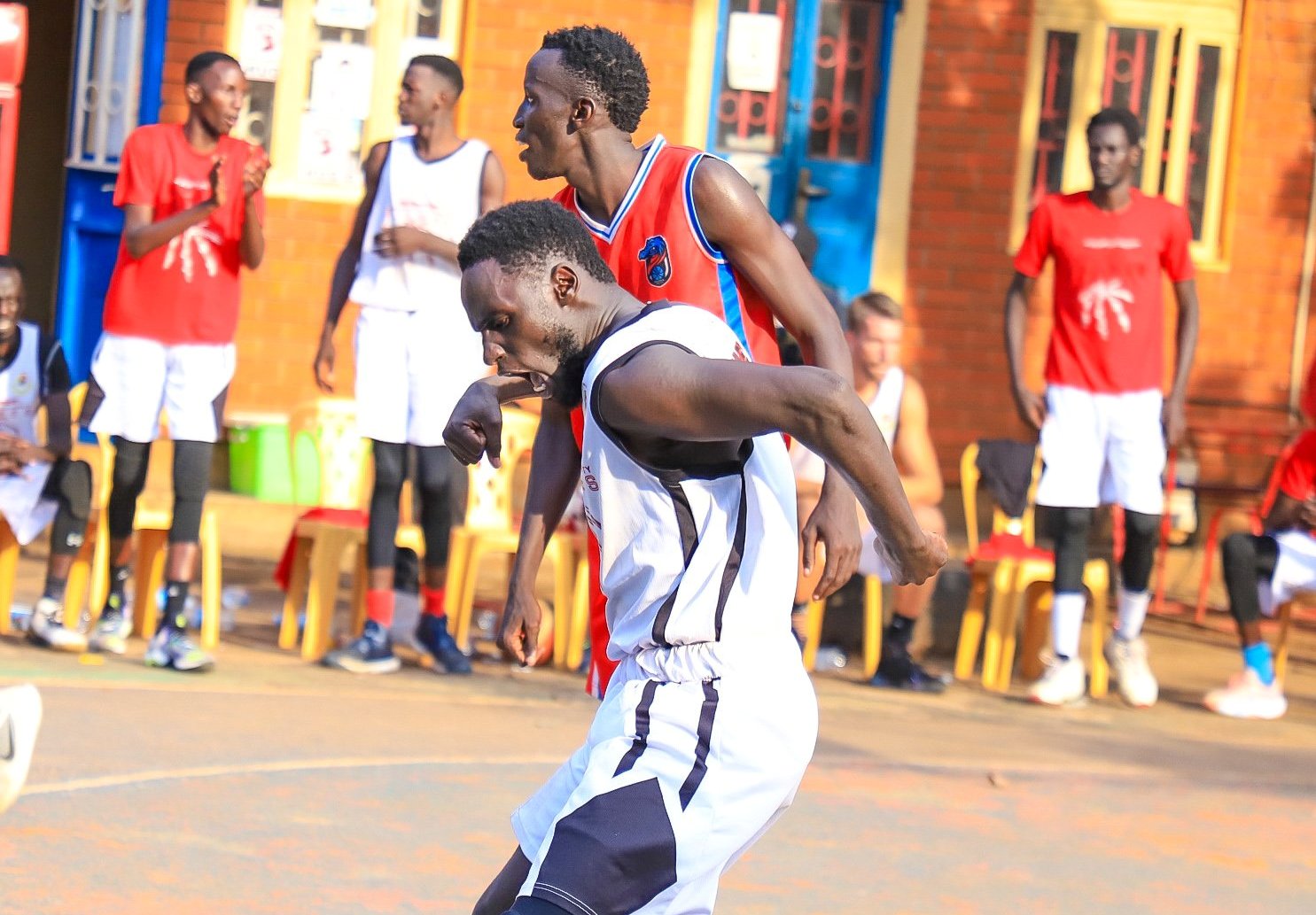
As the regular season of the FUBA Division I in Uganda came to an end, basketball enthusiasts eagerly anticipate the playoffs, a time when seeding takes a backseat to the sheer excitement of the game. The FUBA Men Division I playoffs are known for their unpredictability and the thrilling matchups that emerge, and this year is no exception.

The regular season saw a total of 30 games per team, with each squad striving to prove their mettle in the highly competitive league. While the number one seeded JT Jaguars boasted an impressive 28-2 record, their journey into the playoffs won’t be a walk in the park as they face the eighth-seeded Miracle Eagles, who managed a commendable 17-13 record. Experience has showed that in this league, any team can rise to the occasion and seize victory.
The second-seeded Nkumba Marines, with a strong 24-6 record, are set to clash with the seventh-seeded Falcons, who also finished the regular season at 17-13. The third seed, Livingstone (22-8), faces off against the sixth-seeded Tropical Royals, creating an intense showdown that promises to keep fans on the edge of their seats. The quarters offer an exciting clash between the fourth-seeded Victoria University (19-11) and the fifth-seeded UMU Flames (18-12). This matchup usually highlights the incredible balance of talent within the fourth and fifth seed as told by their respective regular season records.
What makes the Division I playoffs in Uganda truly unique is the way seeding is virtually forgotten once the postseason begins. Unlike many other leagues where higher seeds are expected to dominate, Division I playoff matchups are all about talent, heart, and determination. The lower-seeded teams have a history of rising to the challenge and creating upsets, leaving fans in awe and anticipation.


These playoffs are more often than not the epitome of the depth and competitiveness of Ugandan basketball. The evenly matched teams create an environment where underdogs can become heroes and where the margins of victory are razor-thin. Each game is a thrilling spectacle, featuring fierce competition, remarkable displays of athleticism a constant reminder that in the world of sports, anything is possible. The regular season’s seeding might provide some insight, but it’s the passion, hard work, and dedication of the players that truly determine the outcome. It’s a time when the spirit of basketball shines through, and fans eagerly await each game to see which team will emerge as the ultimate champion.
Who you got?
By Cucu Brian | brian@basketball256.net | Twitter: @Cucubrian
AFRICA
SIlverbacks under George Galanopoulos
Egypt is the top offensive team with Cape Verde in number 4 and Morocco in 7th position. I think it’s just right to say that Group E has the teams with the best offense in these qualifiers and we ought keep our offense top notch for any realistic chances of AfroBasket 2021. Overall, Uganda ranks number 12 among the 20 teams that are seeking to play at the AfroBasket 2021.
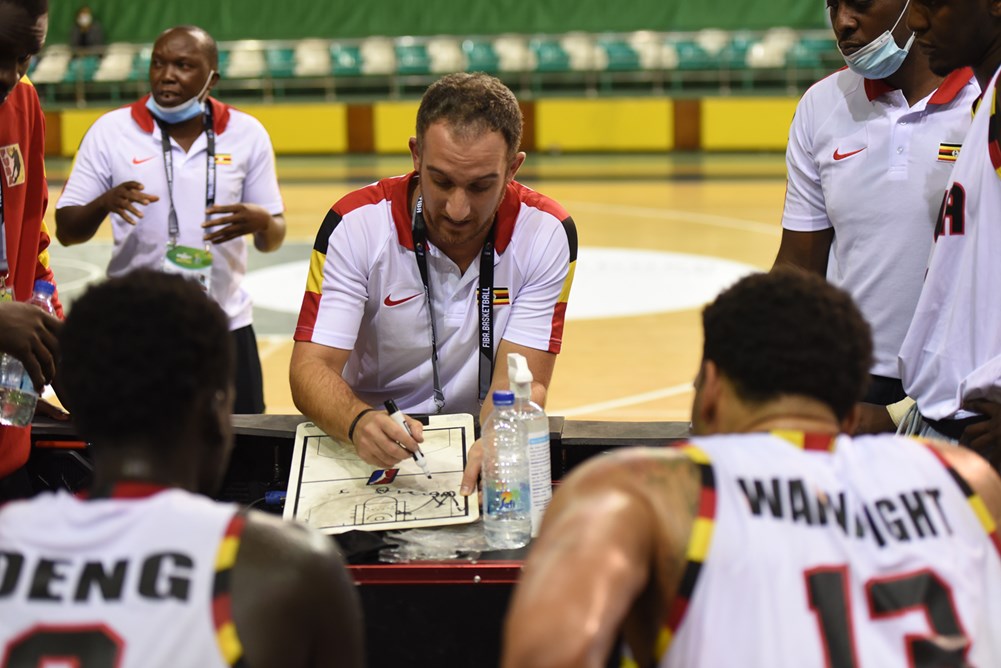
There’s that old basketball saying that Coaches lose games and players win them. Guess it’s the same way generals lose battles and wars and never soldiers. It’s always a notion of accountability. Looking back at the recently completed Round 1 of the AfroBasket2021 Qualifiers where the Uganda Silverbacks –the men’s basketball team set Uganda on course for qualification pending Round two in Kigali next February, with a 2-1 record in Alexandria, Egypt.
Without any shred of doubt, this success can be attributed to the Coaching staff with Head Coach George Galanopoulos at the helm. A lot of buzz especially locally ramps up every time a team to represent Uganda is selected. There’s been reservations and criticism especially about who gets selected and for some reason, which team they come from. It’s my opinion though that when it comes to national team duty, we should be more concerned with what a player can bring to the table rather than which team they play for. Which brings me to the point that usually these conversations are void of – The coach’s philosophy.
I’ve always believed that success of any sporting team starts with the selection of the coach. Once you pinpoint the coach, you submit yourself to his or her coaching philosophy and then you put together the pieces that are a fit within that philosophy. As a fan, the next time you query your team selection, ask yourself what the coach’s philosophy is.
In the Ugandan context, we’ve not been coherently blessed with much sized players but we have consistently been blessed with special guards, I can name every guard that’s been on the Silverbacks. From observation and indeed from his comments, Galanopoulos loves to play quick offense. And he loves a much spaced game – we saw a lot of the 5-Out sets, a lot of run and gun and many sets that were quick hitters. The Silverbacks put up a spirited fight in the Round opening game against Egypt but they’d lose in the fourth quarter with the game ending 96-77. In a post-game interview, Galanopoulos hinted that he preferred the Silverbacks ‘to play quick but not in a rush’. Indeed the Galanopoulos offence yielded a 94-90 victory against Morocco and a 101-98 victory against Cape Verde. Of course in each of those games and like in any basketball game, you can always refer to some individual player brilliance. Jimmy Enabu was nightly notable against Egypt with 20 points, Robinson Opong took over the game against Morocco with the game high 29 points on some incredible shooting and against Cape Verde, Ishmail Wainright had an insane game of 36 points, 12 boards and 7 assists.

Deng Geu was that consistent player providing the much needed support in buckets and adding that extra layer of protection at the glass and getting boards. I’d think that Galanopoulos and his technical team don’t need Deng to top score in a game but to do just what he’s doing while they run the offense around Wainright and Opong. Let me say I love watching a basketball game that keeps me on the edge of my seat, but not so much when it’s the Silverbacks because I’m extremely emotionally invested – and imagine all closings to all the games were nerve wrecking. The common denominator was that we swallowed an average of 96 points per game in Alexandria, a figure Galanopoulos will be seeking to change in Kigali come February 2021.
Based on the rankings after Round one of AfroBasket 2021 qualifications – rankings drawn by Coach Elizabeth Mills, Uganda Silverbacks are ranked number 3 on offensive ranking. Egypt is the top offensive team with Cape Verde in number 4 and Morocco in 7th position. I think it’s just right to say that Group E has the teams with the best offense in these qualifiers and we ought keep our offense top notch for any realistic chances of AfroBasket 2021. Overall, Uganda ranks number 12 among the 20 teams that are seeking to play at the AfroBasket 2021.

Interestingly and quite rightly so, the local based players have been called into nonresidential camp a lot earlier and I’m hoping they’re working on their conversion rate of shots more than anything so they can be the perfect complement to our key pieces.
By Cucu Brian | Twitter @Cucubrian

-
 BLOG1 year ago
#LegendsUG: MONEY IN THE BANK WILBROD ‘OKS’ OKETCHO
-
 THOROUGH7 years ago
When Uganda dared Russia in a 1972 Basketball game & the humble roots of the game.
-
 BLOG6 years ago
Video: UCU Canons guard Bale Fayed talks to CeeBee about his NBL Rookie season and more.
-

 NBL2 years ago
Forgotten Cult: Erosion of the footprint of a budding basketball Culture.
-
 AFRICA5 years ago
Uganda Silverbacks Ishmail Wainright agrees to a two year deal with NBA’s Toronto Raptors.
-

 DIV I3 years ago
LIVINGSTONE, FUBA DIVISION 1 CHAMPIONS 2023.
-

 AFRICA5 years ago
Senegal blow out Uganda in Afrobasket Group D Opener
-
 BLOG1 year ago
LEGENDSUG: THE BIG ARISTOTLE – THE OKS STORY PART TWO.