
LEGENDSUG
DOUBLEDOWN SHOW INTERVIEW WITH BEN KOMAKECH

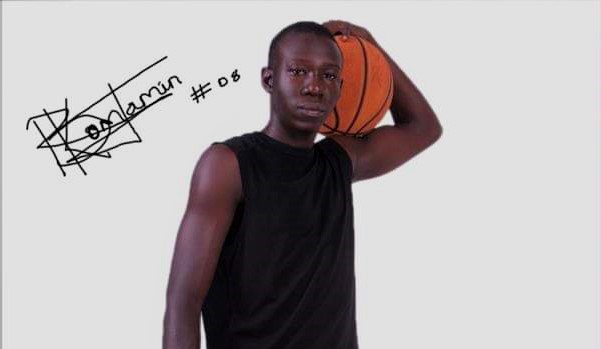
Ben Komakech is a nine times National basketball league Champion and twice he has been voted the League’s Most Valuable Player. Among other basketball achievements, Ben Komakech won the National Schools Championship with Ndejje Senior Secondary School and was also voted the MVP for the same competition. He has been voted the Most Outstanding Player at the FIBA Africa Zone 5 Championship. Komakech is the only basketball player to have the Uganda Young Achievers Award. He has been voted the Uganda Sports Press Association (USPA) Sports Personality of the Year. He is a Director at iHoops Basketball Academy – a reputable Youth Basketball development installation in Uganda.
Ben Komakech now in his 14th season in the NBL is playing with City Oilers after having played with Power Basketball Club, Miracle Basketball Club and NoNem. Over the years, Ben Komakech has been a regular feature on Uganda National Basketball team also called the Silverbacks.
The mostly reserved Komakech who rarely gives interviews sat down with Basketball256’s CeeBee on the DoubleDown Show and he shared on so many topics. Watch part one of his two part series as he reveals his basketball journey.







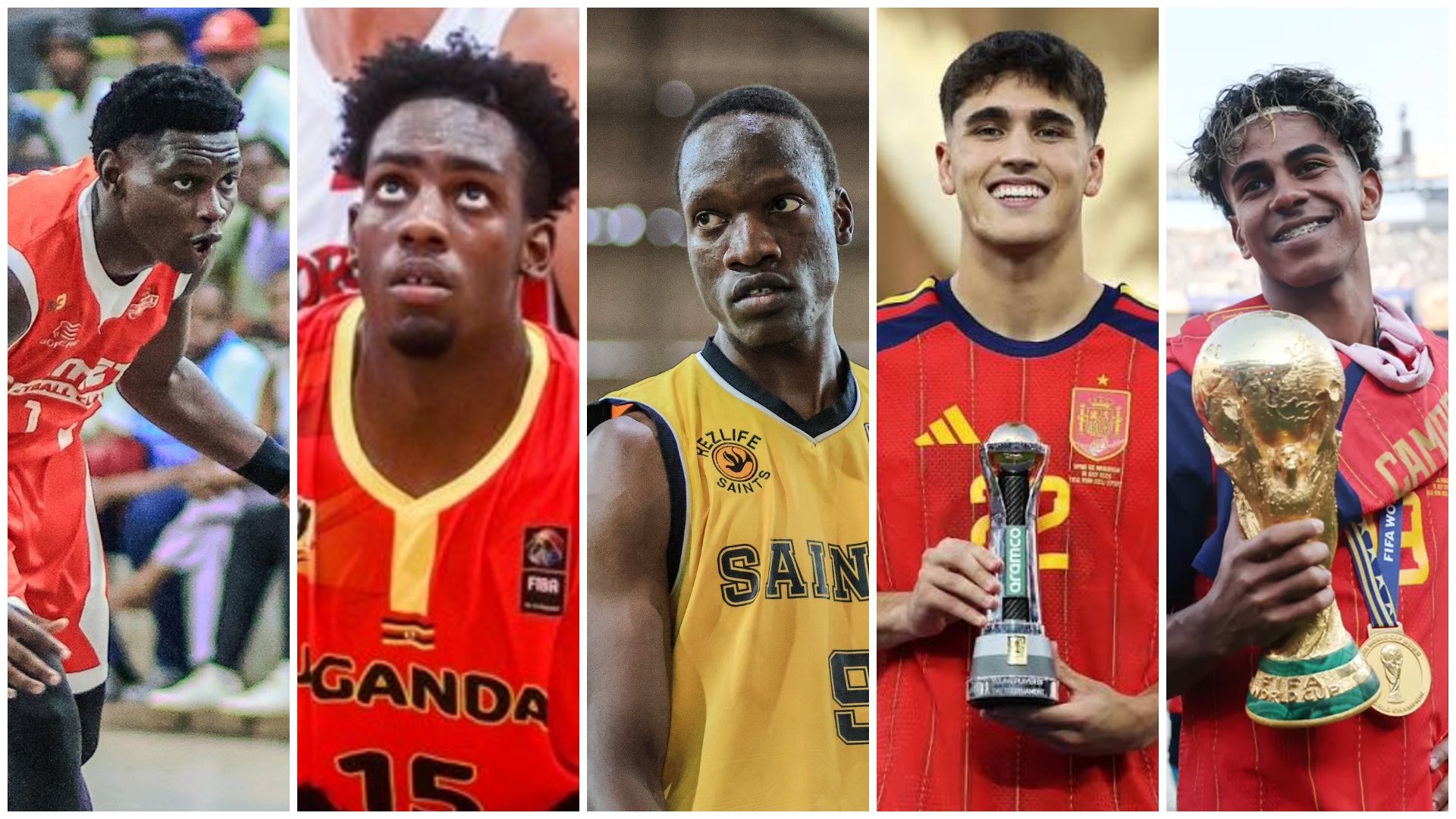
There is something strangely poetic about the number 19.
Not because it is magical. Not because history has ordained it as the age of greatness. But because, time and again, it seems to arrive at the precise moment when responsibility begins to outweigh permission.
On 19 July 2026, the sporting world offered an unlikely lesson.
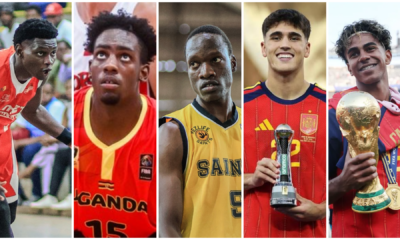
Across the Atlantic, football belonged to youth. Nineteen-year-old Lamine Yamal walked into a FIFA World Cup final sharing the global spotlight with 39-year-old Lionel Messi—a twenty-year age gap that symbolised football’s eternal relay race. One legend carrying the torch, another already reaching for it.
Yamal was not merely present. He was central to Spain’s triumph, instrumental in the move that produced the decisive goal in extra time. Beside him, another 19-year-old, Pau Cubarsí, walked away as the tournament’s Young Player. Think about that for a moment.
A teenager.
Playing centre-back.
Tasked with containing the finest strikers on the planet under the suffocating pressure of a World Cup tournament.
Football did not ask whether he was old enough.
It asked whether he was good enough.
An hour before the World cup final, nearly 7,000 miles away inside MTN Arena, Ugandan basketball quietly echoed the same message.
Nineteen-year-old Matthew Kisakye produced a game-high 20 points for Sommet BC in a winner-take-all playoff against RezLife Saints. Across the floor stood another teenager, Edrin Ekau, who answered with 17 points to propel RezLife into the club’s first National Basketball League semifinal. We need not to be reminded that Ekau was the NBL regular season leader in points and equally, the leader in points in the post-season thus far.
The box score recorded points.
History may eventually record something else.
Perhaps it recorded a changing of the guard.
Because this is not really about Kisakye or Ekau.
It is about what their performances force us to ask.
Why are we still treating youth as a promise instead of a present reality?
Notice what he did not say.
He never mentioned age.
Sport has never rewarded birthdays. It rewards readiness.
History agrees.
At 19, Arthur Kaluma was carrying Uganda to the AfroBasket.
Years earlier, Baale Fayed was already starting in an NBL Finals Game Seven for UCU Canons against the all-conquering City Oilers, carrying responsibilities that many veterans never experience.
Outside sport, the pattern becomes almost impossible to ignore.
At 19, Alexander of Macedon—history remembers him as Alexander the Great—was already commanding armies while learning to govern an empire he would soon build.
At 19, Bill Gates was laying the foundations of Microsoft, not because someone decided he was old enough, but because he had convinced the world he was capable enough.
Different centuries.
Different continents.
Different disciplines.
The same question.
What exactly is supposed to happen after 19 that makes someone suddenly ready? Perhaps Ugandan basketball has been asking the wrong question all along. We often ask whether young players are ready for big moments.
Maybe we should be asking whether big moments are ready for young players.
The evidence keeps accumulating.
Jimmy Enabu was once the fearless youngster challenging veterans before becoming the league’s standard bearer. Arthur Kaluma skipped the queue entirely and stepped onto the international stage.
Now Kisakye and Ekau are writing their own chapter.
Every generation eventually produces a group that refuses to wait its turn.
The danger is not that we give young players too much responsibility. The greater danger is that we ask them to wait until their courage has been coached out of them.
There is an old African proverb that says:
Ugandan basketball should heed that wisdom.
Young players do not merely need minutes.
They need belief.
They need coaches willing to live with mistakes.
They need clubs prepared to build around potential instead of renting experience.
They need a basketball culture that celebrates boldness as much as it celebrates longevity.
Because if Sunday taught us anything, it is this:
When the biggest games arrived, teenagers did not shrink.
They took the shots.
They guarded the stars.
They carried the expectations.
Maybe the future of Ugandan basketball isn’t waiting in academies or school tournaments. Maybe it has already checked into the starting five.
And perhaps the most provocative question of all is not whether Ugandan basketball is ready to hand the keys to its 19-year-olds.
It is whether those holding the keys are ready to let go.
By Cucu Brian.
The views expressed herein are only the views of the author. Brian is an ardent Ugandan basketball follower, a basketball junkie and the founder of Basketball256 LLC.

…To understand the sheer thrill Oks got from dominating his adversaries and contemporaries, one would have to understand the source of the nickname that he’d soon take on – The Big Aristotle. The Big Aristotle had been a nickname that Shaquille O’neal had given himself as a reference to the consistent greatness that won him the 2000 MVP award. Just like Shaq, Oks had won his MVP award in the year 2000.
One of Oketcho’s closest friends and teammate Isaac ‘Magalo’ Afidra told me that, “Oks would do everything that Shaquille O’neal did. The mannerism, the celebration after making a basket and the sheer force and dominance.”

Power in the early 2000s, Wilbrod Oketcho – standing, extreme right.
Oks and Afidra met in December of 1998 during the Abe Lincoln Tournament. The Abe Lincoln tournament had been a popular basketball showcase in Uganda that collected competing teams in East Africa in both senior and junior categories. Afidra narrates, he had first met Oks that December while playing for the Power Junior team at the tournament. He recalls that he was in his Form Four(U.C.E) vacation while Oketcho was in his Form Six (U.A.C.E) vacation. The junior team did not go past the quarter finals of the tournament but as was the tourney’s norm, teams could upgrade players from the junior team to the senior team and Oketcho was upgraded to the Power seniors team to play the semi finals against Rhinos.
“The Rhinos of then is not the Rhinos of now. That team really had distinguished players.”, Afidra told me. In the semi finals, a young Oketcho faced off with a Rhinos forward, an American Marine called Dr. Jay – Afidra recalls. Oks was way ahead of his time, instantly showing confidence exchanging trash talk with the experienced marine. “Give me the ball, this is light work”, Afidra remembers Oks saying.

Wilbrod Oketcho
Before then, Afidra had only heard about Oketcho from his brother Jesse who played for Power. Jesse had repeatedly spoken of a fearless kid from SMACK who played with the Bugolobi Bingos. In one tournament, while Bugolobi was playing against Makerere University, Oks had driven through their zone defense and dropped an emphatic dunk on their forwards.
“At that time, Makerere had some of the creme de la creme, players like Humphrey Hakiza. These were gifted players.” – Afidra told me.
In 1999, both Wilbrod Oketcho and Isaac Afidra would team up for Power. As rookies, they would test the heat, and the thrills of competing in the National Basketball league. Being on any roster in that era meant you’d have to face off with the mighty Falcons. Power verses Falcons was an epic rivalry.
“In those years, everything about basketball was Falcons. They were too organized. Falcons’ players were very disciplined, they had a very tactical coach in Ronnie Kaboha and Stephen Omony was literally unstoppable.”, Afidra told me of Falcons.
Stephen Omony is a legend and the undisputed G.O.A.T of Ugandan basketball. His Runnings with Wilbrod Oketcho would start while both players were in high school.
“Without a doubt we had an early running. I was at Kitante Hill School and he was at SMACK. I was the leader of my team and he was the leader of his. He had such a big fight in him and you could tell he didn’t want to lose.”, Stephen Omony told me.
The two players (Omony and Oketcho) had a fantastic relationship off the court but on the floor, it was always fierce competition. Omony reaffirms Afidra’s comment about Falcons’ superiority and discipline in the day, “We had things we were doing as a team that were different”. “Personally, I had a drive and resolve within me that I didn’t see in many other guys but when you compete, you can always see people that have that fire similar to yours .”, Omony says. I had a role to lead my team and so did he, Sometimes that calls for a bit of unfriendly things – Omony continued. Stephen Omony points out Marvin Banks Keronga (also a very close friend to Oks) as the other guy on the Power team that had a burning flame inside him.
Despite going unbeaten in the regular season, Oketcho and Afidra’s Power would lose to Falcons in the Finals of 1999. Afidra believes the result of those finals would have been different hadn’t it been for Oketcho tearing a ligament in the knee and Jesse having to move to the U.S ahead of the finals.
“I could see the frustration in them when they continuously competed and things not going their way. It was so intense some people misinterpreted it as hatred for each other but as far I’m concerned, It was an on-court thing.”, Omony told me about that 1999 finals between Falcons and Power.
Oketcho and Power would get restitution against Falcons with the dawn of a new millennium, the year 2000. Afidra recalls that 2000 wasn’t an easy year especially for Oketcho.
“He had to go through surgery on his knee and it was a very slow return. He joined us half way through the season”, Afidra remembers. I asked Afidra how a half healthy Oketcho could win MVP. He told me that he hadn’t seen such efficiency from a player until then.
“Oks knowing he was only recovering did only the basic stuff, He was a sure bucket in the blocks, he played good defense, locked down his opponents and set up his teammates. MVP just naturally came to him”.
Afidra remembers how hard they trained to win the league in 2000. They had learned from their slip ups from the year before. “We were fitter than any team in the league. We had to make amends.” Afidra recalls two weeks to the semi finals against Rhinos – they had no rims installed at YMCA, all they did was run hills and run on court. “The rims were only installed on a Thursday for a Friday practice. We ended up sweeping Rhinos on Saturday and Sunday in a best of three series.”
Omony acknowledges that the Power they faced in 2000 had changed a whole lot. ‘Oks and Afidra had gotten a whole lot better and Marvin had a fire in him’.
2000 Power Championship Team
Oketcho Wilbrod, Isaac Afidra, Julius ‘Shell’ Wapera, Stephen ‘Sengo’ Sengooba, Charlie, Elliot ‘Baddu’ Bagenda, Shaban Ali, Marvin Banks Keronga, Musa Malamu, Samuel Sebadduka, Martin Kindagaire.
Oks was a fierce competitor. Afidra remembers that ‘he would foul you so hard and turn to his teammates and argue with them about why they’re getting beaten easily’. He had this thing where he would extend his elbows after making a basket, whether you were his teammate or opponent, you didn’t want to be in the way of that, ‘Get out of my way‘, he would said. Oketcho created an aura of intensity starting from practice and pick up games – ‘It was always bloody. Oks and Marvin started the Power Intensity slogan still used to date ‘, Afidra tells.
“Oks never beat about the bush. Whether it was telling the lanky Julius ‘Shell’ Wapera to get stronger by going to the weight room or telling Sengo to quit playing like a girl.”

Afidra and Power won the league in the year of Oks’ passing -2008 in his honor.
For his legacy, Afidra will always remember Oketcho as a ‘true sportsman’, a ‘true competitor’, a father, big brother and a friend.
Stephen Omony will always remember Oks as a ‘happy guy who had so much positive energy to throw around.’ “His presence was always contagious and I can attest that he always pushed people around him to do and be better. You could tell that he was a smart and progressive guy who was going going to have a very impact-full life not only on the basketball court. I think he had just began expressing just who he was as a person.”
Rest in Power Wilbrod ‘Oks’ Oketcho.
By Cucu Brian| I respond to tweets, @Cucubrian | Also tag @Basketballug

In a country that’s not been so endowed with basketball Forwards, there was once a titanic figure who inspired a generation of basketball players nationally. Wilbrod ‘Oks’ Oketcho turned out for Sadolin Power between 1998 – 2008 until his young life was tragically brought to an end by thugs who attacked his house shooting him in the leg. Oks would succumb to to a blood clot that had traveled from his leg to his heart on the 14th of May 2008. I shall not delve into the conversation about the alleged clinical inefficiency at the Mulago Hospital and the circumstances surrounding his passing. He was a father, fiancee, brother and friend to so many.
Oketcho within the basketball circles was also famously known by his aliases ‘Teddy Bear’ and Mr ‘Money in the Bank’. Norman Blick one of his adversaries says he was called Teddy Bear because he was “very big, imposing, strong and ruthless but deep down he was a warm and kind hearted guy.” Norman narrates that; “He is the one guy i never dunked on, he really liked to win and would do anything to win.” On the basketball court, Oks threw all the kindness out of the window – he meant business. Norman tells on.
Wilbrod attended St Mary’s College Kisubi (SMACK) on Entebbe Road and later Makerere University. At high school level, he had already showed he was going to be dominant. ” I watched him in a high school game in which my brother Donald (Blick) played, He was a beast.” , Norman says.
Fast forward at Sadolin Power, Wilbrod Oketcho would quickly become the face of the franchise. Basketball in Uganda in the late 90s and early 2000s was tailored mostly around proficient big men and Oketcho would quickly become one of the best, if not the best of them. One of his former coaches at Sadolin Power, Mr Peter Mubanda dubbed him ‘Money in the Bank’. He was such a dependable player with little or no bad days at the office. He came with so much game every time. Oketcho was subsequently voted the league’s Most Valuable Player (MVP) in the year 2000.
It’s almost impossible to tell the Oketcho basketball tale without telling it through the eyes of his teammate, friend, kid brother and protege – Ken Balyejjusa. Together, the two players while at Sadolin Power, forged one of the most dominant partnerships ever seen in Ugandan basketball. The two players were filling up the bucket on each other’s facilitation.
“I can only compare that partnership to Stockton and Karl Marlone. Basketball in Uganda hadn’t yet seen a point guard and a big man that complimented each other in almost the same proportions.” – Norman Blick told me of the Oketcho – Balyejjusa partnership. Every time Oks got the rebound, he knew Ken was running and every time Ken had the ball, he knew how to find Oks in his spots, Norman continued. They had worked out their pick and roll thing, I mean these guys were brothers on and off the court – Norman concluded.
ken and I usually talk matters basketball every time we meet up. He is as enthusiastic about the game as the first time we all first fell in love with it. His passion for basketball runs deep. It’s reflected in his choice of words when he speaks of the game he has retired from and made attempts at comebacks too. Up until choosing to do this LegendsUG series, the conversation about his departed big brother had never turned up. When I first called him, he was getting ready to drive from Mbale to his home city of Jinja – a journey that takes about three hours. When he was finally settled down in Jinja, I re-introduced the conversation. Ken sighed severely for several seconds pondering where to start. When he had finished catching his breath, he said; “Brian you know you’re going to have to guide this conversation because I could go on and on till tomorrow and the day after that”. I really had no intention to structure our conversation. If anything, I needed Ken to share from deep within, a Wilbrod Oketcho version, the way that only those close to him knew.

Wilbrod Oketcho instructing teammate Mark Enabu
Ken Balyejjusa had first seen Oketcho while he (Oketcho)was coach at SMACK. Ken would regularly go to SMACK to visit his brothers at the Entebbe school while he (Ken) was a student at Kabojja School. Kabojja School – now defunct and replaced by Kabojja International School had been a Ugandan high school basketball power house with players like Ivan Enabu, Allan Tawoda and Snap-G Babumba. Ken in himself a high school basketball star, would sneak up on SMACK practices every time he visited his brothers. Indeed there was a lot of clamors about a one Kenneth Balyejjusa in the corridors of high school basketball. He was electric and equally electrifying to watch.
But the duo did not meet until the Sprite Qualifiers in 2002. Ken Balyejjusa had joined his team late for the tournament because he was coming off another tournament in Eldoret – Kenya. He had arrived when Kabojja was playing St Peter’s Nalya – another high school basketball power house at the time. When he had arrived and the buzz about him being in the building had started, the SMACK coach Oketcho is said to have wondered out loud saying; “This skinny guy is who you are all afraid of!” Despite his team being down when he had first arrived, Ken helped to turn that game around and Kabojja would go on to win the finals of the tournament against Mazolidi high.
At the end of that tournament, Wilbrod Oketcho approached Ken Balyejjussa recruiting him to Sadolin Power. “I’m sure you can help us change a few things at Sadolin Power.“, Balyejjusa remembers Oketcho asking him.
“I can’t explain how that felt. Here I was in 2002, with the league MVP of 2000 talking to me at that level. I almost instantly dreamed of working with a person like that who blindly believed in what I can bring to the table.” – Balyejjusa said with audibly sporadic sighs.
Balyejjusa says that after high school, he could not immediately join Power because his home is in Jinja and Power was a Kampala team so he had a short stint at the Jinja based Sky Jammers. Balyejjusa says that Oketcho had constantly stayed in touch and was mentoring him and ‘capturing his intrigue in the league’.
“Eventually when i joined Sadolin Power in 2003, It didn’t take any time for us to click. He (Oketcho) had helped me off the court. He was a big brother to me.”, Balyejjusa told me.
On his character, Balyejjusa defines Oks as a ‘very likeable guy’ who enjoyed making ‘tons of jokes’ and friends, very generous, very reliable and ‘surprisingly enough, a very good listener’.
On his partnership with Oketcho, Balyejjusa recalls that when he had just joined the league, it was mostly a big man’s game.
“Most of the sets were aimed at Oks. He was the first option. But Oks believed so much in my game he quickly started turning that around. From 1 – 4 to 4 – 1.” Ken said about the sharing of scoring roles between guard and forward and forward to guard.
“He was such a versatile player. In one game against Falcons, Oks played point for the entire game because he was being guarded by Eric Malinga. For a big guy, he was very agile with incredible footwork and some of the best court vision I’ve seen. He was a big man lashing out no look passes.”, Balyejjusa says of Oketcho.
Whenever Oketcho had the ball, Balyejjusa remembers that all he had to do is be in the right spots or make the right quick cuts and Oketcho would be ready to offload the ball. He recalls that Oketcho had an affinity for passing to the hot hand until it had burned out. “If he knew you had a hot hand, he just had to find you. He made basketball so easy”. For the teams they versed, it became the near impossible task of denying Oks the rebound and stopping Ken from running or stopping Ken from finding Oks – a job they continually terribly failed at. Oks and Ken stacked up numbers like the league had never seen.

Ken Balejjusa (Blue) takes on Falcons Sam Obol in a league game at YMCA Wandegeya
On his half court game, Ken Balyejjusa remembers Oks as a beast. With his size , he was lethal at attacking the hoop. He had a good shot and very good eyes so he could both facilitate or go for the finish. He was an absolute bully to smaller bodies piled anywhere near the hoop. “ Oks had mastered a cut through the middle of the the paint. I’d lob the ball to him and he’d float it into the basket – we called it the ‘One hand Project’.
When I asked Balyejjusa about his fondest memory of Oketcho, he was spoilt for choice. The humming stutter and momental silence signaled a milliard of those. He eventually settled for a tale of his charisma.
“When I had just joined the team, Oks was a big Aristotle (reference to classical Greek philosopher and polymath). Every time he spoke, very few could counter. He believed that to change things around Sadolin Power, somebody younger than everybody else had to be captain – he pushed for it and I became captain in my first year at the team. That elevated my confidence.” , Ken told me.
On his leadership, Ken pointed out how Wilbrod Oketcho led from the front. “You just had to follow when you saw him in the thick of things. Sometimes he was a fierce leader, and it would look seemingly as if he was quarreling while tasking everyone to put in their best effort.”

Balyejjusa says Wilbrod Oketcho was a leader in the thick of things. Never at the back
He was equally inclusive – he wanted everybody to be on the same page. He routinely emphasized doing things together – so guys hanged out together, checked on each other and built a strong spirit of camaraderie. “That’s the genesis of the whole Power is a family thing”, Ken pointed out.
Much as he was an outstanding athlete with Sadolin Power, Wilbrod Oketcho was a graduate and a professional who worked with the Electoral Commission. Balyejjusa remembers that Oketcho and other guys at Power emphasized the need for an education and pursuit of a career outside basketball. “You see at that time, playing basketball had very little monetary value, we played mostly for the passion . Oks , Marvin, Simon, Kasendwa and Sam all had good jobs, they showed that you can be a father, a husband, a professional and still play the game. They set the standard for me to finish at UCU” – Ken narrated.
Ken Balyejjusa considers it a ‘big blessing’ and a rare stroke of serendipity to have been able to play with Wilbrod Oketcho, to share in his basketball story, to interact and to get to know the amazing man he was. A legend indeed.
Kevin Durant once said that; “If basketball is all I’ve ever been good at, then I have terribly failed.”
Power basketball Club was able to honor the legacy of Wilbrod ‘OKS’ Oketcho (God rest his soul) with the NBL title championship in the same year (2008) of his passing and two more in 2010 and 2011. Since 2008, the jersey with Number 11 was retired at Power in honor of Oketcho.
Rest in Power OKS.
By Cucu Brian | I respond to tweets | @Cucubrian
Share your fondest memory of OKs by tweet and we shall share it on our platforms. Be sure to tag @Cucubrian and @Basketballug

“You never can tell what the future holds, but I knew basketball is a game I wanted to play and a game I wanted to be very good at.”, Flirsh said when asked if she could ever have imagined a girl of the 5 feet 6 stature becoming the Greatest Of All Time to play the game.
Flavia Oketcho boasts of a whooping twelve (12) National titles which she won with the Lady Bucks, the UCU Lady Canons, KCCA Leopards and recently with the JKL Dolphins. Flirsh won a whooping six titles with the Lady Bucks an organization she says set her on the trajectory of what she eventually became.
While on the DoubleDown Live Show on Friday night, Oketcho gave an exclusive of how she accidentally became a Lady Bucks player because her team Amazon Rhino had ditched her. Flirsh had first fallen for the game while at Kitante Primary School when she saw the likes of the legendary Stephen Omony play the game at Kitante Hill School. Flirsh would eventually join Kitante Hill School – a high school basketball power house at the time. But she revealed that her intention was never to start at Lady Bucks. In fact, for about two months, she had been practicing with Amazon Rhino – a team that had several players she looked up to at that time. Flirsh mentions Angella Lokidi and Amelia as some of elite players at Amazon Rhino that had asked her to join the team while at Kitante Hill.
“Those days, it wasn’t how it is now were teams are friends, you can see me seated with a player from UCU Lady Canons and we’re chatting after the game. Back in the day, when you belonged to a team, even saying Hi to a player from another team was considered treason.” – Flirsh.
On her supposed first game day with Amazon Rhino, the games were meant to be away in Jinja some 80 kilometers away from the capital Kampala and teams were supposed to meet at YMCA Wandegeya. But Flirsh wasn’t quite aware that she was supposed to carry her own facilitation for transport and meals. She hadn’t asked her parents either for the facilitation so Amazon Rhino opted to leave her behind.
“We were supposed to leave for Jinja at 7:30 AM, I was at the YMCA at 6:30 AM.” – Flirsh
“The Amazon bus left and some of them (players) waved at me”, she narrates. Surrounded by an air of melancholy, she sat at a canteen near YMCA pondering what her next move was going to be and suddenly The Lady Bucks Patron and senior player at the time Ms Susan Kafumbe Mukasa notices her and invites her to travel with the Lady Bucks to Jinja in the comfort of their spacious bus. Arriving in Jinja on the enemy bus, she was instantly black-balled by the Amazon Rhino. Flirsh would end up winning half a dozen WNBL titles with the Lady Bucks.
Flirsh credits Susan Kafumbe Mukasa as the greatest influence on her both on the basketball court and off the basketball court.
“Susan was my greatest mentor. Not only the way she played basketball but also how she put us as women in shape. She would take you on as a mother, talk to you about life, about hygiene and about everything. It’s something that groomed me even up to now.” Flirsh tells about Susan Kafumbe Mukasa.
Flirsh also recounts her privilege of playing with legendary players like Penninah Kabenge, the President of the Africa University Sports Federation, FASU, the Deen of Sports at Makerere University and winner of the first FUBA Lifetime Achievement Award. Flirsh also played with Coach Harriet Lubowa as well as Ref Imelda.
You can watch the entire Episode of the DoubleDown Show with Flirsh in the embed below.
By Cucu Brian | Tweet me: @cucubrian.
Watch Full Episode here below:

-
BLOG11 months ago
#LegendsUG: MONEY IN THE BANK WILBROD ‘OKS’ OKETCHO
-
 THOROUGH7 years ago
When Uganda dared Russia in a 1972 Basketball game & the humble roots of the game.
-
 BLOG6 years ago
Video: UCU Canons guard Bale Fayed talks to CeeBee about his NBL Rookie season and more.
-

 NBL2 years ago
Forgotten Cult: Erosion of the footprint of a budding basketball Culture.
-
 AFRICA5 years ago
Uganda Silverbacks Ishmail Wainright agrees to a two year deal with NBA’s Toronto Raptors.
-

 DIV I3 years ago
LIVINGSTONE, FUBA DIVISION 1 CHAMPIONS 2023.
-

 AFRICA5 years ago
Senegal blow out Uganda in Afrobasket Group D Opener
-
 BASKETBALL DEVELOPMENT5 years ago
Claire Lamunu and World Embrace to build Four Courts in Gulu. Gulu will become a basketball power-house.