

“The only constant in life is change” – Philosopher Heraclitus
Basketball came to Uganda in the 1960s, through Peace Corps volunteers and missionaries. The sport, like many events and activities of the time, got caught up into the political turmoil. Uganda was a very unstable political state. Basketball in Uganda would then gain some traction in the 1970s during the reign of Gen. Idi Amin. Those playing in the early 1970s were true pioneers of the sport. Among the originators, Mr James Adoa, Dr Cyrus Muwanga and the towering Minister of Disaster Preparedness, The Engineer Hillary Onek. Memorable engagements of the National team include the game between Uganda and USSR now Russia in 1972 at the Lugogo Indoor Stadium(now MTN Arena), a game in which our team was obliterated but the game not seeing the final whistle because the glass backboard was brought down by a dunk from a huge Russian player called Victor Petrakov. I have been fortunate enough to listen to conversations about this epic encounter from a couple of sources who were in the Arena that fateful afternoon, some of which I share in this article: When Uganda dared Russia in a 1972 Basketball game & the humble roots of the game. During that time, Uganda was very dominant in East Africa. Other international engagements would include the Military games in Egypt Alexandria, where Ugandan players would discover that some nations like Somalia at the time had professional basketball players.
The political uncertainty of the 1980s made it almost impossible for the assembly of a national basketball team or the possibility of engaging in any meaningful competitions. In the 1990s, out of the YMCA and Makerere University courts arose a crop basketball talent like Mark Ssali, Robert Ndamagye, The Kabohas and Vicent Chatti, a crop that would birth talents like Stephen Omony, Norman Blick, The Malinga brothers, WIlbrod Oketcho and many others. With this crop, the Uganda national basketball team would again become a thing but barely, the team would make it out of the region. The greatest stage for this crop was the Zone 5 where the greatest adversary was Kenya. References are made to the so called Big-man’s game, basketball sets that revolved around the fluidity or size of the post. But Uganda would find success in the region in 2005 with a combination of the post prowess of the Malingas and the athletic/shifty abilities of players like Ivan Enabu and Ken Balyejjusa.

Henry Malinga once equated to me that beating Kenya for the first time in the early 2000s was like getting a stubborn monkey off one’s back. Indeed as a basketball competing country, our level of planning and goal setting wasn’t going beyond the Zone 5. On the other hand, FIBA Africa had set the qualification criteria for big events based on zones. Zone 5 had Egypt, Kenya, Uganda, Tanzania, Somalia, Eritrea, later Rwanda, Burundi and South Sudan but Egypt was virtually untouchable in these contests. And to be brutally honest, the facilitation for the national team in every aspect was not sufficient and many times unavailable. The team could only do enough with very ill preparation and facilitation. For the longest time, the government has not treated sports as the multi-billion dollar industry that it is and the opportunities it can bring to the economy.
While on Basketball256’s DoubleDown show last year, Ugandan basketball legend Norman Blick recounted a time they went for national team duty in Rwanda but the team could not afford meals. Isaac Lugudde, a player on the team had to chip in for the team to be able to feed!
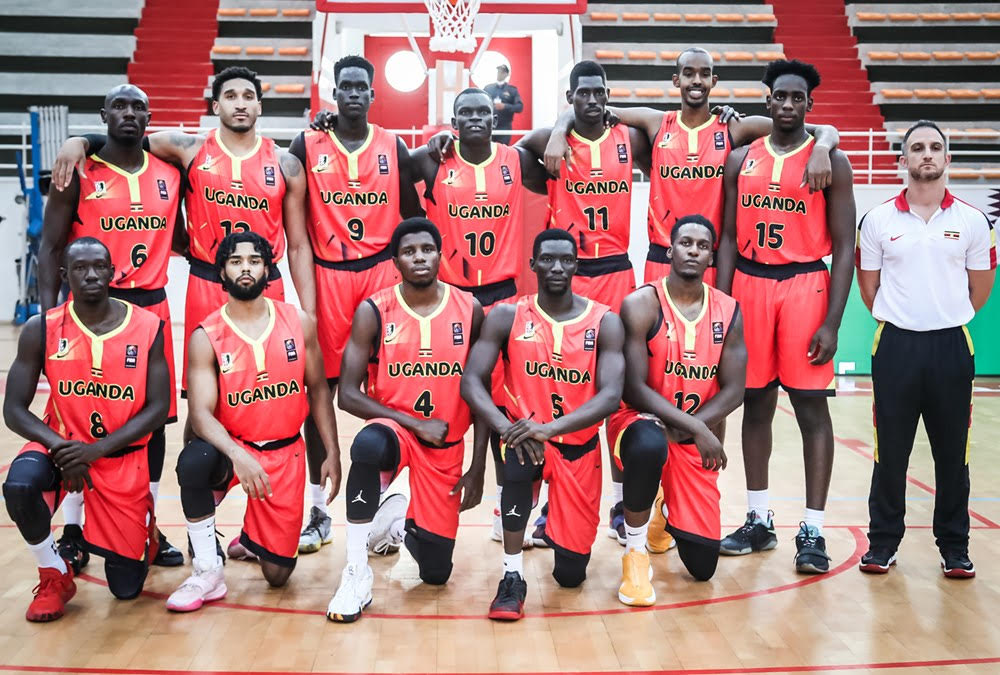
Basketball is a living game. With so much shift especially in how it’s played. This notion is rather enshrined in the different philosophies coaches bring forth; these can take any way, shape or form of pace of play, living by the three-ball or two-ball as we call it. Also importantly, the skill sets of your players are very critical. Soon due to better exposure, coaches and players alike had an oasis of skills but it would take a different kind of ambition than just competing for the Zone 5 Championship. This kind of thinking and ambition would be brought by the General Manager Muhamed Santur and a committee constituted solely for the purpose of managing the national team. It all started by interesting Ugandan players outside Uganda to join the team; the first batch in 2015 included players like Kassim Nangwere, Samuel Mukooza, Josh Johnson and John Baligwaire. The introduction of international players on the team brought out the competition from within the local players if they needed to make the cut for the national team.

Some of the most critical players on the Silverbacks since 2015 when Uganda first qualified for AfroBasket have been Stanley Ociti, Stephen Omony, Jimmy Enabu, Henry Malinga, Brandon Davis, Robinson Opong and now Ishmail Wainright. Some of the brightest moves by the national team managing committee was widening the coaching staff. Long time national team coach Mandy Juruni was joined by George Galanopoulos and NBA Scout Mike Schmitz who identifies talent that can boost the squad. Recently, Galanopoulos took over as head coach as his knowledge of the team improved.

On July 8, the Silverbacks beat Morocco right in their backyard to secure a third straight qualification to Afrobasket, inspired by the witty 20 points performance of 19-year old Arthur Kaluma. There’s certainly so much opportunity going forward for young talented and hardworking guys on the Silverbacks seeing that much of the old guard is letting up. Kaluma is an example that on the Silverbacks, just as we see on many elite teams, the leaders of today are the young and talented. U.S.A is usually considered the Mecca of basketball, ahead of the Olympics, Nigeria beat U.S.A a few days ago thanks to many of it’s players that are playing in elite leagues around the world including the NBA. Let’s not forget that Nigeria competes at Afrobasket!

Albert Ahabwe, the Silverbacks manager, while on the DoubleDown Show advised;
“When you become a national team player, the league (NBL) is no longer your highest vision of accolade. You stop looking at the league as the standard of success for you, you need to educate yourself on the tendencies of your opponents some of whom play at levels as high as the NBA”
This statement has never been truer. With Africa fast becoming a major basketball destination with competitions like the Basketball Africa League (BAL) becoming very competitive, many nations are stacking up and bringing their very best. Uganda must stay the course to stay in conversations like Afrobasket or World Championships.
By Cucu Brian
brian@basketball256.com | @Cucubrian on Twitter


Must See


