
AFRICA
From ragtag to three consecutive AfroBasket appearances, the story of the evolving Silverbacks.


“The only constant in life is change” – Philosopher Heraclitus
Basketball came to Uganda in the 1960s, through Peace Corps volunteers and missionaries. The sport, like many events and activities of the time, got caught up into the political turmoil. Uganda was a very unstable political state. Basketball in Uganda would then gain some traction in the 1970s during the reign of Gen. Idi Amin. Those playing in the early 1970s were true pioneers of the sport. Among the originators, Mr James Adoa, Dr Cyrus Muwanga and the towering Minister of Disaster Preparedness, The Engineer Hillary Onek. Memorable engagements of the National team include the game between Uganda and USSR now Russia in 1972 at the Lugogo Indoor Stadium(now MTN Arena), a game in which our team was obliterated but the game not seeing the final whistle because the glass backboard was brought down by a dunk from a huge Russian player called Victor Petrakov. I have been fortunate enough to listen to conversations about this epic encounter from a couple of sources who were in the Arena that fateful afternoon, some of which I share in this article: When Uganda dared Russia in a 1972 Basketball game & the humble roots of the game. During that time, Uganda was very dominant in East Africa. Other international engagements would include the Military games in Egypt Alexandria, where Ugandan players would discover that some nations like Somalia at the time had professional basketball players.
The political uncertainty of the 1980s made it almost impossible for the assembly of a national basketball team or the possibility of engaging in any meaningful competitions. In the 1990s, out of the YMCA and Makerere University courts arose a crop basketball talent like Mark Ssali, Robert Ndamagye, The Kabohas and Vicent Chatti, a crop that would birth talents like Stephen Omony, Norman Blick, The Malinga brothers, WIlbrod Oketcho and many others. With this crop, the Uganda national basketball team would again become a thing but barely, the team would make it out of the region. The greatest stage for this crop was the Zone 5 where the greatest adversary was Kenya. References are made to the so called Big-man’s game, basketball sets that revolved around the fluidity or size of the post. But Uganda would find success in the region in 2005 with a combination of the post prowess of the Malingas and the athletic/shifty abilities of players like Ivan Enabu and Ken Balyejjusa.

Henry Malinga once equated to me that beating Kenya for the first time in the early 2000s was like getting a stubborn monkey off one’s back. Indeed as a basketball competing country, our level of planning and goal setting wasn’t going beyond the Zone 5. On the other hand, FIBA Africa had set the qualification criteria for big events based on zones. Zone 5 had Egypt, Kenya, Uganda, Tanzania, Somalia, Eritrea, later Rwanda, Burundi and South Sudan but Egypt was virtually untouchable in these contests. And to be brutally honest, the facilitation for the national team in every aspect was not sufficient and many times unavailable. The team could only do enough with very ill preparation and facilitation. For the longest time, the government has not treated sports as the multi-billion dollar industry that it is and the opportunities it can bring to the economy.
While on Basketball256’s DoubleDown show last year, Ugandan basketball legend Norman Blick recounted a time they went for national team duty in Rwanda but the team could not afford meals. Isaac Lugudde, a player on the team had to chip in for the team to be able to feed!
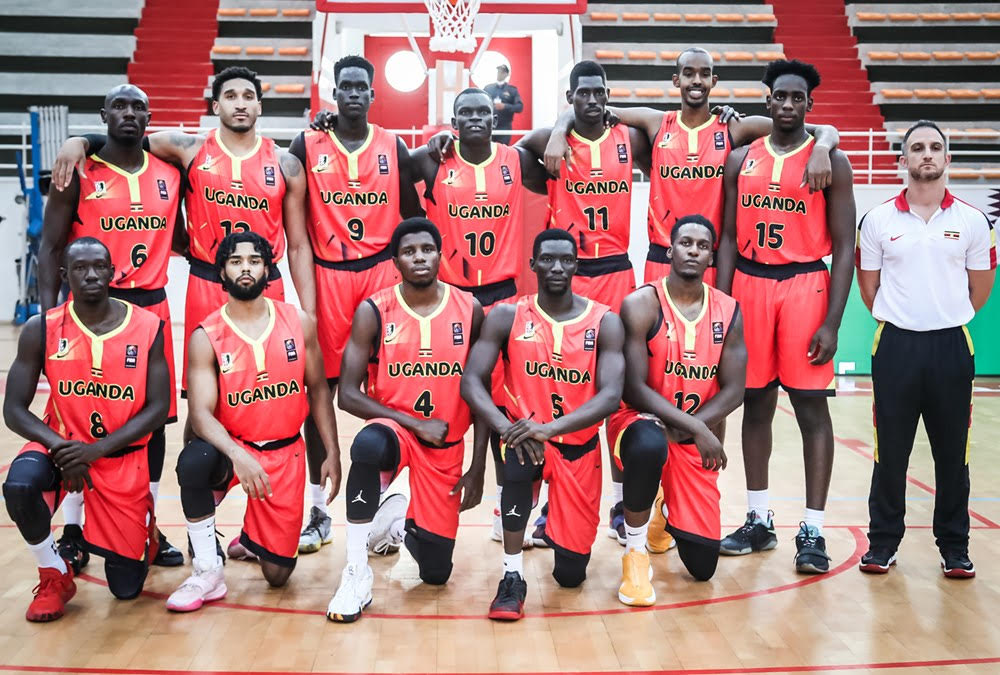
Basketball is a living game. With so much shift especially in how it’s played. This notion is rather enshrined in the different philosophies coaches bring forth; these can take any way, shape or form of pace of play, living by the three-ball or two-ball as we call it. Also importantly, the skill sets of your players are very critical. Soon due to better exposure, coaches and players alike had an oasis of skills but it would take a different kind of ambition than just competing for the Zone 5 Championship. This kind of thinking and ambition would be brought by the General Manager Muhamed Santur and a committee constituted solely for the purpose of managing the national team. It all started by interesting Ugandan players outside Uganda to join the team; the first batch in 2015 included players like Kassim Nangwere, Samuel Mukooza, Josh Johnson and John Baligwaire. The introduction of international players on the team brought out the competition from within the local players if they needed to make the cut for the national team.

Some of the most critical players on the Silverbacks since 2015 when Uganda first qualified for AfroBasket have been Stanley Ociti, Stephen Omony, Jimmy Enabu, Henry Malinga, Brandon Davis, Robinson Opong and now Ishmail Wainright. Some of the brightest moves by the national team managing committee was widening the coaching staff. Long time national team coach Mandy Juruni was joined by George Galanopoulos and NBA Scout Mike Schmitz who identifies talent that can boost the squad. Recently, Galanopoulos took over as head coach as his knowledge of the team improved.

On July 8, the Silverbacks beat Morocco right in their backyard to secure a third straight qualification to Afrobasket, inspired by the witty 20 points performance of 19-year old Arthur Kaluma. There’s certainly so much opportunity going forward for young talented and hardworking guys on the Silverbacks seeing that much of the old guard is letting up. Kaluma is an example that on the Silverbacks, just as we see on many elite teams, the leaders of today are the young and talented. U.S.A is usually considered the Mecca of basketball, ahead of the Olympics, Nigeria beat U.S.A a few days ago thanks to many of it’s players that are playing in elite leagues around the world including the NBA. Let’s not forget that Nigeria competes at Afrobasket!

Albert Ahabwe, the Silverbacks manager, while on the DoubleDown Show advised;
“When you become a national team player, the league (NBL) is no longer your highest vision of accolade. You stop looking at the league as the standard of success for you, you need to educate yourself on the tendencies of your opponents some of whom play at levels as high as the NBA”
This statement has never been truer. With Africa fast becoming a major basketball destination with competitions like the Basketball Africa League (BAL) becoming very competitive, many nations are stacking up and bringing their very best. Uganda must stay the course to stay in conversations like Afrobasket or World Championships.
By Cucu Brian
brian@basketball256.com | @Cucubrian on Twitter







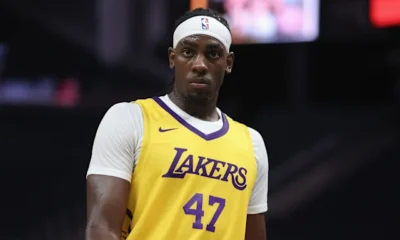

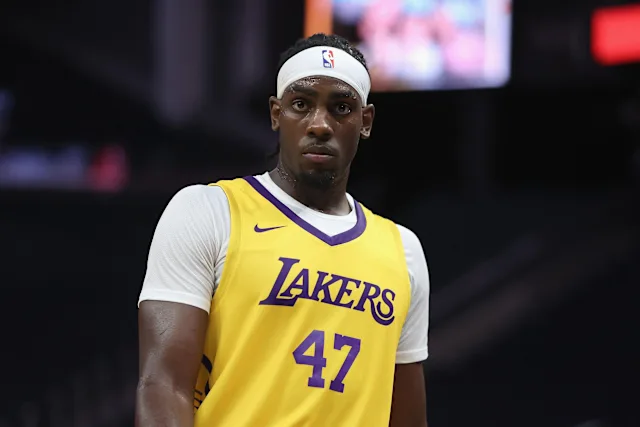
Basketball has a habit of making us remember places long after we’ve forgotten the score.
For Arthur Kaluma, Los Angeles will forever be the city where an NBA dream edged closer to reality.
For Ugandan basketball, however, the story begins somewhere else entirely.
It begins in Rabat.
Long before the Los Angeles Lakers announced that Kaluma had signed a two-way contract for the 2026-27 season, before the 34-point explosion in Las Vegas Summer League, before South Bay and before the G League grind, there was a teenager wearing Uganda across his chest for the very first time.
It is easy to forget that now.
The NBA has a way of claiming every success as though the story started the moment America noticed. But Ugandan basketball remembers differently. It remembers the nervous excitement surrounding a 19-year-old freshman from Creighton. It remembers the uncertainty after Uganda’s qualifying games in Egypt were postponed because of COVID-19 protocols. And it remembers what happened when Kaluma finally stepped onto the floor.
Against Morocco, with Uganda’s AfroBasket hopes hanging in the balance, the teenager delivered a performance that announced himself not only to Ugandans, but to everyone watching.
Twenty points. Five rebounds.
Ten points in the final five minutes.
A ticket to AfroBasket 2021.
For many players, a national team debut is the beginning of a career. For Kaluma, it became the first chapter of a journey that now carries him into one of basketball’s most iconic organizations. The organization of Kobe Bryant. The Organization of Magic Johnson and Kareem and Lebron James. Yes , that organization! 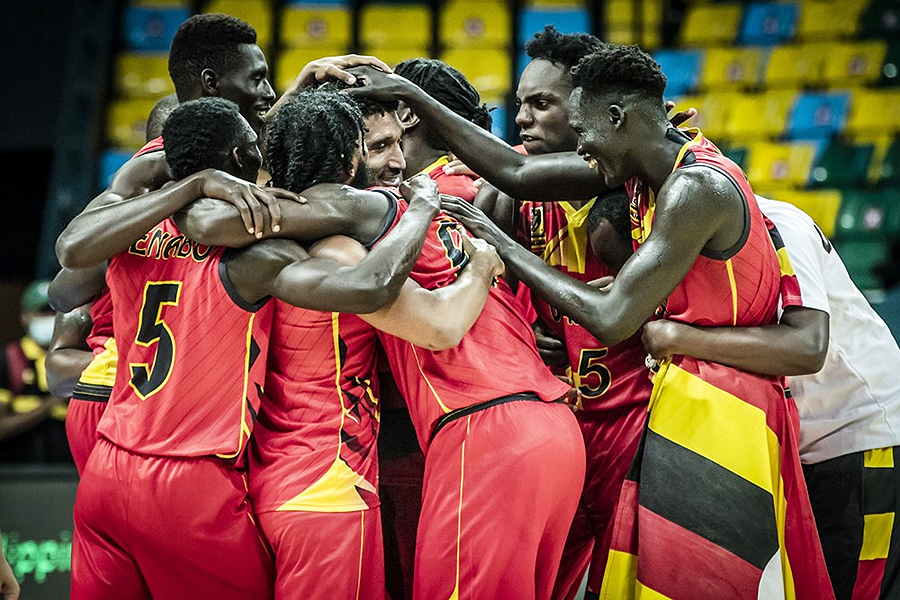
Kaluma’s road to the Lakers has been anything but glamorous.
After two seasons at Creighton, he transferred to Kansas State before finishing his collegiate career at the University of Texas. Despite the talent, despite the pedigree, despite the flashes, his name was never called on draft night.
For many prospects, that is where the dream begins to fade.
Instead, Kaluma chose the harder route.
The Lakers signed him to an Exhibit 10 contract, effectively asking him to prove that he belonged. There were no guarantees, only opportunities waiting to be earned.
With South Bay in the G League, Kaluma quietly built one of the most efficient seasons of his professional career, averaging 14.6 points and 5.0 rebounds while shooting an impressive 54.5 percent from the field.
The numbers were solid.
The growth was even more impressive.
Then came Las Vegas.
Summer League has become basketball’s version of a job interview. Every possession is watched. Every mistake is magnified. Every great performance can change a career.
He averaged 18.6 points while shooting 60.9 percent from the field and an outstanding 50 percent from three-point range. Then, against the Dallas Mavericks, he produced the performance everyone in the Lakers organization had been waiting for.
Thirty-four points.
It wasn’t merely scoring.
It was the confidence of a player who finally looked comfortable belonging at that level.
After the game, Kaluma explained why.
“I feel like I’ve been able to move my feet a lot better on defense, my shot obviously feels good. But my understanding of the game after having a year of it under my belt, I feel a lot more comfortable out there.”
That sentence may explain his journey better than any box score ever could. Talent got him noticed. Understanding kept him there. The opportunity, he earned.
The Lakers rewarded that development by signing Kaluma to a two-way contract while waiving guard Peter Suder.
He now joins AK Okereke and Chris Mañon as the franchise’s two-way players for the coming season, continuing his development between the Lakers and South Bay while remaining firmly within the organization’s plans.
A two-way contract is not a destination.
It is an invitation. An invitation to practices with NBA stars. An invitation to compete for minutes. An invitation to prove that he belongs on basketball’s biggest stage.
For a player who went undrafted barely a year ago, that invitation carries enormous significance.
Why this matters beyond Los Angeles
Every generation of Ugandan basketball has searched for its proof. Proof that local dreams can survive global competition.
Proof that wearing the Silverbacks jersey is not the end of ambition but the beginning of it.
Kaluma’s story does not belong solely to Uganda. It belongs equally to America, where he was raised, developed and now pursues his NBA career.
But it would be equally incomplete without Uganda.
When he chose to represent the Silverbacks, he gave Ugandan basketball something precious: belief. Not because one player could solve every challenge facing the sport, but because he reminded a generation that Uganda could produce athletes worthy of the world’s biggest stages.
Five years later, that belief feels even more tangible.
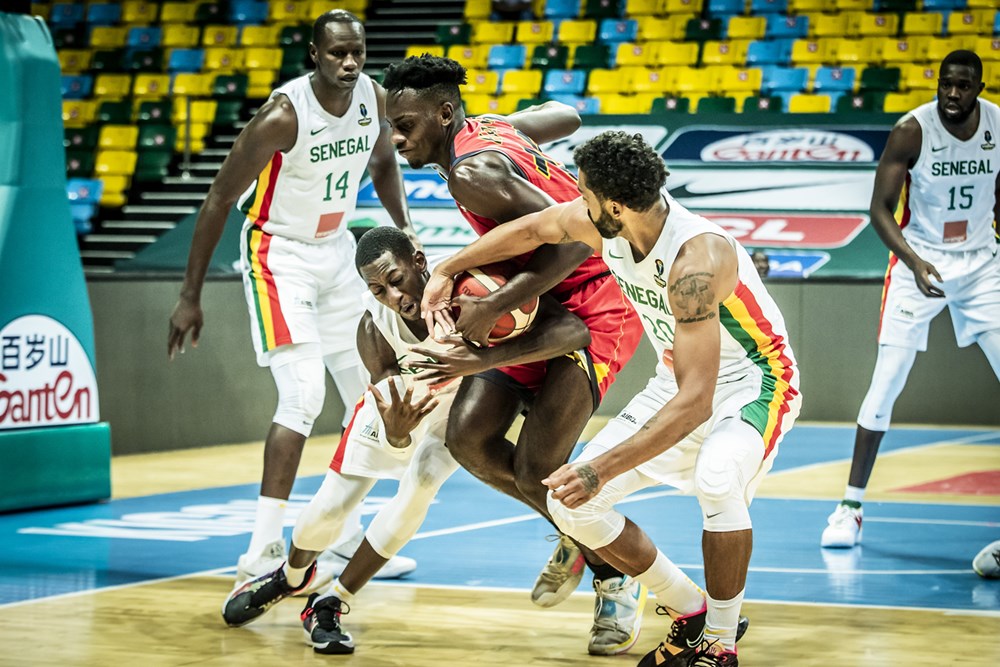
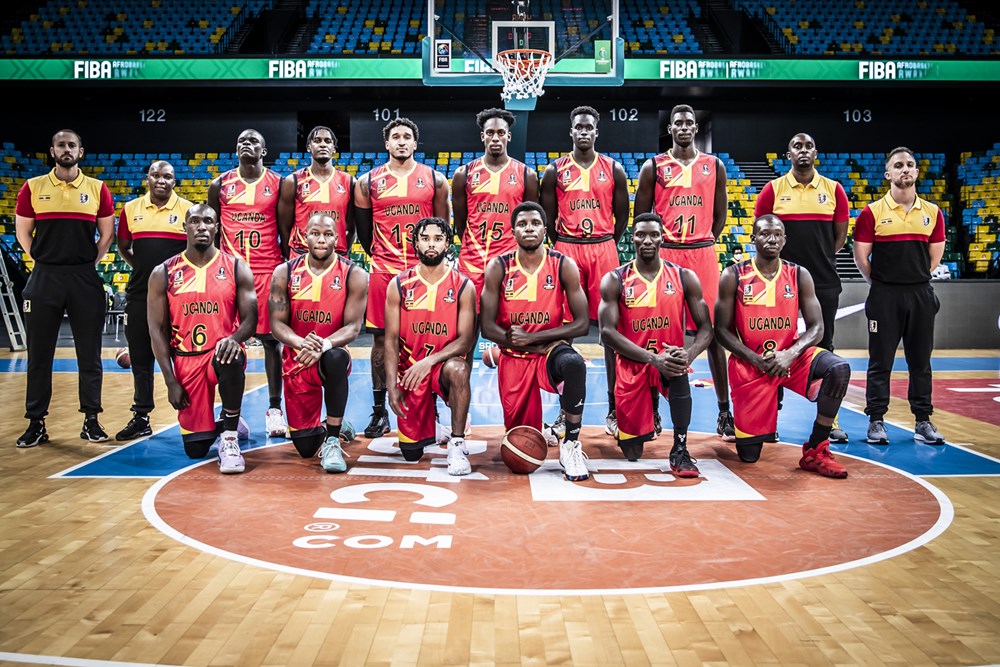
Art for the Silverbacks X Senegal at AfroBasket
Children who watched Kaluma rescue Uganda against Morocco are now teenagers chasing their own dreams on courts across Kampala, Mukono, Jinja, Gulu and beyond. They now have more than highlights to admire.
They have a roadmap.
Perhaps that is the real significance of this Lakers contract.
It is not simply another Ugandan name getting closer to the NBA.
It is another piece of evidence that the distance between Lugogo and Los Angeles is no longer impossible to imagine.
Basketball has always been about more than the next game. Sometimes it is about the stories that quietly reshape what a country believes is possible.
Five years ago, Arthur Kaluma helped Uganda qualify for AfroBasket.
Today, he has taken another step toward establishing himself in the NBA.
But perhaps the greater achievement is this: somewhere in Uganda, another teenager has just stopped seeing the NBA as somebody else’s dream.
And if one dream can change the imagination of a generation, who is to say that Arthur Kaluma’s greatest assist won’t come far from the bright lights of Los Angeles?
By Cucu Brian.
The views expressed herein are only the views of the author. Brian is an ardent Ugandan basketball follower, a basketball junkie and the founder of Basketball256 LLC.

Uganda Silverbacks forward Arthur Kaluma delivered the performance of the night at the NBA Summer League, pouring in 34 points to lead the Los Angeles Lakers to a commanding 91-70 victory over the Dallas Mavericks.
Since featuring on the Silverbacks as a 19-year-old, Ugandan basketball fans have watched Arthur Kaluma’s journey from afar—more keenly from his NCAA collegiate career with Creighton, then Kansas State, and now the Los Angeles Lakers organisation. On Saturday night, that patience was rewarded with another reminder of why so many believe the Silverbacks star belongs on basketball’s biggest stage.

Arthur Kaluma playing for the Silverbacks back in 2021.
Kaluma erupted for a game-high 34 points as the Lakers cruised past the Dallas Mavericks 91-70 in NBA Summer League action, producing one of the standout individual performances of the tournament so far.
The Ugandan international was simply unstoppable.
Kaluma shot an efficient 11-for-16 from the field and buried six of his ten three-point attempts, adding five rebounds in 30 minutes. Every time Dallas threatened to make a run, Kaluma had an answer, whether attacking the rim or stretching the floor from deep.
His 34 points accounted for more than a third of the Lakers’ offense and were comfortably the highest total by either team.
It was the kind of performance Lakers executives and coaching staff wanted to see from a player looking to force his way into NBA conversations.
After going undrafted in 2025 despite an impressive collegiate résumé, Kaluma signed with the Lakers organization, where he has primarily been attached to the South Bay Lakers in the G League. Summer League, however, offers a different opportunity—a stage where young players compete directly for NBA roster spots and rotation minutes.
Against Dallas, Kaluma looked every bit like a player determined to seize that opportunity.
The former Creighton and Kansas State forward showcased the versatility that has made him one of the Silverback’s brightest basketball stars. He scored in transition, punished defensive switches, knocked down perimeter shots with confidence and consistently found ways to impact the game without needing the offense built entirely around him.
While no other Laker reached the 20-point mark, Kaluma’s scoring outburst powered Los Angeles to 51 percent shooting from the field and a comfortable 21-point victory.
For Ugandan basketball, performances like this carry significance far beyond the Summer League standings.
Every strong outing in a Lakers jersey strengthens the belief that Uganda could soon have another player wearing an NBA uniform, following in the footsteps of Ishmail Wainright who played on Portland Trailblazers and the Phoenix Suns.
Summer League performances alone do not guarantee an NBA contract. Competition is fierce, and roster spots are limited. But games like Saturday’s undoubtedly move Kaluma further into the conversation.
And if Arthur Kaluma continues to shoot the ball the way he did against Dallas, that spotlight may soon follow him all the way to Crypto.com Arena when the NBA season tips off.
This performance also continues an encouraging trend for Kaluma. Since leaving Creighton for Kansas State and beginning his professional career, he has steadily expanded his offensive game. Against Dallas, he displayed the confidence, efficiency and shot-making ability that NBA organizations value, giving Ugandan basketball fans every reason to dream that a full-time call-up to the Los Angeles Lakers may not be far away.
-Basketball256 Editorial

There is one image from Luanda circulating around Ugandan basketball circles over the last few days that may define Uganda’s FIBA World Cup Qualifying Window 3 more than any box score ever could. It shows Silverbacks and City Oilers forward Titus Lual guarding Egypt’s giant centre Hamad Abouelrish.
At 2.35 metres, Abouelrish is arguably the tallest player in international basketball today.
Outside meme-lovers caricature of it, It is an image of two athletes playing the same sport and arguably the same position—but in completely different physical realities.
Then there is Fayed Baale.
Standing at 1.73 metres (5’8″), Baale lit up Angola for 17 points and remains one of Uganda’s most electrifying guards. Remarkably, he is also among the shortest players in the current FIBA World Cup Qualifiers.
Those two images—the tallest and one of the shortest players in the competition—capture the question Uganda basketball can no longer avoid:
Does Size Matter?
The scoreboard from Luanda told one story.
The eye test told another.
Watching the Uganda Silverbacks battle Angola, Mali and Egypt during Window 3 of the FIBA Basketball World Cup African Qualifiers, one reality became increasingly difficult to ignore.
Uganda was often giving away size across multiple positions.
Not less talented.
Not less committed.
Simply… undersized.
And in basketball, that matters.
It is an uncomfortable conversation because nobody wants to reduce the game to height. Basketball has evolved beyond the era when simply having the tallest players guaranteed success. Shooting, pace, spacing, skill and decision-making now define the modern game more than ever before.
But size never disappeared.
It simply evolved.
Today’s international basketball demands players who are 6-foot-7 and can defend guards. Centres who can protect the rim and still sprint the floor. Wings with seven-foot wingspans who can switch every screen without creating mismatches.
Against Angola, Uganda spent much of the night battling Bruno Fernando around the basket.
Against Mali, the Silverbacks struggled to match the physicality of a deeper and longer rotation.
Against Egypt, Uganda competed brilliantly for forty minutes before the accumulated physical demands of the game seemed to favour the deeper, bigger team during overtime.
Three different opponents.
One recurring observation.
Uganda was often asking smaller players to perform oversized roles.
That raises a bigger question.
Is Uganda Producing Enough Size?
Uganda has wrestled with this question before.
More than a decade ago the Silverbacks attempted to add size through players like Sam Gombya and Marial Dhal. The experiment never fully matured, while Stanley Ocitti later became arguably Uganda’s most impactful modern power forward, playing a pivotal role in the team’s historic qualification for AfroBasket 2017.
Since then, however, Uganda has largely returned to building around guards.
Perhaps the issue isn’t that Uganda lacks tall people.
Perhaps the issue is that Ugandan basketball isn’t finding them early enough.
How many players taller than 6-foot-7 are currently in structured basketball programs?
How many secondary schools actively recruit exceptionally tall students into basketball rather than letting them drift into other sports—or no organized sport at all?
How many strength and conditioning programs are designed specifically around developing young post players instead of simply producing guards?
These questions matter because international basketball increasingly rewards countries that identify physical tools early and develop skills around them.
Can Uganda Manufacture Size?
No.
Height cannot be coached.
But length can be identified.
Strength can be developed.
Mobility can be trained.
Timing can be taught.
Skill can absolutely be built.
Countries with limited basketball traditions have dramatically improved by creating deliberate pathways for taller athletes. Uganda can do the same if the federation, schools, academies and clubs align behind a long-term vision.
That vision begins with recognizing that frontcourt players require different development. A 6-foot-9 teenager should not necessarily be trained exactly like a 6-foot point guard.
The Future Is Bigger—But Also Smarter
This should not become a search for height alone.
Uganda has always produced skilled guards. Over the decades, I can name but a few, Jimmy Enabu, Tony Drileba, Mark Okidi, Cyrus Kiviiri, Josh Johnson, Kassim Namgwere, to the current crop of guards. That identity should remain.
The next step is balance.
Imagine Uganda’s talented backcourt complemented by two or three homegrown forwards standing 6-foot-8 or taller, comfortable defending, rebounding and finishing above the rim.
That changes everything.
It changes defensive schemes.
It changes rebounding battles.
It changes transition opportunities.
Most importantly, it changes expectations.
My Conclusion
Window 3 exposed many things about the Silverbacks.
Execution can improve.
Turnovers must decrease.
Closing games remains a work in progress.
But perhaps the biggest lesson wasn’t tactical at all.
Window 3 suggested that Uganda’s greatest long-term challenge may not simply be Angola, Egypt or Mali. It may be matching their physical profile.
If Uganda wants to become a consistent contender in African basketball over the next decade, developing bigger, longer and more versatile frontcourt players cannot remain an afterthought.
The conversation shouldn’t be about whether size matters.
At this level, it clearly does.
The conversation should be about what Uganda is prepared to do about it.
By Cucu Brian.
The views expressed herein are only the views of the author. Brian is an ardent Ugandan basketball follower, a basketball junkie and the founder of Basketball256 LLC.

Results rarely tell the whole story.
On paper, Uganda leaves Luanda with three defeats from three games after losses to Angola (95-62), Mali (82-59) and Egypt (77-70 in overtime).
But beneath those results lies a qualifying window full of valuable lessons—some encouraging, others brutally honest.
For a Silverbacks program still striving to establish itself among Africa’s basketball elite, Window 3 exposed both the progress Uganda has made and the distance still left to travel.
1. Forty Minutes Is No Longer Enough
If there is one lesson that defined Uganda’s campaign, it is this: international basketball punishes every lapse.
Against Angola, the Silverbacks were within seven points at halftime before a devastating 20-0 run ended the contest.
Against Egypt, Uganda led for more than 24 minutes and held a two-point advantage with less than a minute remaining, only to lose in overtime.
The Silverbacks proved they can compete.
Now they must prove they can finish.
Elite African teams don’t necessarily play better basketball for forty minutes—they simply execute better during the five or six possessions that matter most.
2. Uganda Has Reliable Scorers
One of the biggest positives from Luanda was the emergence of multiple offensive contributors.
Fayed Baale announced himself against Angola with 17 points while shooting five three-pointers.
Leonard Musiime matched that scoring output against the Palancas Negras.
Deng Geu led Uganda against Mali with 13 points.
Nike Sibande was consistently excellent throughout the window, culminating in a superb all-around performance against Egypt with 19 points, six assists and three steals.
For years, Uganda has searched for dependable offensive options.
Window 3 suggested the Silverbacks are beginning to build that depth.
3. Turnovers Continue to Be the Biggest Enemy
The numbers repeatedly pointed to one issue.
Against Angola, turnovers fuelled the decisive 20-0 run.
Against Egypt, Uganda struggled to execute late possessions in regulation and overtime.
At this level, every turnover becomes a transition opportunity for opponents who rarely waste them.
Protecting the basketball is no longer just a statistical category—it is the difference between winning and losing.
4. Experience Still Separates Uganda from Africa’s Elite
Angola never panicked after falling behind.
Mali controlled the game without needing spectacular scoring runs.
Egypt erased a 12-point first-quarter deficit before calmly executing in overtime.
The common thread was experience.
These are programs accustomed to winning pressure games.
Uganda’s young core is still learning those lessons in real time.
The encouraging part is that such experience cannot be taught in practice—it can only be earned through games like these.
5. The Future Remains Bright
Three defeats should not overshadow the bigger picture.
Uganda competed with Egypt until overtime. The Silverbacks challenged Angola for an entire half. Young players continued to grow in confidence while established leaders embraced larger responsibilities.
There were frustrations, certainly.
But there were also signs that Uganda’s basketball program continues to mature.
The gap between the Silverbacks and Africa’s traditional powers is no longer about talent alone.
It is about consistency, execution and experience. Those qualities are developed over years, not weeks.
6. Size Still Matters—Perhaps More Than We Want to Admit
This may be the most uncomfortable lesson from Luanda.
Uganda looked smaller.
Against Angola’s Bruno Fernando and a physically imposing frontcourt, against Mali’s length across multiple positions, and against Egypt’s interior presence led by Assem Marei, the Silverbacks often found themselves giving away inches, wingspan and physicality before the opening tip.
International basketball has evolved dramatically over the last decade. The game is faster, more perimeter-oriented and increasingly positionless. But one truth has remained remarkably consistent:
Size still wins possessions. Size secures rebounds. Size alters shots. Size changes passing angles. Size allows defenses to switch without constantly needing help.
Throughout Window 3, Uganda’s margin for error was noticeably smaller because its margin in size was equally small.
That is not a criticism of the players who wore the Silverbacks jersey. They competed relentlessly against bigger opponents. Rather, it is a challenge to Ugandan basketball as a whole.
Where are the next generation of 6-foot-7 forwards? Where are the mobile seven-foot centers? How many players above 6-foot-6 are currently being developed through Uganda’s schools, academies and clubs?
These questions should now become part of the national basketball conversation.
Because while skill can neutralize size for stretches, over the course of forty minutes against elite African opposition, size remains one of basketball’s greatest competitive advantages.
The Silverbacks don’t necessarily need to become the tallest team in Africa.
But they do need to become bigger.
Hamad Abouelrish of Egypt vs Uganda in Window 3, Luanda. Hamad was a tower the Silverbacks had to tussle with.
The Basketball256 Verdict
Window 3 was not the campaign Uganda hoped for. Neither was Window 2 in Alexandria.
It was, however, a reminder that international basketball is often decided by details rather than talent. The Silverbacks leave Luanda without a victory but with something equally valuable: clarity.
They now know they can compete with Africa’s best. The next step is learning how to beat them. That journey will not be defined by this FIBA World Cup 2027 qualifying campaign.
It will be defined by how Uganda responds to the lessons learned in Alexandria last February and in Luanda this July.

-
 BLOG1 year ago
#LegendsUG: MONEY IN THE BANK WILBROD ‘OKS’ OKETCHO
-
 THOROUGH7 years ago
When Uganda dared Russia in a 1972 Basketball game & the humble roots of the game.
-
 BLOG6 years ago
Video: UCU Canons guard Bale Fayed talks to CeeBee about his NBL Rookie season and more.
-

 NBL2 years ago
Forgotten Cult: Erosion of the footprint of a budding basketball Culture.
-
 AFRICA5 years ago
Uganda Silverbacks Ishmail Wainright agrees to a two year deal with NBA’s Toronto Raptors.
-

 DIV I3 years ago
LIVINGSTONE, FUBA DIVISION 1 CHAMPIONS 2023.
-

 AFRICA5 years ago
Senegal blow out Uganda in Afrobasket Group D Opener
-
 BLOG1 year ago
LEGENDSUG: THE BIG ARISTOTLE – THE OKS STORY PART TWO.