
BASKETBALL DEVELOPMENT
Claire Lamunu and World Embrace to build Four Courts in Gulu. Gulu will become a basketball power-house.


Claire Lamunu is the only player born and raised in Uganda to go professional. One in a myriad across the gender divide. She credits her life’s path firstly on her faith in God and on that one invitation by a coach at the Gulu Caribbean playground to try out at basketball. Since her first touch of the basketball, doors have been opened both within and without.
Gulu is a fast developing metropolis in the northern part of Uganda. Two decades ago, Gulu town and the entire northern region was a place afflicted by the consequences of the LRA insurgency led by Joseph Kony. Lamunu couldn’t have been any older than twelve years when the rebels were expelled from Uganda in 2006.
Lamunu went to Mount St Mary’s College Namagunga from where she went to Makerere University. While at Makerere, she’d play for Division I Ladies outfit Gladiators. At Gladiators, she was noticed by KCCA Leopards and also got her first call to the Uganda Gazelles, the women national basketball team. She inspired the Leopards to the 2014 WNBL Championship winning the MVP accolade that same season. Lamunu transferred to Vanguard University on scholarship the following year winning numerous awards while playing for the College, eventually graduating with a Science degree in Biochemistry. She went undrafted for the WNBA but went on to pursue a career as a professional basketball player in Portugal and Finland where she has won numerous awards. Due to the COVID-19 pandemic lockdowns, Lamunu is in Uganda pursuing her master’s degree while playing for KCCA Leopards and finding time to do community work among the Youth of her hometown, Gulu.
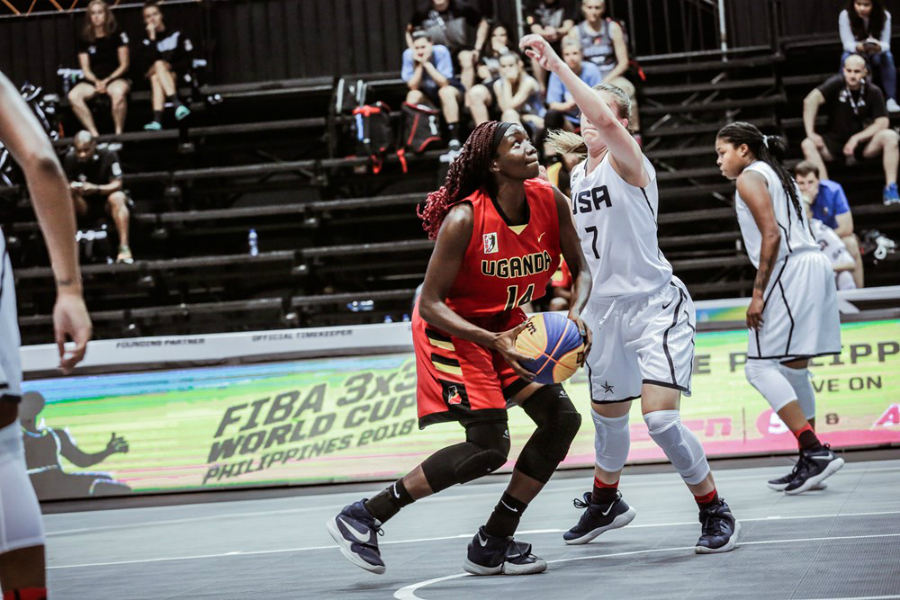
While pursing the professional basketball career, Lamunu has consistently found time to come back to Uganda, to Gulu, a town where it all begun – to conduct basketball clinics for the youth. But the dilapidated Caribbean basketball playground at the Kaunda Grounds is the only public basketball playground in a city of over 400,000 inhabitants most of whom are youth under the age of 18. Gulu is naturally well endowed with a tall and strong phenotype that’s well suited for basketball. Lack of facilities is a huge draw back for sports and youth development in Uganda. Lamunu through her repute sought to partner with World Embrace an organization that’s been working in Gulu, to build a children’s park that consists of four basketball playgrounds. World Embrace had already purchased the land for which this dream facility is to be built and only teamed up with Lamunu to raise the USD 60,000 that was required to construct the playgrounds. Lamunu hints that they’ve been overwhelmed by the reception of the project and they’ve already been able to raise the money for the construction.
When I’m doing these clinics in Gulu, I look in these kids’ eyes and I see myself in them. They can have even better opportunities, including learning basketball skills when they’re much younger. We are trying to give these kids an opportunity to grow and also to get a free education, It can be here in Uganda or out there. But the goal is to change their lives, change their family story, and change the community. That’s the motivation, it takes one life to change the community with myself as the testimony because of where I started and where I’ve been able to go. It’s a reality and I want them to know that it’s a reality. ~ Lamunu told Cucu Brian
Lamunu is an impact driven woman, a leader and a trailblazer. I’ve written a lot about the role of athletes in the community, Lamunu is an inspiration of what can be achieved when you work hard and follow through to build partnerships that can cause change. Ghandi said, “Be the change you want to see in the world”. Gulu has passionately and continually been involved in the Ugandan leagues through the city teams Gulu Hawks and Gulu Hoop Rockers, notwithstanding, the challenges of having to play the majority of their games in Kampala . With the prospect of this landmark facility, I can predict with the certainty of a prophet that Gulu will become Uganda’s basketball hub in the near future.
By Cucu Brian | brian@basketball256.com | Twitter: @Cucubrian






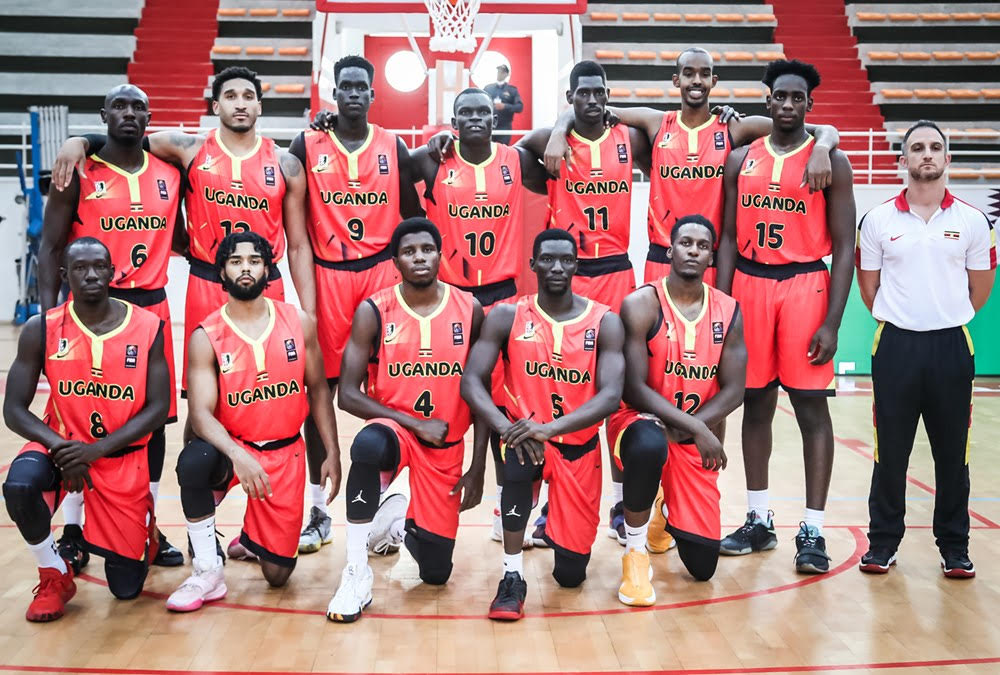
A few weeks ago, I was in so much desperation and rage because our National Women’s Basketball Team had been informed that it wouldn’t participate in the FIBA AfroBasketball Qualifiers Zone V. I wrote down a heartfelt piece that yielded no results other than sympathy.
A few weeks down the road, to have our U16 National Basketball Teams, both the girls and the boys, to participate in the U16 Basketball Championship, it had to be first tabled by parliamentarians. This left me wondering whether this was necessary. Get me right! Sports is a whole sector in the country with Ministers, State Ministers, and officials attached to it, but, unfortunately, athletes have to cry out to receive even a drop of the funding.

A fortnight or less down the drain, the Silverbacks are now faced with the same situation. Same talk again. The government has no money to fund you! The FIBA AfroBasketball games are taking place in our neighboring country Rwanda. A stone throw away, but the government and the concerned stakeholders can’t afford to throw the boys over.
The last time we checked, Ssekitoleko informed us of how he financed his way to the Olympics. The best I know, these boys have worked hard with little or no support from the concerned stakeholders. Uganda has all the money and resources, but its priorities set, don’t favor sports. With all due respect, it’s disheartening to watch our leaders jubilate when our athletes win. Their success ends in just being celebrated with a presentation of what merely contributes to long sustainable solutions for the sports industry. Sports is one of the most underrated sectors in our country, yet it is one of the most developed and economically growing sectors globally.
A few weeks ago, the basketball fraternity was jubilant over the signing of a Ugandan to the Toronto Raptors, making him the first Ugandan in the NBA. It was of least concern to me because this is a young man who has not lived the true Ugandan life of an athlete. Let’s build on this. We can’t compare the facilities and support of an athlete who has lived all his life in the States with one who has grown his game through playing pick-up at pool court. We are happy for you, Mr. Wainwright, but we need to be realistic. I would be jubilant if our own Enabu or Drileba were invested in by his own country and given a right to display his talent at different International tournaments competitively. We are quick to celebrate what we have not invested in.
The performance of the U16 National teams should be the nudge to the concerned stakeholders. Young enthusiastic players are let down by their own system. How did we expect players who camped for three days to have a competitive advantage over their opponents? Actually, it is an extreme sport to build a career in sports in Uganda. It messes with all your senses; psychologically, emotionally, physically, and economically. An athlete has to buy their own sports merch, equipment, and finance their daily sporting engagements and only will be appreciated if they successfully make it with gold or silver or make it out of the country.

My articles for the past weeks have all been around this issue. It is high time we prioritized sports just as we prioritize our kidandali, kadongo Kamu, hip hop, and upcoming musicians. Sports should be prioritized, not made an option! We can’t keep running on a system of lobbying for funds each time a National team represents us.
Promises won’t do justice to the sports sector; instead, establish systems and structures for long-term sustainability and growth of the industry.
Silverbacks keep strong and stay focused. “Help” finally came through, but the sports industry shouldn’t be helped; it’s a whole industry not a charity case—all the best to the Silverbacks in Rwanda at the Afrobasketball Games.
Article by Elizabeth Kisolo | kisolo@basketball256.com| Twitter: Big_Foot115

In a bid to play for Nigeria’s female national basketball team, D’tigress at the ongoing 2021 Olympics in Tokyo, Japan, three Women National Basketball Association (WNBA) stars; Nneka Ogwumike, Chiney Ogwumike, and Elizabeth Williams declared their interest to represent Nigeria. The three all have dual citizenship in the United States and Nigeria. Indeed, when the Nigeria Basketball Federation (NBBF) revealed its provisional D’Tigress, the three WNBA stars were included in the team. All the three have dual citizenship in the United States and Nigeria
Nneka Ogwumike, a former WNBA Most Valuable Player (MVP), and Elizabeth Williams have previously been involved with the U.S National Women’s basketball team with the former playing in two FIBA world cups while Chiney Ogwumike had not yet played for the U.S in any FIBA tournament. The two Ogwumike sisters had intended to join their young sister, Erica who had already been included on the Nigerian roster.
The Federation of International Basketball Association (FIBA) bars players above 17 years of age from switching nationality after playing in a FIBA tournament for a country. However, there is an exception where FIBA may allow a player to play for the national team of his or her country of origin if this is in the interest of the growth of basketball in that country.
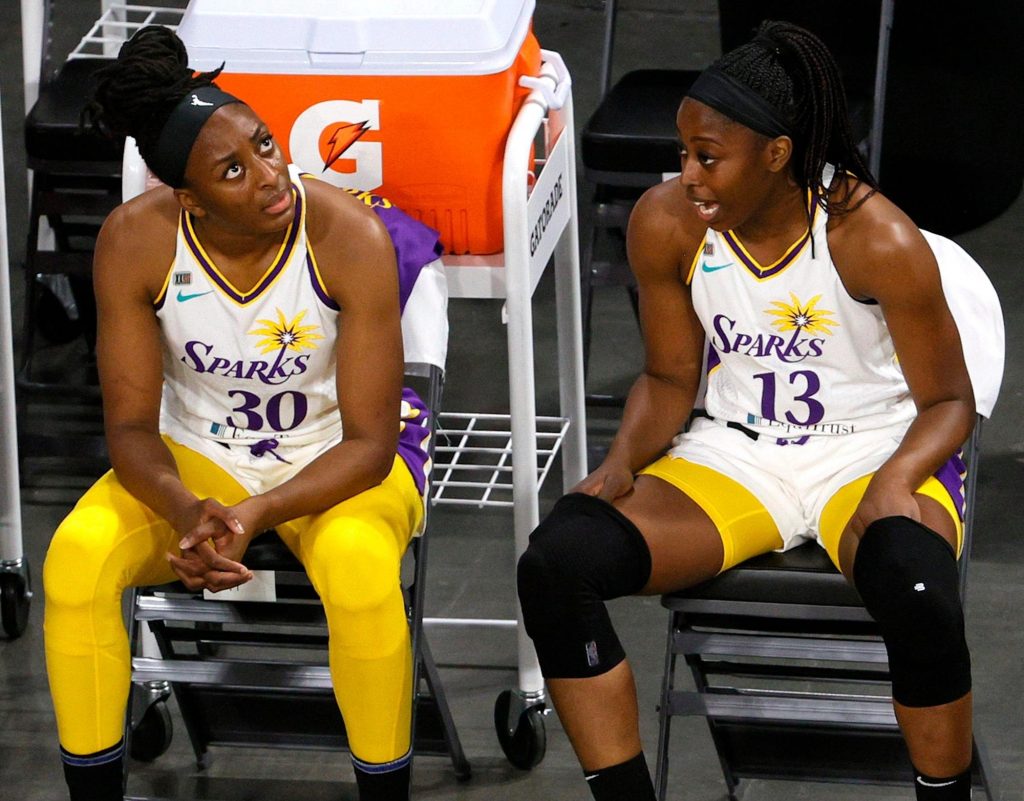
FIBA denied Nneka Ogwumike and Elizabeth Williams the opportunity to play for the D’Tigress arguing that the two had been substantially involved with the U.S national women’s basketball team for them to fall within the exception. Chiney Ogwumike was authorized to play as a naturalized Nigerian, something she contested because Erica Ogwumike, her sister has similar status and has never competed for the U.S at any level had been cleared to play as a normal Nigerian citizen. The trio appealed to the Court of Arbitration for Sport (CAS) asking the Court to allow them to compete for the D’Tigress on a provisional basis until after the games when CAS would be able to conduct a full hearing and determine the matter on its merits.
CAS upheld FIBA’s decision provisionally pending a full hearing.
Basketball nationality
CAS has overtime emphasized the view that sporting bodies have the authority to regulate sporting nationality[i]. The CAS has further advised that:
“A person may have two or more nationalities, but every athlete can only have one sporting nationality…when the athlete has made his choice as to his sporting nationality, the possible benefits of dual nationality will disappear…”[ii]
The CAS is not bound by the ‘doctrine of precedent’ or ‘Stare Decisis’, however, CAS awards (decisions) are of persuasive value in the wider Lex Sportiva-distinct universal principles of sports law developed especially by CAS and international sports federations. This topic divides opinion among many sport law scholars.
Be that as it may, there are two CAS awards that could particularly come in handy here:
Belize Basketball Federation V FIBA[iii]
In 2009, the Belize Basketball Federation (BBF) submitted a list of players that it intended to represent it in a basketball tournament. BBF, went ahead in pursuit of confirming the eligibility of the players to submit the official birth certificates of the players’ parents, copies of their passports, and certificates of affirmation of Belizean nationality.
True to form, FIBA questioned the nationality status of these players. FIBA argued that contrary to its Internal Regulations. Except for two players, FIBA established that the players had acquired their Belizean nationality after having attained the age of sixteen-they were in fact all above twenty years. The particular provision, ‘Article H.2.3.3’ of the FIBA Internal Regulations then which is pari materia with FIBA’s current ‘FIBA Eligibility and National Status of Players’ status Regulations was couched as follows:
“A National team participating in an international competition of FIBA may have only one player on its team who has acquired the legal nationality of that country by naturalization or by any other means after having reached the age of 16.”
Despite a spirited fight from the BFF where they enlisted the support from the Belizean Director of Immigration and the equivalent of the country’s top legal advisor who wrote letters to FIBA guiding on Belizean nationality. In essence, what the Belizean government officials advised was that one can acquire Belizean nationality is by descent if, at the time of their birth, one or both of their parents is a citizen of Belize. They also stated that the Certificate of Affirmation of citizenship which FIBA based on as proof that the players had not claimed their Belizean nationality by the age of sixteen was merely declaratory and not constitutive as far as Belizean nationality is concerned. BFF appealed to CAS.
The question before CAS for determination was whether the impugned Article H.2.3.3 of the FIBA Internal Regulations was applicable to the dispute.
The CAS reversed FIBA’s decision. It agreed with BFF’s argument that the Certificate of Affirmation of Belizean nationality was of a declaratory, not constitutive nature for purposes of Belizean nationality-that it was simply ‘procedural, administrative and not substantive’.
CAS held that the players had acquired the nationality of Belize by descent at birth and were all therefore of Belizean nationality and had attained that nationality before their sixteenth birthday. In holding that, Court held that the impugned Article H.2.3.3 did not apply to this case.
CAS further criticized FIBA for relying on Article H.2.3.3 and focusing exclusively on nationality criteria as opposed to for example the period of time played in national competitions. It suggested that if FIBA indeed wanted to keep out players with no previous track record in national competitions of a particular country from representing the same country’s national team, other than relying on the impugned rule as it was then, it had to formulate other rules.
The Court did take note of FIBA’s submission to the effect that it was concerned with the prevention of nationality laws as states sought to nationalize foreign players in the pursuit of sporting success. FIBA stated that it had a duty to preserve a level playing field in national team competitions and that Article H.2.3.3 was important to achieve that goal.
“…absent this provision, the undesirable phenomenon of professional players acquiring the nationality of another country merely to facilitate their participation in the national team of that country (and thus to increase their market value) would inevitably increase. As a result, national teams would increasingly be composed of players who had never participated in their national championships and there would be, not infrequently, a substantial discrepancy between the sporting quality of the national team and that of national competitions.”
In obiter dictum remark, the panel acknowledged the aforementioned view and added that there was indeed a need to preserve a link between national team competitions and national teams and that it was important to avoid a ‘situation in which national teams are substantially or wholly composed of sporting mercenaries acquiring belatedly nationalities of convenience’
Spanish Basketball Federation V FIBA[iv]
The Spain Basketball Federation contested FIBA’s decision that had allowed the legendary female basketballer, Natalia Zassoulskaia’s to play for Russia at the FIBA World Championships in 1998. Spain had argued that Natalia Zassoulskaia was already a citizen of Spain and had gone ahead to obtain the basketball nationality of Russia illegally.
The Spanish Basketball Federation lost because it was discovered that Natalia Zassoulskaia had held USSR/Russian nationality before she obtained Spanish nationality which she had not renounced and had competed for USSR/Russia in a FIBA tournament previously.
CAS further held that neither FIBA Eligibility department nor the Central Board are Courts of Law. These bodies are empowered to deal with certain matters arising during the course of the administration of sport. Any judicial body subsequently examining such matters should be reluctant to impose on the sports body a materially different standard of proof or evidence than that which the parties accepted through their membership of the sports body.
These cases, BFF V FIBA (supra) and the Spanish Basketball Federation V FIBA (supra) show that it is possible for a party to triumph over a sports body in conflict of laws dispute between domestic nationality and sporting/basketball nationality.
The Lex Sportiva has its claims to being an autonomous legal order by and large created by private global institutions that govern international sport and CAS. It is not governed by national legal systems. It is a ‘Sui generis’ set of legal norms not found elsewhere. Characteristically, there will be a contractual arrangement between domestic sports bodies and international sporting federations making the domestic sports `federations/ bodies submit to the authority of the international sporting federations. With this comes self-regulation by international sporting institutions or accepted external ones. Sports law in essence attempt to take away the power of states to regulate it.
Therefore national laws will often find themselves in conflict with sports law, it is not surprising that these duels between nationality/citizenship as defined by the laws of a particular State versus basketball/sports nationality set out by FIBA are commonplace in the basketball world.
This eligibility rule continues to deal its fair share of controversy which has not just started with the Ogwumike sisters-why was Chiney Ogwumike who had never played for the U.S before declared a naturalized citizen and yet her sister, Erica Ogwumike was given normal Nigerian status? As a Ugandan, I remember being blown away by John Baliwigaire, a Ugandan-American who had helped steer Uganda to its first Afro-basket competition in 2015 in Tunisia and along the way had put up some spell-binding performances notably his clutch shots against the Egyptians. He was unfortunately declared ineligible to play in that tournament and indeed the Ugandan Silverbacks missed him as they went ahead to finish 15th in that tournament. It is the same rule that has stood in the way of Jordan Clarkson of the Utah Jazz and current NBA sixth man of the year playing for the Philippines basketball team.
FIBA perhaps has legitimate concerns in preventing ‘the undesirable phenomenon of professional players acquiring the nationality of another country’ to up their value in the market, something which is indeed currently happening. It is also true that increasingly, there is a huge gulf in class in many African national teams and their domestic leagues.
However, this is not unique to basketball, the same is true for other sports especially football-a typical national team of an African country will comprise majorly professionals plying their trade in more lucrative leagues in Europe or elsewhere. Speaking of football, FIBA might have a lot to learn from the Federation of International Football Associations (FIFA)’s eligibility rules which are way more flexible.
In my opinion, undoubtedly, there is a need for reform of the FIBA eligibility rules and perhaps this Ogwumike sisters-Elizabeth Williams dispute with FIBA is a blessing in disguise and could go a long way in leading the way as far as reforming the said eligibility criteria. The odds seem stuck against two of them though; Nneka Ogwumike and Elizabeth Williams look like disgruntled ‘mercenaries’ who only remembered their Nigerian nationality belatedly after being dropped by the U.S female basketball team with which they had been involved for a while, and CAS’ characteristic deference to international sports bodies and its not being bound by the doctrine of precedent. Chiney Ogwumike should be able to be declared a Nigerian citizen and not naturalized for basketball purposes unless otherwise.
I await with bated breath for the full hearing of this matter and the subsequent decision and so should all African basketball federations.
Authored by Ivan A. Ojakol
[i] TAS 92/80 B. V Federation Internationale de Basketball (FIBA)
[ii] CAS 98/2 15 International Baseball Association
[iii] Arbitration CAS 2009/A/1988 Belize Basketball Federation v. Fédération Internationale de Basketball (FIBA), award of 20 April 2010
[iv] Arbitration CAS 98/209 Spanish Basketball Federation / FIBA, award of 6 January 1999

There was social media excitement all through the Ugandan basketball community when ESPN’s Adrian Wojnarowski tweeted the confirmation that Ishmail Wainright had agreed to a two year deal with Toronto Raptors. A swingman, Wainwright played for SIG Strasbourg in France’s LNB Pro A last season, averaging 11.8 points on .486 shooting, 4.6 boards and 2.5 assists a night in 35 games.

Wainwright, a two-sport athlete spent four season playing for the Bears, The Baylor’s basketball team and in his senior year in 2017, he played tight end for the football team and appeared in nine games, recording a pair of touchdowns. Undrafted, he signed as a free agent with the Buffalo Bills in 2018.
“No one is more deserving of an NBA deal. Grinded his way through Europe, has fully embraced playing for the Uganda National Team. All-World human being who will play in the NBA for years to come” – Tweeted ESPN’s Mike Schmitz.

The news of the Mailman’s deal is good motivation for the Silverbacks having an NBA player within their ranks as they head into Afrobasket 2021 which starts in shortly over two weeks in Kigali, Rwanda. Wainright is a pillar on the Silverbacks since his commitment to the team in 2020. His inspirational performances and leadership during the Afrobasket qualifiers including a monster 36 points and 13 rebounds notable performance against Cape Verde is the reason Uganda will be vying for a top spot in Kigali.
Basketball256 Editorial.

The Hoops dream all over Africa continues to flourish every day. Girls and boys all over Africa can continue to believe that if they put in time, sweat and passion in their craft, in due time it will bear fruit. This is because every other time, one of our very own makes it to the biggest stage. We are continually seeing stars born in Africa, raised in Africa or of African descent make it to the biggest stage. Giannis Antentokoumpo and Pascal Siakam are recently NBA World Champions and last night, 18 year old Congolese sensation Jonathan Kuminga started that journey to greatness by being picked by the Golden State Warriors in 2021 NBA Draft.
Kuminga began playing basketball in the Democratic Republic of the Congo at the age of two. In 2016, he moved to the United States to play high school basketball
As a high school sophomore, Kuminga emerged as one of the best recruits in the 2021 class, with most recruiting services ranking him number one in his class by the time he was a junior. On 15 July 2020, he reclassified to the 2020 class and announced that he would bypass college basketball to join the NBA G League Ignite over offers from Texas Tech, Auburn, Duke and Kentucky, among other college programs. At the end of his high school career, he was a consensus five-star recruit and the best small forward in the 2020 class. He was considered the third-best player in his class by Rivals.com and the fourth-best by 247Sports.com and ESPN after reclassifying
By drafting Kuminga at No. 7 and Moses Moody at No. 14, the Warriors focused on the future in the draft. But Kuminga is confident that being around Steph Curry and the Warriors’ championship core will allow him to elevate his game quickly and ahead of his perceived schedule.
“As long as I grow around Steph Curry, Klay [Thompson], Draymond Green, I feel like my game is going to go from the bottom to the top in a couple months,” Kuminga said after he was drafted
“As I get along and get used to them people, because they’re going to always push me, they’re always going to put me in the right situation, and I feel like no matter where we end up, we’re ready to compete and win a championship.”
Kuminga knows he was drafted into an ideal situation where the Warriors won’t ask too much of him right away. That being said, he wants to do whatever he can to help the Warriors hang another banner.
“Golden State is just a team — it’s a good team and just me being selected at Golden State, I feel like it’s the perfect fit for me and I’m really excited to be a part of it,” Kuminga said.
“I’m already prepared, because I’m not going to be, I’m not going to be the ‘man’ of the team, but at the end of the day I’m going to be one of the players on the team that’s going to help the team to win.”
The Warriors were surprised to see Kuminga, a player with incredible talent and upside, fall to them at No. 7. They snatched him up without hesitation believing in what he can become. Now, it’s time for the 18-year-old to get to work to reach his lofty potential.

-
 BLOG11 months ago
#LegendsUG: MONEY IN THE BANK WILBROD ‘OKS’ OKETCHO
-
 THOROUGH7 years ago
When Uganda dared Russia in a 1972 Basketball game & the humble roots of the game.
-
 BLOG6 years ago
Video: UCU Canons guard Bale Fayed talks to CeeBee about his NBL Rookie season and more.
-

 NBL2 years ago
Forgotten Cult: Erosion of the footprint of a budding basketball Culture.
-
AFRICA5 years ago
Uganda Silverbacks Ishmail Wainright agrees to a two year deal with NBA’s Toronto Raptors.
-

 DIV I3 years ago
LIVINGSTONE, FUBA DIVISION 1 CHAMPIONS 2023.
-

 AFRICA5 years ago
Senegal blow out Uganda in Afrobasket Group D Opener
-
 BLOG11 months ago
LEGENDSUG: THE BIG ARISTOTLE – THE OKS STORY PART TWO.