
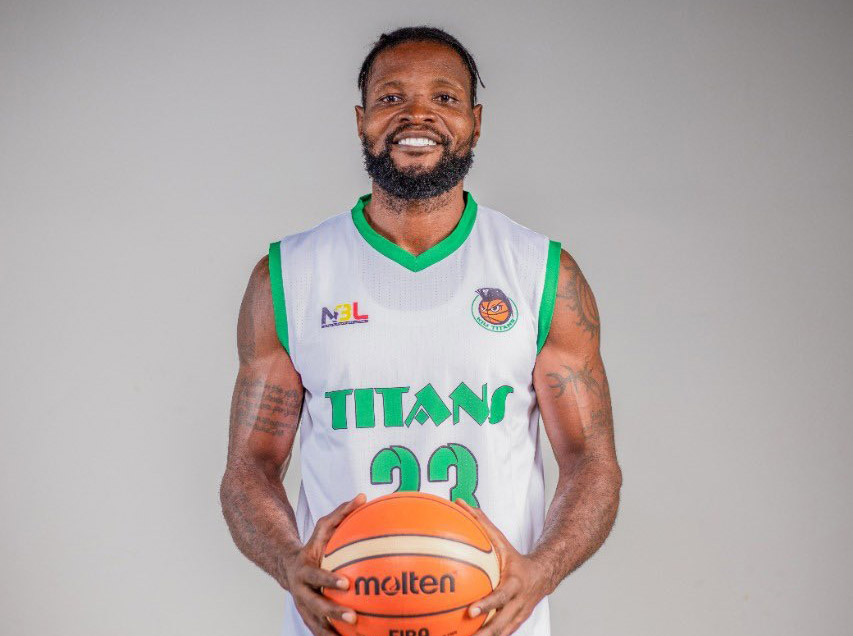
Who will bare the burden of unseating ‘the dictator’? I’m intrigued by the conspicuous semblance of the Ugandan NBL to the polity. Specifically, in the context of the attempts by many basketball organizations to challenge the decade-long dominance of the City Oilers. Many of us are catching wind of the clamors – about an impending power shift from Namuwongo to Kansanga. By the look of it, it will be the KIU Titans’ turn to challenge the City Oilers for the NBL title that they’ve won back to back, since 2013. For a decade, only the Covid-19 pandemic was able to put a halt to the Oilers’ championship reign. It was business as usual soon after the pandemic lockdowns were lifted with the Oilers lifting their eighth straight title after a finals game 7 with Namuwongo Blazers.
Without any shred of doubt, Namuwongo as a community and the Blazers as an organization has had one of the largest contributions to Ugandan basketball in the recent past. The Blazers can be credited with taking Ugandan basketball to the ‘hood’. For the first time, we could hold basketball conversations with random boda-boda riders, in a commuter taxi, or even with your local meat butcher. The Blazers’ community campaigns filled the Lugogo Arena – coupled with the NBS-Sport telecasting of the games. Many Blazers’ enthusiasts, most of them converts and others simply exhausted from the Oilers’ long reign met a melancholic end after that game 7.
Tony Drileba, before the Finals series with Blazers, almost with the certainty of a prophet said, “Let them beat us in a seven-game series, then we can talk”. Oh, how these words fanned the flame for Blazers’ fans. Drileba’s confidence and temerity were borderline arrogant, yet Oilers still won the NBL title for the eighth straight time – the opposition’s burden and the league’s shame! The Boston Celtics won the NBA championship 8 times in a row, from 1959 – 1966, arguably the longest winning streak in any professional sport – and you might say, the Ugandan NBL is not a professional league and you’re right! For contrast’s sake, it’s a difficult feat but not an impossible one, but shameful nonetheless for 21st-century sports.
Without divorcing myself from the establishment, the NBL (with specific reference to organizations challenging the Oilers for the title) has taken the shape of the polity, especially opposed to the establishment. It’s no wonder during the finals of 2022, phrases like “removing the dictator” were in trend. The Sports demagogues and sports populism! There’s no way this is best illustrated than in the recycling of players and a lack of commitment to building lasting systems that will eventually lead to success!
With full knowledge of the verticals sports organizations in Uganda operate in and I can vehemently affirm how incredibly difficult it is to run a sports team in Uganda, especially because as a matter of policy, the political elites have been keen on showing us or even telling us that ‘sports is trash’! Notwithstanding, Namuwongo had built something beautiful. They’d put together building blocks and don’t we all hate to see that fall apart! – coming off the news that key pieces in Saidi ‘Melo’ Amisi, Collin Kasujja, Peter Obleng, David Deng ‘Dikong’ Kongor, Kennedy Wachira, Dudus Monoja, and Ariel Okall have all taken their business elsewhere. Melo, Kasujja, Obleng, Joseph Chuma, and Innocent Ochera among others will be hoping that Blazers have passed on to them (KIU Titans) the mantle of challenging the City Oilers for the NBL title of 2023, lest the Blazers have an ace hidden down their sleeve.
Whereas we all ought to be excited about the prospects of what this new KIU outlook will bring to the Ugandan NBL, we should be equally despondent about what the Blazers might not bring or about what has been the fate of some of Uganda’s biggest basketball dynasties. Falcons – once Uganda’s most beloved, Power – once the most cherished have been decimal versions of their old selves in the recent past. Kyambogo Warriors with all its rich history is probably defunct. University teams in the league including the finest of them all, UCU – have not been able to dethrone the Oilers and you can argue because they run scholarship-based programs, they lack the consistency required to pull off the feat when students-athletes graduate out of the respective programs. Don’t we all crave the kind of competition when the defending champion is to play the newest entrant into the NBL but nobody has an idea who the heck is going to win?!
In 1967, Philadelphia beat the Celtics (who’d won it eight straight) in the Eastern Conference finals and they’d later go on to win the NBA title that year. They did it on account of good organization, they had been building, and they had Wilt Chamberlain! With the growth of the leagues around Eastern Africa (Burundi, Rwanda, South Sudan), it’s becoming incredibly difficult for Ugandan teams to retain players. It’s a notch harder when the players are in their free agency because they’ll settle for the organization with the competitive advantage (more often than not – higher wages). As a practitioner in the Ugandan sports marketing vertical, I know we still have a long way to go in terms of building sports entities – corporate collaborations to build the financial muscle needed to support these teams in light of the missing benevolence by the government.
To state plainly to this effect, if basketball teams in Uganda can not build their own Wilt Chamberlains, nobody is coming to save the day. Instead, while they squabble among themselves for whose turn it is to lead the fight to remove the dictator, the dictator who’s better strategic and looks attractive to young prospects because he has eyes on greater things like the Basketball Africa League will continue to thrive in the chaos and on their inadequacy.
Without the attempt to delve into the intricacies of how we get away from here – from the place where the Oilers have a decade-long monopoly on the national title, I simply ask; Has the opposition adopted a functional methodology on how to achieve this? And secondly, how sustainable is this approach? How tenable and sustainable is the idea of attempting to form expensive super teams just to unseat the Oilers?
As has been the norm for the last decade, a team will once again bare the pricy burden of attempting to unseat the dictator, whether the attempt shall be successful or not, time will tell.
By Cucu Brian | brian@basketball256.net | Twitter: @Cucubrian
The views expressed herein are only the views of the author. Brian is an ardent Ugandan basketball follower, a basketball junkie and the founder of Basketball256 LLC.


Must See


