
UGANDA
From Debutants to Finalists: Gazelles 3×3 triumph at the Glasgow Common Wealth Games 2026

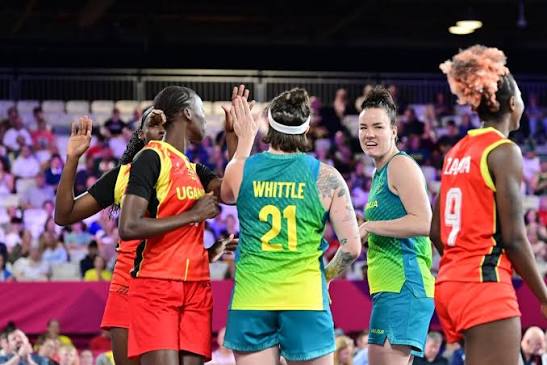
Sometimes silver represents a final that slipped away or a championship that was within reach but not captured. But there are other moments when silver represents something far greater — a breakthrough, a statement, and the beginning of a new chapter.
At the 2026 Commonwealth Games in Glasgow, the Uganda Gazelles created one of those moments.
Making their Commonwealth Games debut, Uganda’s Women’s 3×3 Basketball team walked onto the international stage as newcomers and left as history makers, winning a silver medal after reaching the gold-medal game.
The medal itself tells only part of the story. The bigger story is that four women carried the hopes of a growing basketball community and proved that Uganda’s women’s game belongs on the biggest stages.
But the challenge ahead was unique because this was not the traditional five-on-five basketball that most fans know. The Gazelles were competing in 3×3 basketball, a faster and more demanding version of the game where every player must contribute in every moment.
Played with three players on each team, one basket, and a smaller court, 3×3 basketball removes the safety net of traditional rotations. Players must score, defend, rebound, create, and make decisions under constant pressure. Games are decided by the first team to reach 21 points or the team leading when the 10-minute clock expires.
It is a format built around urgency, toughness, and instinct. There is nowhere to hide. Every possession matters.
Placed in Group B, Uganda announced itself with a dominant 21-7 victory over the Cayman Islands before producing an even bigger statement against regional rivals Kenya, defeating them 21-5.
Against Jamaica, Uganda found itself in a tightly contested battle but held its composure to win 18-17. They followed that performance with another convincing victory over Fiji, winning 21-8 and securing their place among the leading teams in the competition.
The final group game brought the toughest challenge yet.
Australia, one of the world’s established basketball nations, defeated Uganda 21-9. However, the loss did not diminish the significance of what the Gazelles had achieved. They had arrived at their first Commonwealth Games and had already shown that they could compete.
The knockout stage would now decide whether Uganda’s impressive start would become history.
Facing Tonga in the quarter-finals, the Gazelles embraced the pressure and delivered a 21-12 victory to advance.
Then came New Zealand.
The Kiwis entered the semi-final unbeaten and carried the confidence of a team that expected to compete for gold. Uganda, however, had developed something equally powerful — belief.
Before the game, Jamila Nansikombi understood the importance of the moment.
“It’s absolutely huge,” she said. “It’s the semi-finals, but we still have to keep fighting. The fight is not over, and I know they’re going to come out fighting as well, so we just have to keep the same energy up until the tournament is done.”
Those words became the identity of the Gazelles.
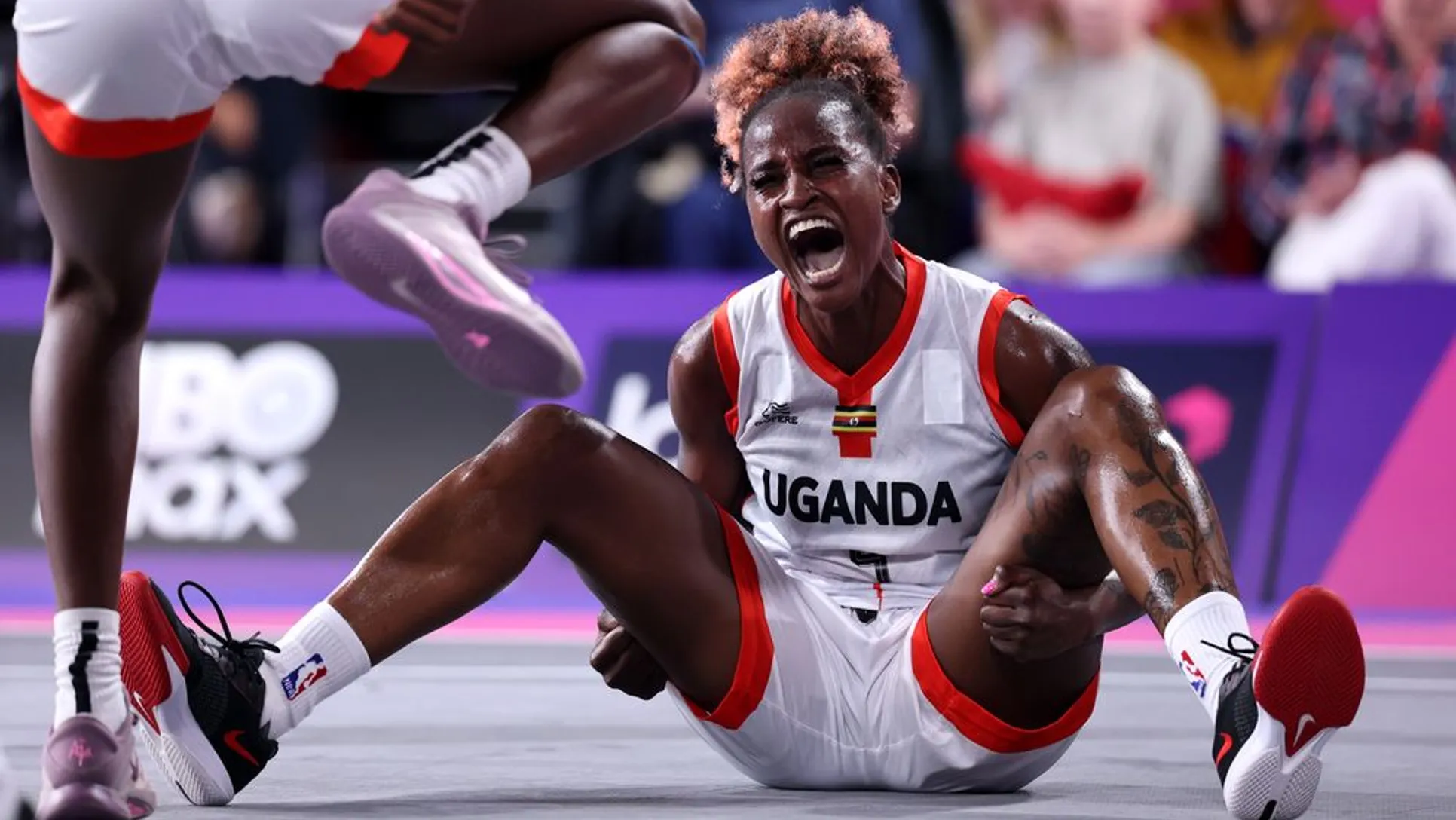
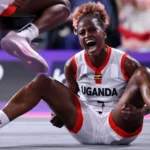
Jamila Zama Nansikombi in the semifinal game vs New Zealand.
Uganda defeated New Zealand 21-9 to qualify for the gold-medal game.
For a team making its 3×3 Basketball Commonwealth Games debut, the achievement was extraordinary.
When the final point dropped, emotions poured out. The celebrations, the embraces, and the tears told a story beyond basketball. This was the moment the players realised they had achieved something that would live forever in Ugandan sporting history.
They had defeated an unbeaten opponent. They had reached a Commonwealth Games final.
At the centre of that historic run were four players who will forever be connected to this moment.
Captain Jane Asinde led the Gazelles through the pressure of their first Commonwealth Games appearance, while Melissa Akullu brought experience and athleticism to the campaign. Jamila Nansikombi became one of the voices of the tournament, perfectly capturing the fighting spirit of the team, while Perus Nyamwenge completed the quartet that delivered Uganda’s first Commonwealth Games 3×3 basketball medal.

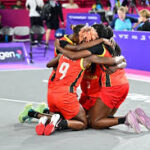

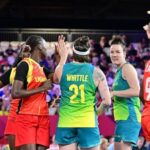
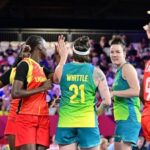
Standing between Uganda and gold was Australia, the same opponent that had defeated the Gazelles in the group stage. In the final, the Australians once again showed their quality, winning 21-11 to claim the championship.
But this was never a story about losing gold. This was a story about winning belief.
The Gazelles proved that women’s basketball in Uganda can compete against the best. And perhaps their greatest achievement will not be measured by the medal around their necks. It will be measured by the number of young girls who now look at a basketball court and see possibility. Because every sporting generation needs athletes who expand the boundaries of what people believe is achievable.
Jane Asinde, Melissa Akullu, Jamila Nansikombi, and Perus Nyamwenge have done exactly that.
-Basketball256 Editorial












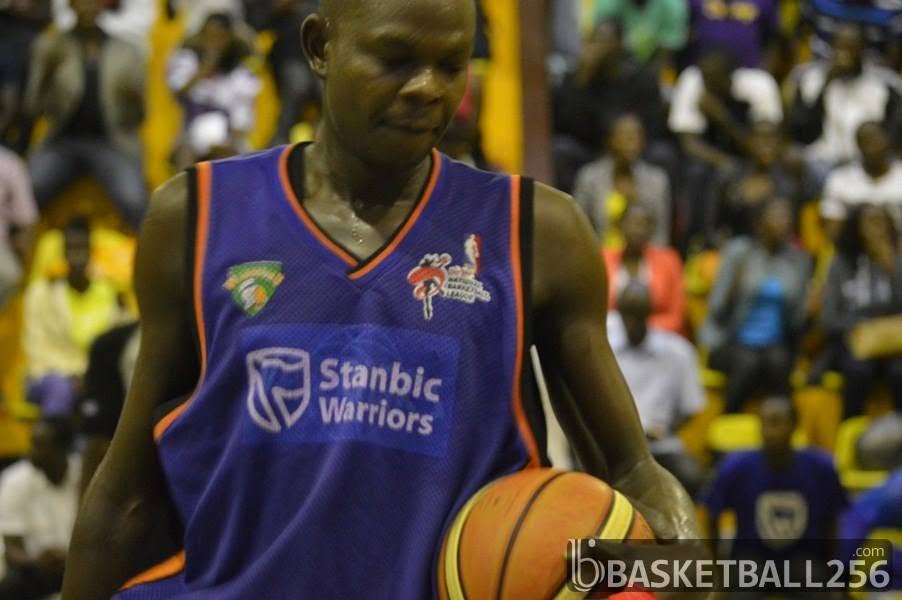
Ronnie Kasewu had something almost deceptive about him. On a basketball court, he carried the nickname of an assassin, but off it he was hardly the sort of person who seemed interested in announcing himself. He was calm, understated and, to those who knew him, almost completely uninterested in the theatre that can sometimes surround a basketball star. Ronnie did not need the noise. He did not need to be the loudest man in the room, the flashiest player on the floor or the one demanding that everybody notice him. He had the basketball. That was enough. And perhaps that is why the news that Ronnie Kasewu passed away on Friday evening feels particularly difficult for a generation of Ugandan basketball that watched him play. There are players you remember because they made a lot of noise, players you remember because they were spectacular, and then there are players whose presence somehow became woven into the fabric of the game itself. Ronnie was one of those. For Kyambogo Warriors, he was more than a player. For Ugandan basketball, he was one of the craftsmen who helped build an era.
Long before Ugandan basketball became dominated by the modern language of dynasties, continental ambitions and professionalisation, there was a different league being built at the YMCA, Lugogo and university courts, with players whose reputations travelled mostly by word of mouth and whose careers were measured as much by loyalty as they were by trophies. Ronnie Kasewu belonged to that generation. He started with Kyambogo Warriors as a teenager and, remarkably, never found a reason to leave. By 2017, when he had spent nearly two decades with the club, Kasewu could look back on a relationship that had begun when he was only 15 and still in Senior Two at Kyambogo College. “I’ve never had any reason to leave,” he said then. Warriors, as far as Ronnie was concerned, was home.
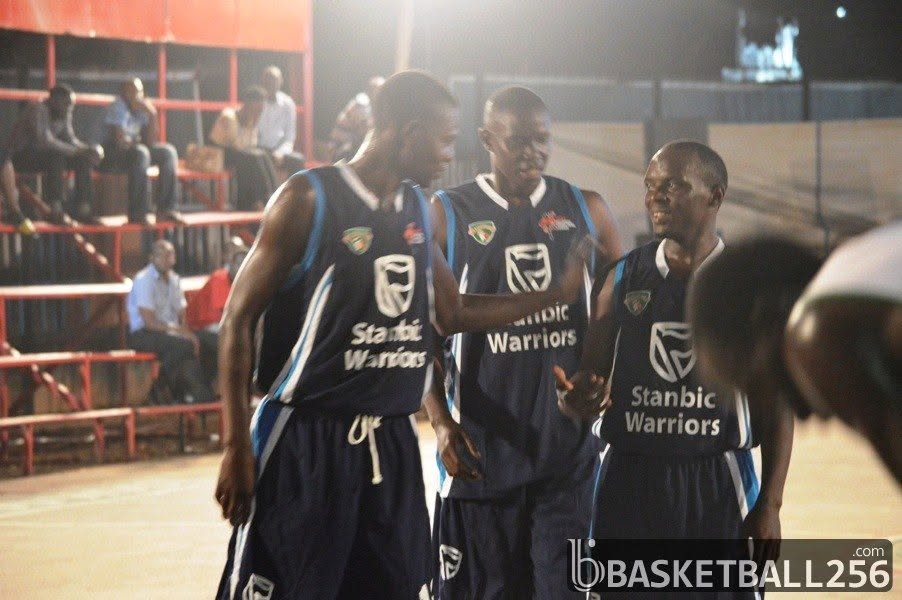
Ronnie Kasewu with Warriors teammates Ivan Enabu and Ssali in 2014
There is something almost old-fashioned about that kind of loyalty now. Professional sport has always involved movement, but in Ugandan basketball the bond between player and club could sometimes become something much more personal. Ronnie was not simply somebody who wore the Warriors jersey; he became part of what the jersey meant. He lived through the club’s difficult seasons, its near misses, its heartbreaks and, eventually, its triumphs. He was there when Warriors went from being a team with ambition to becoming national champions. He was there when they lost. He was there when they came back. Kasewu was one of the survivors of the Warriors team that had reached the 2007 final and surrendered a 2-0 series lead to Falcons, a painful defeat that stayed with the club for years. By 2009, when Warriors returned to the final under Coach Gad Eteu, Kasewu was no longer simply one of the players. He was one of the people who carried the memory of everything that had happened before.
And then there was the left hand.
Ugandan basketball came to know Ronnie Kasewu as the Left-Hand Assassin, a nickname that sounded far more menacing than the quiet man who carried it. The remarkable part was that Ronnie was actually right-handed. His left-handedness was not some childhood basketball trick designed to confuse defenders. It was born from circumstance. In 1998, while playing handball, he injured his right hand. During his recovery he continued playing basketball with his left, and then another injury to the right wrist forced him to essentially start again. The left hand became stronger and, eventually, became the hand with which Ronnie dribbled, passed and shot. He continued to write with his right hand, but on the basketball court, the left became his signature.
It is one of those stories that sounds almost too perfect to be true, because sport loves to turn adversity into mythology. But there was no mythology necessary with Ronnie. He simply adapted. What began as a limitation became an advantage. Defenders knew the left hand was coming, but knowing it and stopping it were two very different things. Kasewu was a player who could do a bit of everything, a facilitator and floor manager with the ability to shoot from anywhere on the floor. The left hand was the most obvious part of his game, but it was never the whole game. Ronnie understood basketball. He could organise it, read it, slow it down or speed it up. He was the kind of player whose value was not always captured by the box score alone because some of his best work happened before the shot ever went up. You could not have identified a more quintessential player who was as defensive as was offensive.
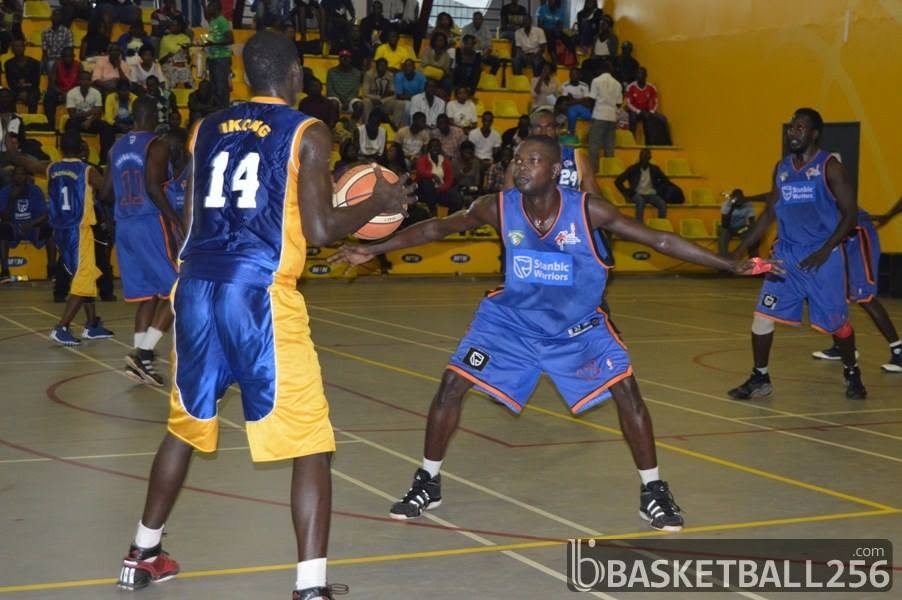
By 2009, that understanding had become impossible to ignore. Kyambogo Warriors won the national championship and Ronnie Kasewu was named the season’s Most Valuable Player. It was an important championship for Warriors, but also an important moment in the story of the Ugandan league itself. Kasewu had become one of its defining players. His name was no longer merely attached to Kyambogo(Kasewu was born, raised in Kyambogo, even went to Kyambogo College); it was attached to excellence. Yet even then, the personality remained the same. There was no sense that the MVP award had suddenly transformed him into somebody who needed to be bigger than the game. Ronnie was still Ronnie. The basketball remained the thing.
Warriors would have to wait three more years for their next championship, and the road to the 2012 title carried its own collection of scars. They had lost the previous two finals to DMark Power and had already experienced the particular cruelty of postseason basketball. But when they finally reached the 2012 final against Falcons, Kasewu was one of the men carrying all that history. Warriors won the series 4-2, and in the deciding Game Six at Lugogo, Kasewu delivered the kind of performance that turns a good career into folklore: 25 points, six rebounds and five assists, including 15 points in the fourth quarter, to lead Warriors to an 88-81 victory and their second national championship.
There are performances that happen in games and performances that become part of a club’s mythology. That was the latter. Warriors had been through too much to lose another final. They had seen leads disappear before. They knew what Game Seven could mean. This time, there would be no Game Seven. Kasewu, carrying four fouls, kept shooting. He made three three-pointers in the fourth quarter. With the championship within reach, the man who had spent years quietly going about his business suddenly became the most important player in the building. The Left-Hand Assassin had another target, and this time it was history itself. To highlight how important this performance was, we are talking about a team that had Norman Blick, Henry Malinga and Ivan Enabu but Kasewu as the Man of the occasion.
His contribution to Ugandan basketball extended beyond Warriors. Ronnie made his Uganda national team debut in 2005 and became part of the Silverbacks story, representing the country during an important period in the growth of the men’s national programme. But perhaps his greatest national contribution was not a particular game or tournament. It was simply that he was there. He belonged to the generation of players who gave Ugandan basketball its accumulated memory, the players who played before the current generation inherited the platforms that now exist. They built reputations in YMCA, Wandegeya, Lugogo and the other courts where Ugandan basketball found its identity long before the game acquired some of the polish it has today.
And those who watched Ronnie will remember things that never appeared in the statistics.
They will remember how calm he was. They will remember that he was not particularly flashy, that he did not seem consumed by the need to perform a personality alongside his basketball. And they will remember a peculiar little ritual that became almost inseparable from the Ronnie Kasewu image. Before games and after games, he would often find a quiet place away from the commotion and have a cigarette. It was not the basketball, and it certainly was not what made him great, but over time the ritual became part of the visual memory of him, almost like a recurring prop in the story of an actor who had played the same character for so many years that the audience could recognise him from the smallest detail. While the crowd was gathering and the teams were preparing, Ronnie could often be found away from the noise, in his own little space, before returning to the business that mattered to him.
The cigarette was not the story. Ronnie was. And perhaps that distinction matters because we are often tempted, when somebody dies, to reduce them to the most spectacular things they accomplished. We list the championships, the awards, the national-team appearances and the numbers, and then we say goodbye. But people are rarely remembered that way by those who actually knew them. They are remembered in fragments. A particular laugh. A particular phrase. The way they walked into practice. The way they handled pressure. The way they looked after younger players. The way they stood at the side of the court. The way they held a basketball. For Ronnie, perhaps it will be the left hand. Perhaps it will be the Warriors jersey. Perhaps it will be that quiet figure stepping away from the noise before or after a game. Perhaps it will simply be the knowledge that, for almost two decades, if you were looking for Ronnie Kasewu in Ugandan basketball, you knew exactly where he would be.
With the Warriors.
That may ultimately be the most fitting tribute to him. In an era when careers can be defined by how many teams a player has represented, Ronnie’s career tells a different story. He became great without constantly changing his surroundings. He became an MVP without becoming a celebrity. He won championships without losing the understated personality that had always defined him. And he became known across the country for a left hand that he never originally intended to make his basketball identity. There is poetry in that. Sometimes greatness is not about having everything go according to plan. Sometimes it is about taking what the game gives you, adapting, and becoming so good at the adaptation that generations forget there was ever another way.
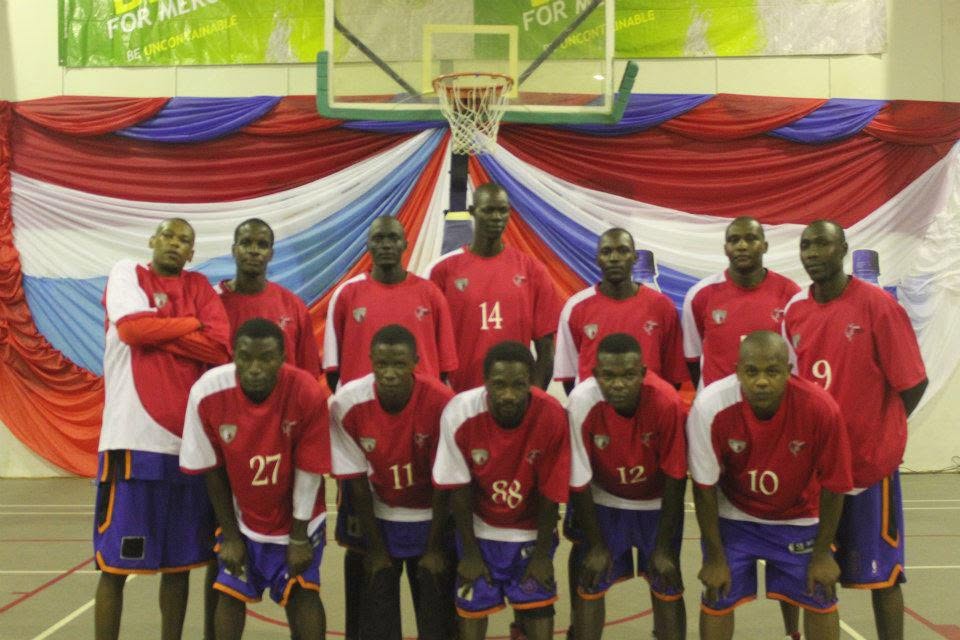
Kasewu Ronnie #12 and the Kyambogo Warriors
There is, however, another loss buried inside the loss of Ronnie Kasewu, and perhaps it is one we ought to confront while we still have the memory to do so. Kyambogo Warriors, the club that gave Ronnie his basketball home and to which he gave almost the entirety of his basketball life, is no more. The two-time champion, the 2009 MVP, the Silverback and the Left-Hand Assassin belonged to an organisation that has itself disappeared from the landscape of Ugandan basketball. That is an uncomfortable detail in the story of his legacy because it means that when we remember Ronnie, we are also remembering something that no longer has a place in the present tense. He was not simply a great player who happened to play for Warriors; he was a Warrior in the fullest sense of the word. He started there as a teenager, stayed through the highs and lows, won there, lost there, and became part of the culture of the club. Yet today, the player remains in our memories while the institution he represented has become part of the past. Perhaps that is what makes the story of Ronnie Kasewu and Kyambogo Warriors belong to the larger story of Uganda’s Forgotten Cult. We have a habit of remembering the trophies but forgetting the houses in which they were won, remembering the stars but forgetting the clubs that made them, remembering the photographs but allowing the worlds inside those photographs to disappear. If Warriors can vanish and we simply move on, what else are we allowing to disappear with them?
Ronnie Kasewu leaves behind two national championships, an MVP award, a Silverbacks legacy and a place in the history of Ugandan basketball. But perhaps his most important legacy is less tangible. It is in the players who watched him. It is in the teammates who shared the court with him. It is in the opponents who spent years trying to stop that left hand. It is in the young basketball players who may never have seen him play but will one day hear the name Ronnie Kasewu and ask why people who watched him speak about him with such affection.
That is the responsibility of basketball history. Championships eventually become lines in an archive. MVP awards become names on lists. Players eventually leave the court. But the stories are supposed to remain.
Ronnie Kasewu was a Warrior. He was the Left-Hand Assassin. He was an MVP, a champion and a Silverback. But before all those things, he was simply a basketball player who seemed to understand that he did not need to make himself bigger than the game. He let the game speak for him.
And it spoke loudly.
Rest in peace, Ronnie Kasewu.
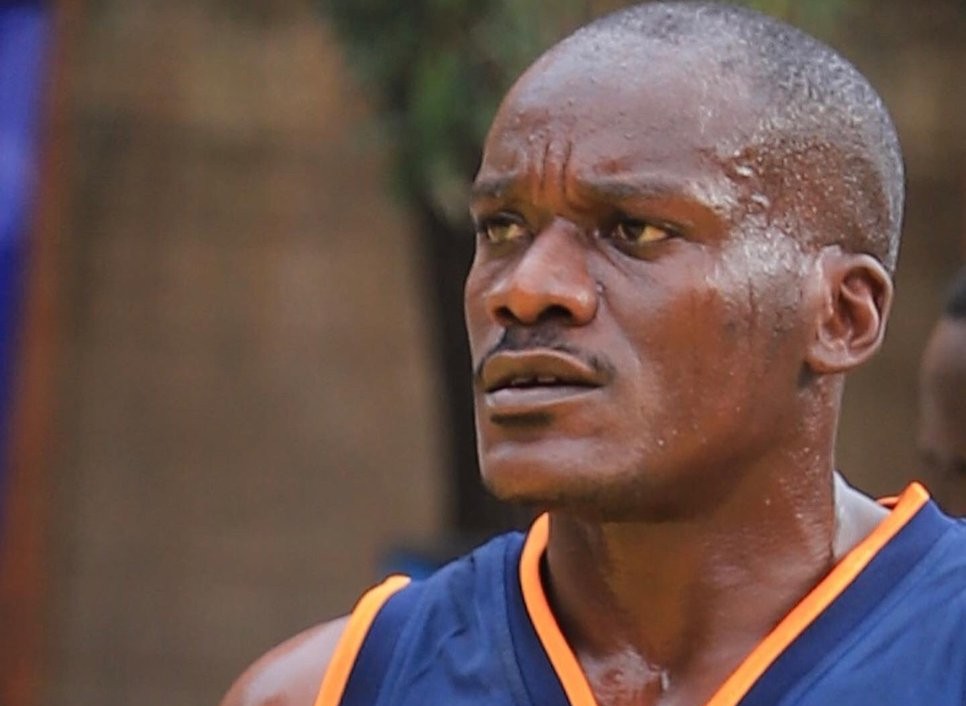
There was something strangely fitting about the way Power Basketball Club left the National Basketball League in 2024. The five-time champions did not go down in some dramatic final-day collapse against one of the giants of Ugandan basketball. They went down at the hands of Livingstone, a club fighting for its own survival, in a 61–54 game at YMCA. Livingstone won and stayed in the NBL; Power lost and, after 29 years in the top flight, were relegated to Division One. For Power, it was the kind of defeat that seemed to demand an immediate response. Surely a club with five championships, decades of history and a name that had been part of Ugandan basketball for so long would spend a season in Division One, gather itself, and come back. Livingstone had merely survived the day while Power had suffered the misfortune of having a bad season at the wrong time. That was how the story could have been told.
Two years later, however, the story looks very different. Power have finished at the bottom of the Division One table and will now drop another level into Division Two. The fall that seemed almost inconceivable in 2024 has therefore acquired a second act, and perhaps the most uncomfortable thing about it is that it makes the first relegation look less like an aberration and more like a symptom. Power did not spend a season outside the NBL before returning to normal. They spent a season outside the NBL and then fell again. For a club that once defined what winning looked like in Ugandan basketball, the question is no longer simply how Power lost its place in the top flight. The more interesting question is what happened to the institution between the last championship and this latest relegation.
I wrote about some of this in November 2024 in an article titled Forgotten Cult. The immediate occasion was Power’s relegation, but the argument was never really about one season or one roster. It was about the erosion of the things that make a basketball club more than a collection of players assembled for a particular competition. Power had accumulated something over the years that could not be measured in championships alone: names that meant something to supporters, players who became part of the identity of the club, traditions that connected one generation to another and a reputation that made the Power jersey carry a certain expectation before a game had even started. The concern then was that while Power still possessed the history, it was becoming increasingly difficult to see how that history was being transmitted to the next generation.
The events of the past two seasons have made that question considerably harder to dismiss.
Power’s attempt to climb back from Division One was, in many ways, built around one of the last living connections to the club’s great era. Isaac Afidra, better known as Magalo, had been playing basketball for more than two decades and had become almost synonymous with Power. By the time the club entered its lower-division campaign, he was well into his forties, yet he remained the go-to player and one of the central figures around whom Power’s attempt at recovery was built. There is something admirable about that, and there is also something deeply revealing about it. A club that once produced generations of players capable of carrying its identity into the future was now asking one of its oldest surviving representatives to help carry that future himself.
Afidra deserves considerably more credit than the eventual league position might suggest. His longevity is remarkable, but longevity alone does not explain why he remained relevant. He could still play. He could still influence games. He could still produce the sort of moments that had made him valuable to Power for years. In 2022, for instance, he had a 16-point, 14-rebound, six-assist performance against Ndejje and made the decisive layup in a 69–67 victory. Even in the lower divisions, he continued to have the experience and skill to make important contributions, including a late game-winning basket against Nkumba Marines in 2025. This was not a case of Power carrying a retired player around for sentimental reasons. Magalo was still capable of helping them win basketball games.
The problem was that Power needed him to help them win too many basketball games.
There is a significant difference between having a veteran as part of a young team and having a veteran become the most dependable expression of what the team is supposed to be. At 43, Afidra was competing in a game increasingly shaped by young legs and athleticism. The lower divisions are not a retirement league, and Division One has plenty of players capable of playing at a pace that makes experience alone an insufficient advantage. A veteran can compensate for declining athleticism with positioning, anticipation, shooting, strength and an understanding of the game, but there comes a point where the physical demands of basketball cannot be negotiated with experience. The irony is that the qualities that made Afidra so valuable to Power—his experience, his familiarity with the club and his understanding of winning—were precisely the qualities that should have made him a mentor to the next generation rather than the primary vehicle through which Power attempted to return to the NBL.
That is why I find Magalo’s role in this story so fascinating. If you wanted to demonstrate the difference between remembering a culture and reproducing a culture, you could hardly construct a better example. Afidra had lived Power’s history. He was not somebody who had watched old championship footage and been told what the club used to mean. He had been part of it. He represented a continuity that had become increasingly difficult to find elsewhere. But an institution cannot depend indefinitely on one person to be the bridge between its past and its future. At some point the bridge has to lead somewhere.
Perhaps that is what Power’s two relegations are telling us.
The club did not lack a connection to its past. It may have lacked the mechanism for turning that past into its future.
That distinction is important because it would be too easy, and frankly unfair, to make Afidra the villain of this story. If anything, his continued presence is one of the more admirable aspects of it. A 43-year-old still turning out for a club he has represented for most of his adult life is not evidence of the problem; it is evidence of the loyalty that still exists around Power. If Magalo was still doing the most he could at that age, perhaps the question should not be why he could not carry the club back to the NBL. The question should be why a club of Power’s historical stature needed him to carry so much of it in the first place.
That brings us back to the original Forgotten Cult argument. Power’s five championships were not created by nostalgia. The trophies were the visible outcome of a functioning basketball culture: players came through, established themselves, became leaders and eventually became part of the history that younger players inherited. The point of remembering Wilbrod Oketcho, Ken Balyejjusa, Marvin Banks, Julius Wapera, David Kiberu, Peter Mubanda and the other figures associated with Power’s great years was never that young players should spend their time worshipping old players. It was that a club should know where it came from well enough to understand what it needs to reproduce.
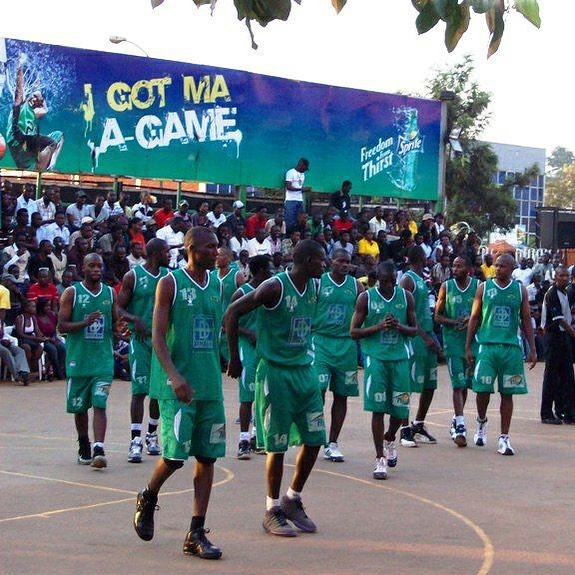
That is where Power’s situation becomes particularly difficult. There is no shortage of history to draw from. The club’s championship years are well documented, its former players are still around, and Afidra himself is a living archive. Yet history is only useful to an institution when it is passed on. A retired number, an old photograph or a championship banner can preserve a memory, but none of those things can teach a young player how to become the next leader. That requires people, structures and a deliberate effort to make the club’s identity part of the development of its players.
And then, almost as if somebody had decided that the Power story needed one final twist, there is Livingstone.
The irony is difficult to ignore. In June 2024, Livingstone beat Power 61–54 in the game that sealed Power’s relegation. Livingstone survived; Power went down. It was a neat piece of sporting symbolism: the old heavyweight was pushed aside by a club fighting to establish its own place in the top flight. Two years later, the final Division One table has put the two names together again, only this time neither club is celebrating. Power finished 12th and Livingstone 11th, and both are heading to Division Two.
In 2024, Livingstone effectively helped send Power down.
In 2026, Livingstone has joined them.
There is an almost comic cruelty to that symmetry, although neither club is likely to find it particularly funny. It also makes the broader point that relegation battles are rarely as simple as one club being “too big to fail” and another being the deserving survivor. Livingstone’s victory in 2024 was entirely legitimate and their subsequent relegation does not diminish it. They survived that season because they were better when it mattered. But surviving one crisis does not necessarily mean an institution has solved the problems that produced the crisis. Two years later, the same league has swallowed both clubs.
For Power, however, the latest relegation feels different because the club is no longer dealing with the shock of falling from the NBL. That shock has already passed. The club has had time to respond. It has had time to adjust to Division One, to develop a route back, to identify younger players and to decide what the next version of Power should look like. Instead, the result is another relegation, and that makes it much harder to argue that the problem was simply a bad NBL season.
There is also a generational question hiding in all of this. Ugandan basketball has changed considerably since Power’s championship era. The league is deeper, the style is faster and the athletic demands are different. Clubs that want to remain competitive cannot simply preserve their old identity and expect the modern game to accommodate it. The challenge is to take whatever was valuable about the old institution and build it into something capable of competing in the present.
Power cannot go back to 2010 -2011 back to back NBL Championship spat.
Nobody can.
The players are older, the game has moved on and the basketball ecosystem around the club is different. Trying to recreate the past would probably be another form of refusing to confront the present. What Power can do, however, is ask why those championship teams worked, what they gave the club beyond trophies, how they developed players, how they connected with supporters and how they created an identity strong enough that people still talk about them more than a decade later.
That is where Afidra becomes important again. Magalo should not be the symbol of Power’s inability to move forward. He should be evidence of what a properly functioning institution can preserve. Imagine what it would mean for a young Power player to learn directly from a man who has spent 26 seasons around the game and lived through the club’s most important years. Imagine if the knowledge accumulated over that career were deliberately transferred to the next generation, rather than being required primarily on the court. The goal should not be to find another Afidra. It should be to create an environment in which Afidra is no longer needed to be the answer because he has helped produce the answers.
That, ultimately, is what makes Power’s fall worth discussing beyond the club itself.
Every generation of Ugandan basketball has its institutions. Some survive because they adapt, some disappear because they don’t, and some linger long enough for us to become nostalgic about what they once were. The danger is that we mistake the continuation of a club’s name for the continuation of the institution itself. A name can survive almost indefinitely. A culture requires constant renewal.
Power now has a long road ahead of it. Division Two is not the end of the club, and there is no reason to believe that a five-time champion cannot eventually find its way back to the NBL. But the comeback cannot simply be measured by promotion. If Power wins its way back to the top division with the same structural problems, the achievement will only postpone this conversation.
The more interesting comeback would be one in which a young player becomes the new Magalo, not because he is 43 and somehow still doing the work of three generations, but because the institution has spent years preparing him to take responsibility. It would be a Power team in which the history is not something mentioned when reminiscing about the old days but something young players understand as part of their responsibility to the people who will wear the jersey after them.
Two years ago, when Power went down to Division One, I wondered whether we were witnessing the erosion of something much bigger than a basketball team. I hoped, perhaps naively, that relegation would be the shock that forced the club to confront it. Instead, Power have now gone one level lower, while Livingstone—the club that delivered the final blow in 2024—has somehow ended up beside them.
There is an irony there that basketball writers could hardly have scripted better.
But there is also a warning.
Power’s five championships are not going to disappear because the club is playing in Division Two. The names of the players who built those teams will remain part of Ugandan basketball history. Magalo’s career will remain extraordinary whether Power are in the NBL or Division Two. None of that can be relegated.
What can disappear, however, is the connection between those things and whatever comes next.
And perhaps that is the real cost of Power’s fall.
Not that one of Uganda’s great basketball clubs is going to play in Division Two.
But that a generation of players could eventually grow up knowing Power as a name, without ever understanding Power as a culture.
That is the part that should worry us.
Because when I wrote Forgotten Cult in 2024, the question was whether Power had forgotten what made it special. After another relegation, perhaps the question has become even simpler: Who is going to remember it for them?
By Cucu Brian
The views expressed herein are only the views of the author. Brian is an ardent Ugandan basketball follower, a basketball junkie and the founder of Basketball256 LLC.
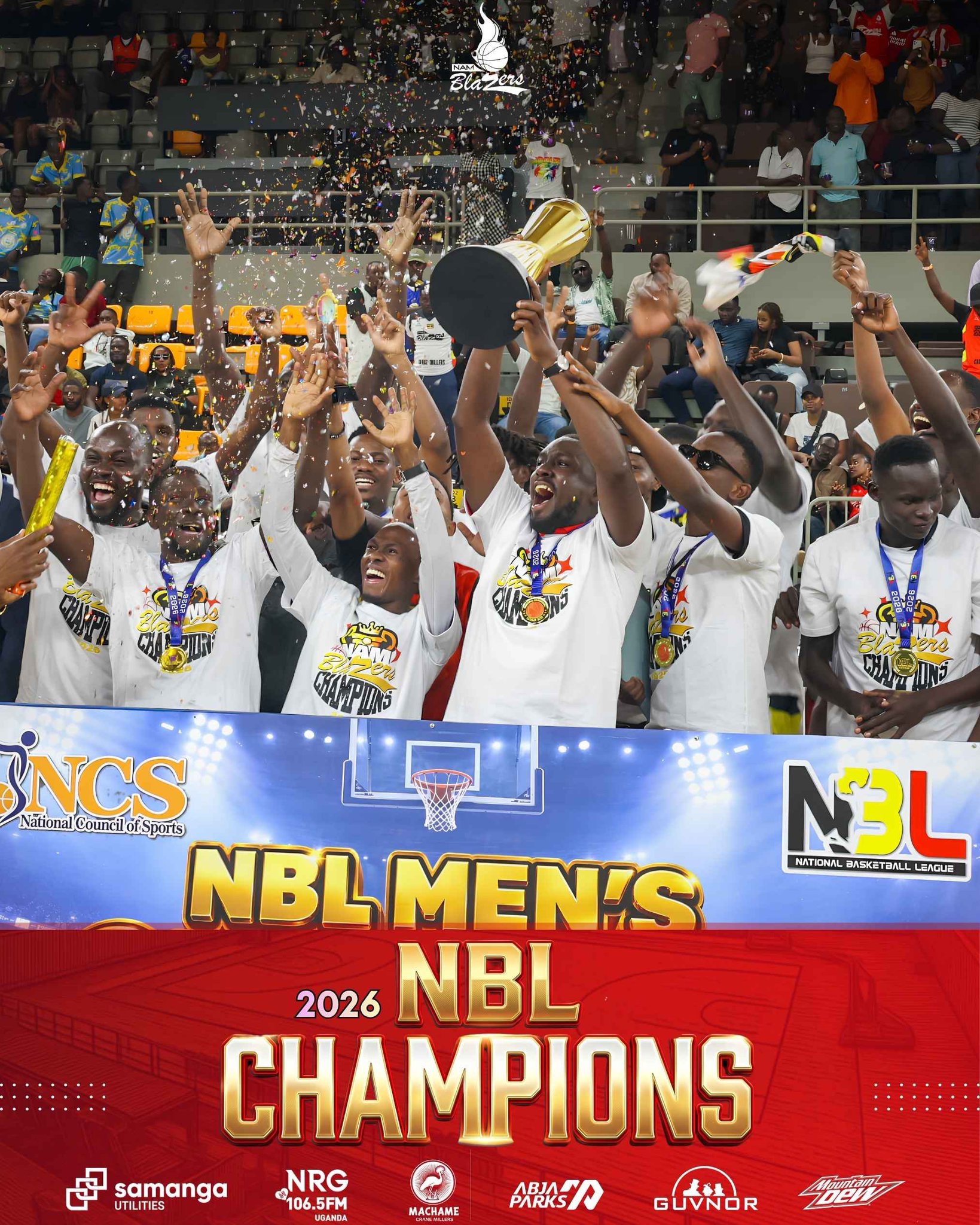
Namuwongo Blazers 81–74 City Oilers (OT)
Hoima Indoor Arena | August 22, 2026
There was nowhere left to hide.
After six games, 240 minutes of basketball, two comebacks, blown leads, overtime, tactical adjustments and enough tension to fill an entire season, the 2026 National Basketball League Finals came down to one final game. And fittingly, Game 7 refused to be settled in regulation.
Namuwongo Blazers are back-to-back champions of Uganda, surviving City Oilers 81–74 in overtime at Hoima Indoor Arena to retain the NBL crown and close one of the most compelling championship series the league has produced in recent years.
For five minutes, the game belonged to overtime. For 40 minutes before that, it belonged to nobody.
And perhaps that was the only appropriate way for this series to end.
Hoima, the final stop
The decision to take Game 7 to Hoima gave the championship a different atmosphere. Away from the familiar surroundings of Kampala, the Oil City became the centre of Ugandan basketball for one afternoon.
Many fans made the long, tedious journey from Kampala, following their teams all the way to the end of a series that had already demanded so much from everyone involved. Inside the arena, that journey felt worthwhile. There was a sense that this was not simply another NBL fixture, but an occasion.
A championship game deserved a championship setting.
And the basketball delivered.
Oilers strike first
City Oilers looked ready for the occasion, opening the game with the urgency of a team that knew the margin for error had disappeared. They built an early advantage and finished the opening quarter ahead 16–12, forcing Namuwongo to chase.
The Blazers, however, had spent much of this series demonstrating an ability to absorb pressure without allowing it to define them.
At the centre of their response was Nyembo Fataki.
He was everywhere. He scored inside, attacked the basket, rebounded, defended and created opportunities for teammates. The Oilers could slow him down for stretches, but they could not make him disappear.
Namuwongo gradually worked their way back into the game, and by halftime the contest had become the kind of possession-by-possession struggle that Game 7s are supposed to be.
Oilers led 34–32.
Two points separated the teams.
There was still nothing between them.
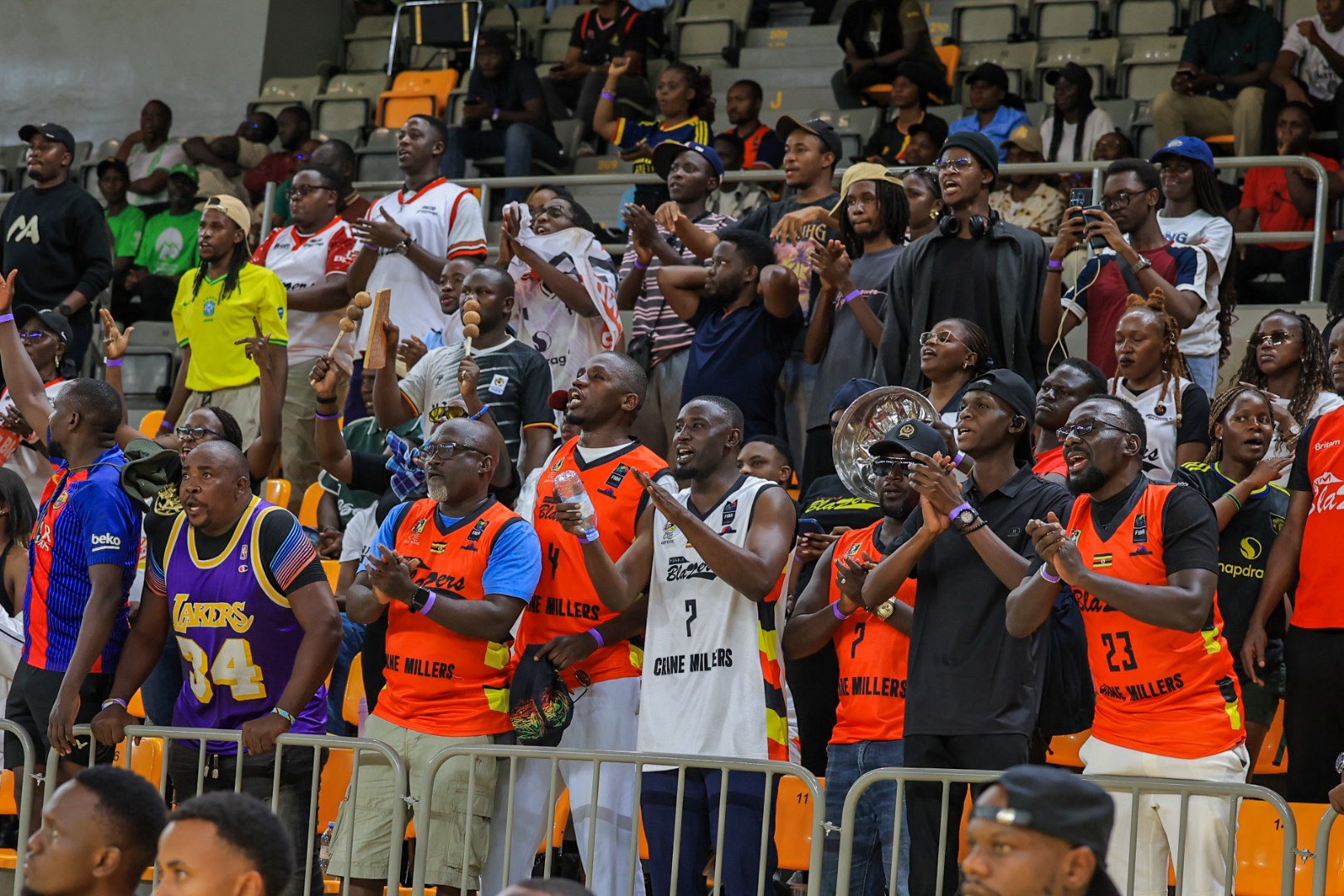
Namuwongo Blazers fans that traveled to Hoima for Game 7
Nyembo and Rembert trade blows
The individual duel was becoming impossible to ignore.
Nyembo eventually finished with 35 points on 13-of-21 shooting, adding eight rebounds, six assists, four steals and two blocks. It was an exceptional championship performance and arguably the defining individual performance of the entire series.
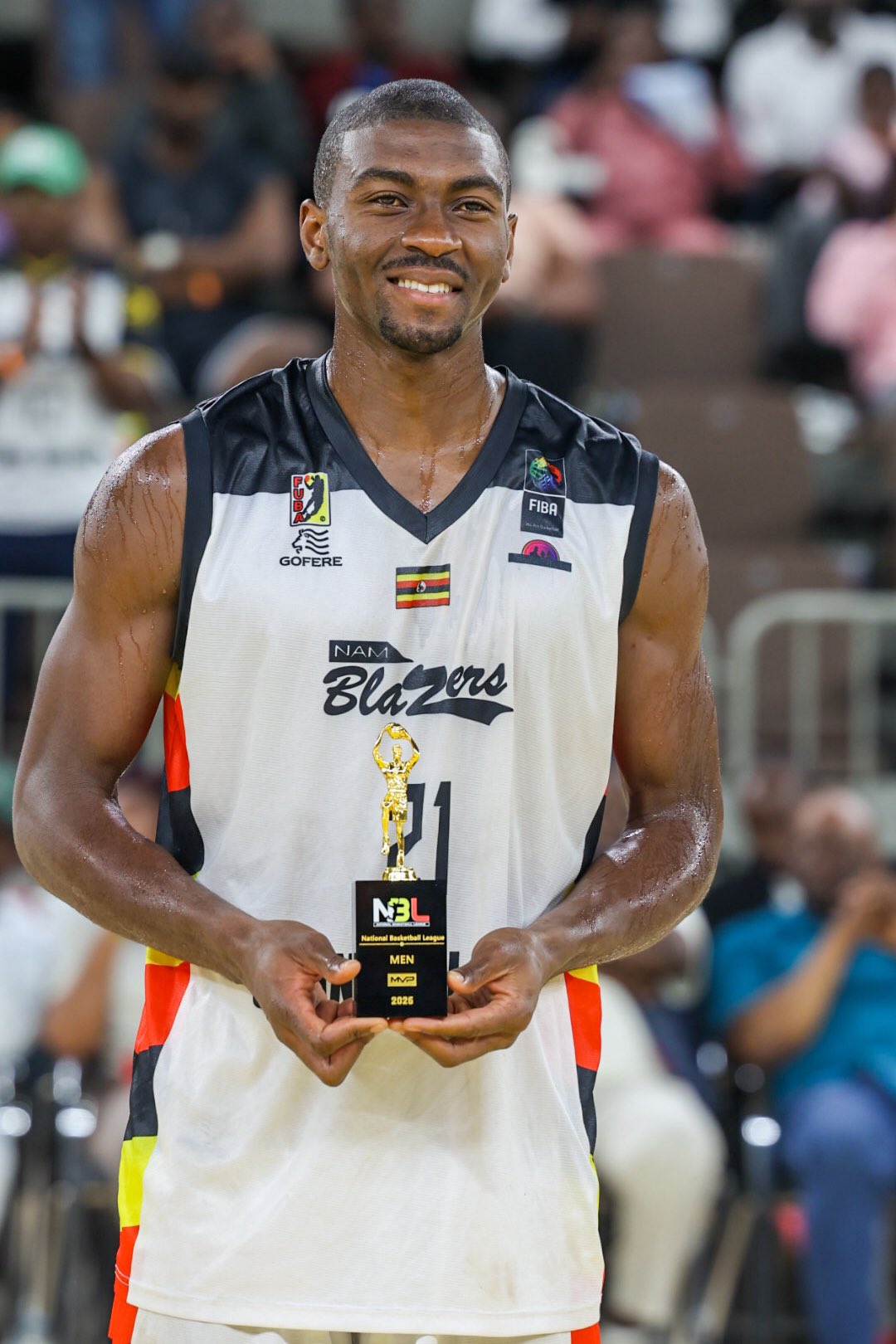
Franck Fataki Nyembo was deservedly voted the Finals MVP
But on the other side, Patrick Rembert was refusing to surrender the stage.
Rembert scored 27 points, playing almost 42 minutes and carrying a huge offensive workload for Oilers. He shot 8-of-23 from the field, but the volume tells part of the story: whenever Oilers needed someone to take responsibility for a possession, Rembert was usually the man taking the shot.
This was not Nyembo against nobody.
It was Nyembo against Rembert, with a championship sitting between them.
The Blazers find another gear
Namuwongo came out of halftime with renewed purpose and began to create some separation.
Their advantage was not built around three-point shooting. The Blazers finished just 3-of-15 from beyond the arc, but they repeatedly attacked where they were strongest. They scored 46 points in the paint, produced 29 fast-break points and converted 28 points off Oilers turnovers.
They also controlled the glass, finishing with 55 rebounds to Oilers’ 48, while their 30 assists spoke to a team that was still willing to make the extra pass even when the pressure was becoming unbearable.
For a moment, Namuwongo looked like they might finally break the game open.
But City Oilers had been here too many times before.
They came back.
The fourth quarter becomes a championship fight
The fourth quarter was less basketball game and more survival test.
Namuwongo created separation, only for Oilers to erase it. Oilers would make a play, and the Blazers would answer.
Fayed Baale was particularly important for City Oilers, producing the kind of shot-making that can change the temperature of a game almost instantly. His ability to create and convert difficult shots kept Oilers within touching distance.
But Baale’s night eventually ended with him fouling out, removing one of Oilers’ most dangerous offensive weapons just as the game was entering its most consequential possessions.
For Namuwongo, meanwhile, experience mattered.
Jimmy Enabu’s numbers—12 points, four rebounds and four assists—do not fully explain his influence. With the game tightening, Enabu delivered a huge three-pointer to tie the contest at 58–58, and throughout the closing stages his composure was visible in the moments when the game threatened to become chaotic.
This is what years of playing high-pressure basketball can give a player.
Sometimes it is not the spectacular play.
Sometimes it is simply knowing what the moment requires.
66–66
With neither team prepared to blink, the final minutes became a sequence of small victories.
Arthur Wanyoto came up with timely contributions. Anthony Chukwubuka battled around the basket. Nyembo continued to create opportunities even as the Oilers defence concentrated on him.
Oilers kept answering.
Namuwongo kept answering back.
Eventually, regulation ran out with the scoreboard reading 66–66.
Forty minutes had not been enough.
Game 7 needed five more.
Five minutes for a championship
Overtime began with Oilers striking first.
Rembert put City Oilers ahead 67–66, and for a brief moment the momentum seemed to have swung back toward the defending runners-up.
Then Arthur Wanyoto answered.
It was a fitting contribution from a player whose impact throughout the game had gone beyond the headline numbers. Wanyoto finished with eight points, six rebounds and two assists, but his +18 was the best plus/minus on either team.
Namuwongo had the lead again.
Then the game became a test of nerve.
Malual Dier hit a three to keep Oilers alive. Anthony Chukwubuka answered with a basket. Rembert responded again. The difference remained only a possession.
Then Nyembo intervened.
He stole the ball from Fayed Baale, turned defence into offence and helped create the next Namuwongo score. Arthur Wanyoto added another basket, and suddenly the Blazers had begun to build the separation they had been searching for all night.
Chukwubuka then hit another crucial jumper.
Oilers were running out of answers.
The final minutes belonged to Namuwongo.
Nyembo added another driving layup. Enabu made a free throw. Another Oilers turnover followed. The Blazers had finally managed to turn a one-possession game into something more.
When the final horn sounded, Namuwongo had won overtime 15–8.
The final score read:
Namuwongo Blazers 81, City Oilers 74.
The crown was staying in Namuwongo.
A championship built on more than one player
It would be easy to write this as the Nyembo Fataki game.
And perhaps, statistically, it was.
Thirty-five points in a Game 7 is extraordinary.
But championships are rarely won by one player alone.
Namuwongo got 12 points from Anthony Chukwubuka, who became particularly important in overtime. Enabu contributed his experience when the game became a pressure cooker. Wanyoto supplied timely scoring and an outstanding two-way performance. Tony Drileba made defensive plays at crucial moments. And even when the shots were not falling, the Blazers continued to defend, rebound and run.
They had 11 steals, forced 30 Oilers fouls and turned those defensive moments into transition opportunities.
That became one of the defining characteristics of the night.
When the game became frantic, Namuwongo were able to turn chaos into points.
Oilers fall short again
For City Oilers, the defeat is painful precisely because they were close.
Rembert gave them 27. Baale supplied 14 before fouling out. Jonathan Komagum had 12 rebounds alongside eight points. Landry Ndikumana added 10 including two pressure free-throws that sent Oilers to overtime.
The Oilers also received 32 points from their bench, compared to Namuwongo’s 20.
They had opportunities.
They had leads.
They had a chance to finish the series in overtime.
But when the final five minutes arrived, Namuwongo were simply better.
The margin was not enormous. It rarely was in this series.
That may be the most frustrating part for City Oilers.
They did not lose because they were blown out.
They lost because, after seven games, Namuwongo found a little more.
Back-to-back
And so, after all the talk of dynasty and transition, experience and youth, old Oilers players now wearing Blazers colours and new Oilers players trying to replace what had been lost, the 2026 NBL Finals ends with a new reality.
Namuwongo Blazers are champions again.
They have defended their crown.
They have survived City Oilers in seven games.
They have won Game 7 in overtime.
And they have done it in Hoima, in front of a crowd that travelled the long road from Kampala because this was the game you simply had to see.
There is something fitting about the way this series ended. The teams could not separate themselves over six games. They could not separate themselves after 40 minutes of Game 7. It took overtime to finally decide who would lift the trophy.
And when the extra five minutes arrived, Namuwongo had Nyembo.
They had Enabu’s experience.
They had Wanyoto’s timely contribution.
They had Anthony’s overtime composure.
They had just enough.
Seven games. Forty-five minutes of Game 7. One champion.
Namuwongo Blazers remain at the summit of Ugandan basketball.
-Basketball256 Editorial
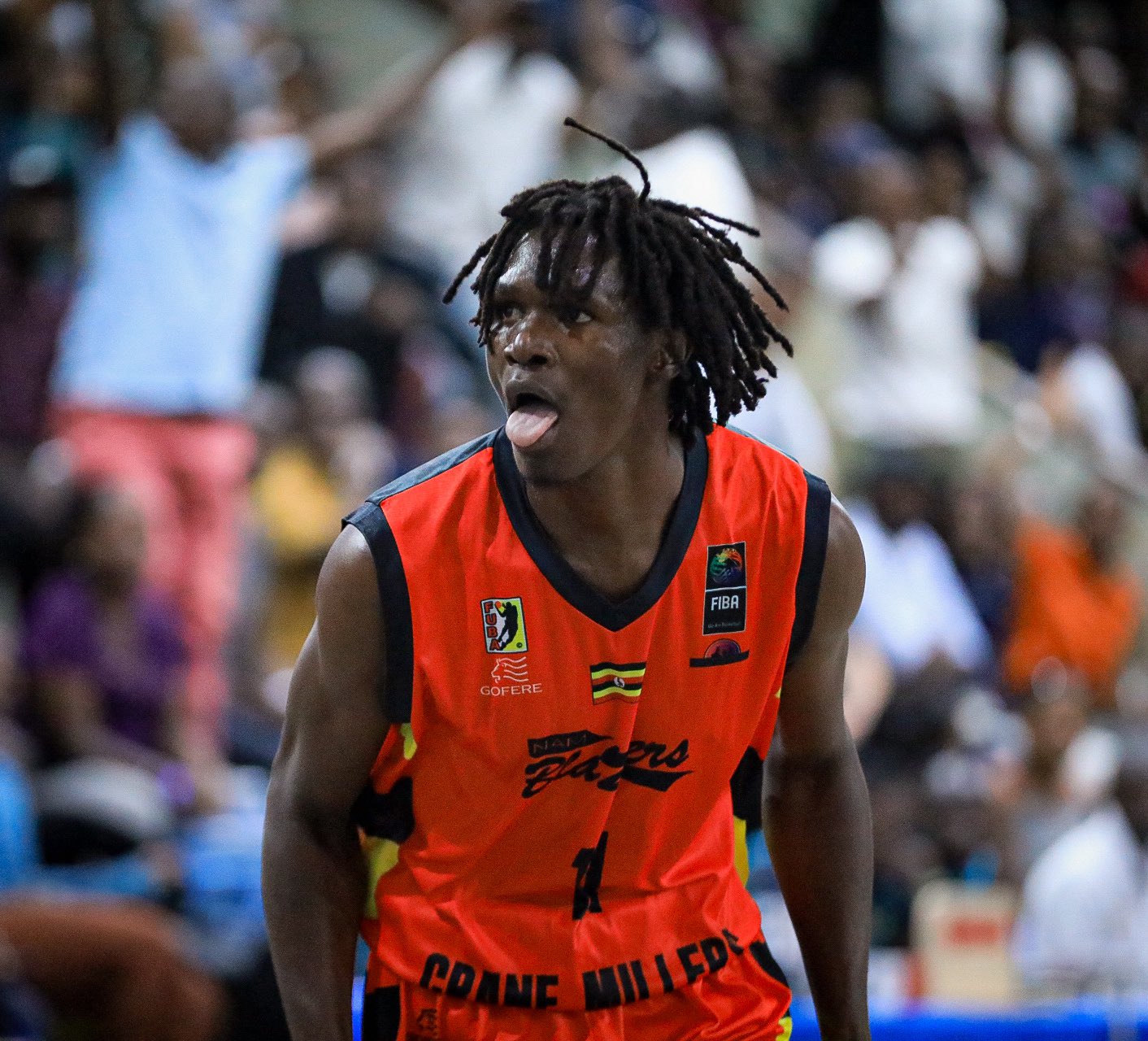
Namuwongo Blazers 82–64 City Oilers
There are many ways to win a basketball game, but there are very few ways to win a championship elimination game. Namuwongo Blazers found one on Wednesday night, and it was emphatic. With their season, and their championship hopes, hanging by a thread, the Blazers dismantled City Oilers 82–64 at MTN Arena to drag the 2026 NBL Finals all the way to the best two words in basketball: Game Seven.
For the first ten minutes, however, there was little indication that this would become the night Namuwongo seized control. Oilers opened with the first basket and, although the lead changed hands repeatedly, the game remained a possession-by-possession affair. Peter Obleng was already beginning to make his presence felt for the Blazers, while Jonathan Komagum provided Oilers with much of their early resistance. When the first quarter finally closed, Namuwongo had only a 14–12 advantage.
Then came the second quarter, and with it came the game.
The quarter that changed everything
Namuwongo did not simply win the second quarter. They took the game away.
The Blazers opened the period by extending their advantage, but Oilers briefly threatened to turn the contest back into the kind of close game that has defined this series. At one stage, City had reduced the deficit to just two points, 17–19, after Joel Kayiira’s turnaround jumper.
That was as close as Oilers would get.
Henry Ssebagala immediately answered with a basket, and then Landry Ndikumana briefly kept Oilers within striking distance with a three. But Obleng responded with another three, and suddenly the Blazers were creating separation.
The decisive sequence came after that. Ssebagala hit consecutive threes, while Kevin Nyemeck repeatedly attacked the paint. Drileba Tonny was finding cutters and bigs with precision, and Namuwongo’s offence began to look less like a team desperately trying to stay alive and more like a team that had discovered something Oilers could not solve. By the time Obleng buried another three with 1:54 remaining, the Blazers had opened a 16-point lead.
Oilers did find brief answers through Komagum and Rembert, but every attempted response was met by another Namuwongo possession. Nyemeck scored inside, Obleng continued to punish from outside, and Ssebagala added yet another three.
At halftime, the scoreboard read 45–29.
A 31–17 second quarter had transformed a two-point game into a 16-point problem.
And, importantly, it wasn’t one player doing all the damage.
Obleng, Ssebagala and the bench that changed the game
Peter Obleng finished with 22 points, shooting 8-for-15 from the field and an extraordinary 4-for-5 from three. Henry Ssebagala added 15, including three three-pointers, while Nyemeck contributed 13 and Nyembo Fataki finished with 18. That is four players producing in four different ways, and it was precisely the kind of collective performance Namuwongo needed with their backs against the wall.
But the most revealing number in the boxscore may be the 52 bench points.
City Oilers managed only 25.
That 27-point difference is difficult to overcome in any game, let alone a championship game. Namuwongo’s reserves weren’t merely filling minutes; they were driving the game. Obleng’s shooting, Ssebagala’s scoring and Nyemeck’s interior work gave Stephen Nyeko the luxury of continually putting fresh problems in front of Andrew Tendo’s Oilers. The depth advantage became a story in itself.
Tonny Drileba was another quiet architect of the victory. He scored no points, going 0-for-3 from the field, but finished with 11 rebounds and 11 assists. His fingerprints were all over the Blazers’ offensive rhythm. He assisted Nyemeck’s basket late in the second quarter, helped create Obleng’s scoring opportunities and repeatedly kept the ball moving.
This was not a night when Namuwongo needed every star to score. They needed everybody to contribute.
Oilers never found the comeback
The third quarter offered City Oilers one final opportunity to make the game uncomfortable.
They never got it.
Komagum continued to battle, Rembert found a few baskets and Baale knocked down a three early in the quarter, but Namuwongo’s lead remained stubbornly large.
Every time Oilers appeared to have a chance to build momentum, the Blazers answered. Nyembo scored inside. Ssebagala went to the line. Enabu found the basket. Nyemeck cleaned up second chances. And when Komagum tried to keep Oilers alive, Namuwongo simply kept scoring.
At 8:38 of the third, Nyemeck followed up his own offensive rebound to stretch the lead to 22 points, 51–29.
That was the moment Game Seven began to feel less like a possibility and more like an inevitability.
Oilers entered the fourth quarter down 64–48.And while the fourth quarter was technically competitive, it was never really in doubt.
Rembert had no Game 5 encore
Patrick Rembert had been spectacular in Game 5, carrying Oilers with a 28-point performance that had put them within one victory of another championship.
Game 6 was different.
Rembert finished with 14 points, but needed 16 shots to get there, going just 1-for-8 from three. He did manage a late burst as Oilers attempted to make the deficit respectable, including a driving basket and a three earlier in the second half, but Namuwongo never allowed him to find the rhythm that had defined Game 5.
The same was true of Joel Lukoji, who finished scoreless on 0-for-5 shooting, while Edgar Munaba also went scoreless on 0-for-6. Oilers had stretches of good individual production—Komagum’s 18 points and 13 rebounds were particularly important—but collectively they could not generate enough offence.
Their shooting tells the story: 22-for-67 from the field and 6-for-28 from three.
Namuwongo, meanwhile, shot 29-for-67 and 8-for-25 from beyond the arc.
The Blazers also moved the ball beautifully, finishing with 30 assists to Oilers’ 16, while turning Oilers’ mistakes into 17 points and running for 28 fast-break points. Those numbers paint a picture of a team playing faster, sharing the ball better and consistently getting itself into advantageous situations.
One more game
By the final minutes, the only question was whether Namuwongo could complete the job. Nyembo provided the exclamation point, throwing down a dunk with 1:27 remaining after another Drileba assist to push the lead back to 20.
Moments later, the starters began leaving the floor. Namuwongo had done what it needed to do.
The final score read 82–64.
The series, once seemingly on the verge of belonging to City Oilers at 3–2, was suddenly level again.
Three wins apiece.
One game left.
One team will walk away with the 2026 championship. The other will spend the offseason wondering how close it came.
And perhaps that is the most fitting way for this particular series to arrive at its conclusion. Nothing about these Finals has been straightforward. Coaches have adjusted. Players have answered. Leads have disappeared. Momentum has changed hands. Heroes have emerged and disappeared from one game to the next.
Now there is nowhere left to hide.
Game Seven.
The best two words in basketball.
And for City Oilers and Namuwongo Blazers, they are the only two words that matter now. Game 7 will be played in Hoima Arena in Western Uganda with no team claiming homecourt.
-Basketball256 Editorial

-
 BLOG1 year ago
#LegendsUG: MONEY IN THE BANK WILBROD ‘OKS’ OKETCHO
-
 THOROUGH7 years ago
When Uganda dared Russia in a 1972 Basketball game & the humble roots of the game.
-
 BLOG6 years ago
Video: UCU Canons guard Bale Fayed talks to CeeBee about his NBL Rookie season and more.
-

 NBL2 years ago
Forgotten Cult: Erosion of the footprint of a budding basketball Culture.
-
 AFRICA5 years ago
Uganda Silverbacks Ishmail Wainright agrees to a two year deal with NBA’s Toronto Raptors.
-

 DIV I3 years ago
LIVINGSTONE, FUBA DIVISION 1 CHAMPIONS 2023.
-

 AFRICA5 years ago
Senegal blow out Uganda in Afrobasket Group D Opener
-
 BLOG1 year ago
LEGENDSUG: THE BIG ARISTOTLE – THE OKS STORY PART TWO.