
BLOG
LEGENDSUG: HAKEEM THE KING OF STREETBALL

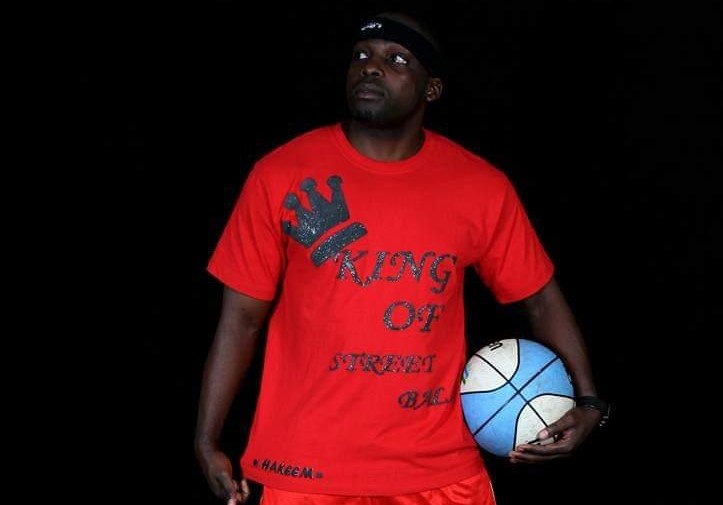
Speaking for hoops junkies in Uganda, Hakeem ‘ILL‘ Iga is a legend and a true trailblazer. You see, for so many (including myself) who started hanging around Ugandan basketball as teenagers, he was the ultimate inspiration to pick up a basketball and burst out some moves – Hakeem made basketball cool for all of us who had had soccer as our first sport. And if I’m to be brutally honest, he set in motion the kind of events and inspiration that would later yield this network – Basketball256.
In his devotion, I see myself – a teenager running around with a small LUMIX digital camera, recording Hakeem’s workouts and practicing some of his moves and later running to a desktop computer at my grandma’s house to try out video editing. In my senior six vacation, I would learn HTML just to learn how to build webpages. With my HTML skills I would build the website Streetball256.com – Uganda’s premier website featuring content strictly on Ugandan basketball. Streetball256 would evolve into Basketball256. Usually, before i get behind the laptop to write out most of these articles, I call a few of my basketball geng geng and together we put these conversations in perspective. Ben Komakech proposed I should put myself on the stand for this one but I insisted I shall not. In a nutshell, Hakeem stirred up an undeniable passion for basketball within me – with it a desire to document the game through writing, photography and videography. With internet technologies on the up, i found myself studying Computer Science as a means to tell our basketball stories better. How coincidental in myself to find just another inspired by Hakeem!
Hakeem went mostly by two Streetball aliases, ILL and ADDICTED. Keem as those that interacted with him a lot call him narrates that he got the nickname ILL (ill with It) because he was suffering from basketball and he was beyond sick with the moves. Similarly, his other nickname ADDICTED came from him being addicted to the game of basketball. In the early 2000s while at Makerere University, Keem told me that students would be returning from the bars at 6:00 AM in the morning and they would find him already on court. That’s how addicted and committed he was to the improvement of his craft. Keem took basketball ‘from the basketball court to the stage’ , he oversaw the creation of a new basketball culture and with it a wave of new fans of the game that had been untapped.
Keem says he was first introduced to basketball in 1994 on joining Tororo College in Eastern Uganda. He had taken his first dribbles in S.1 but he would be drafted on the school team the next year. He grew very fond of the game and he’d continually seek to improve. At the end of his four years at Tororo College, Keem would join Jinja S.S for his A-levels and that’s how he gets drafted to the Jinja based 2002 League Champions – Sky Jammers. Keem was joining the cast of the young brothers Norman and Donald Blick, Swaib Ssemakula, Beste, Mark Kasadha and Mugisha Justus among others.
“In the early 2000s, passion was the only currency of the game. Jammers is what I would call a hustle team – we would come from Jinja when we were just four players and we would have to draft a fifth player from the YMCA. Sometimes guys had no shoes and they had to borrow from a fan. Man, It was just passion.” – Hakeem
Hakeem told me how hard it was to play basketball in those days. Basketball seemed like a game played by guys from ‘good families’. Of course you can imagine how hard it was to get access to things like good basketball shoes and basketballs themselves. It’s not far-fetched, that seemingliness of basketball to a rich kids game. I asked Keem why they endured those hardships to compete and he told me;
“Of course the passion was too much, but if you ask many guys that put in effort around that time, we were looking for scholarships to go to College in the U.S. Sprite (a brand of the Coca-Cola Company) was so active in hooking up guys with scholarships to College. Scouts would come to watch games and remember, guys like Dikembe Mutombo had been drafted to the NBA seven years ahead of us. The dream of the NBA was very alive .” – Hakeem
Hearing this made me comprehend why players from that generation developed such a work ethic and a natural commitment to the game. They set their eyes on the ultimate ambition – to play at the world’s biggest basketball stage, the NBA. Whether that worked out or not does not devoid the effort from the attempt.
“Somehow fans jumped to Sky Jammers because we were always the underdogs. They just wanted to see the two brothers (Norman and Donald Blick) win. At that time, Dona and Norman had such a stunning resemblance”, Hakeem told me of Sky Jammers. He continued that Norman, Donald , Swaib Ssemakula and himself had been the core of the team. “When the four of us were on the floor, we were tricky to stop”. keem told me that basketball those days was a bit rough –many fouls always went uncalled. We played basketball that had so many set plays unlike these days where I see guys running a lot. We had so many set plays but guys had a lot of skill too.
The undisputed consensus is that Hakeem was and still is the slickest hands by any Ugandan to ever dribble the basketball. Call him Uganda’s Kyrie Irving. But why would the best point guard at the time just simply walk away from the league to pursue streetball for the remainder of his basketball career?
What I know about him; he only played for Sky jammers and was part of the team that won the national league. I am yet to see anyone in uganda that handles the ball like him….The And1 team can testify – Wanyama Ibra (long time Ugandan basketball fan)
He just moved out of the league and started playing his passion!! Hakeem’s ball handles grew, so did his love for And 1 basketball. He was just unstoppable!!! – Jackson Kikonyogo (former Falcons BC)
Among my 3 musketeers with Oluka Tony and Ivan Enabu. Whenever any one of them had the ball, someone was inevitably anointed to take one or two crossovers for the team and fans at large. And the crowd plauding them on always got them going. A menace to opposition players -Rogers Odiama- Entebbe Basketball legend
Played together in three different teams; Sky jammers,Makerere university team and Nkrumah hall in inter-hall – Ochan Moses(Blue Jackets, Sky Jammers, KIU)
Keem told me that he was rather unsettled in 2003, he wasn’t sure if he should continue competing in the league or ‘just play fun basketball’. He had moved from Jinja to Kampala to undertake a degree in Community Psycology at Makerere University. Keem says he didn’t quite fit in with the Kampala teams.
“I think there was a bit of frustration as well. Remember I wanted to get a scholarship to College. I had done my best but nothing had come out of it.” – Hakeem.
Hakeem believes that taking to Streetball was a calling. He remembers that he had always had the street game in him. ‘I always had those crossovers in me even while i was still in the league. I would dribble slowly to my defenders, then I erupt -That was my game. I was a crowd pleaser and everybody knows that.’ , Keem told me. Around 2003 and 2004, The And1 Company Mixtapes would reach Uganda and when Hakeem landed on those, his mind was made up. He knew he was going the way of an entertainer but he would remain a strong pillar on the Makerere University team and also on his Nkurumah Hall team. While at Makerere, Keem says that Nkurumah won all the Inter-Hall basketball competitions.
Starting Streetball was hard. Keem didn’t know exactly what to do with it when he had just started but then he invented FreeStyle. Freestyle is a rhythmical range of streetball moves usually done on hiphop soundtracks. Keem recalls how much he loved break dance but he had never been able to dance. He always practiced while listening to hiphop music and little by little he connected the dribbling and footwork to create a rare rhythmical flavor. Urban Expression in its purest form was perfected by Hakeem through the craft of Freestyle – by far one of the most beautiful forms of artistry I’ve personally ever seen. You didn’t want to blink when Hakeem was freestyling afraid you’d miss a magical moment.
Freestyle being a form of art he could perform is small spaces, Hakeem would take his act to the stage. He performed in schools, at HipHop music festivals and soon he’d be a hit in many music videos. Keem tells me that at the time, basketball was getting only but a few articles in two Ugandan newspapers but he was doing interviews for Channel-O and EATV. At the time these where the top TV channels of Youth Urban Expression. Top artists would give anything to appear on these channels– he told me. Hakeem’s biggest stage to perform basketball freestyle in Uganda was the Pearl of Africa Music Awards, at the time, the biggest show in Uganda geared at awarding top musical artists. “I was up in all those lights performing man”. Hakeem had collaborations with Bataka Underground/Bavubuka Allstars with which they’d stage the very first HipHop and Basketball fusion festival at YMCA. He featured in multiple videos for Bella and Michael Ross.
Behind the intricate detail in his work was a lot of time dedicated to the perfection of his craft. It was practice practice practice, he says. Hakeem told me that he had to find a room outside the University’s Nkurumah hall where he had first been a resident so that he could be able to practice way after midnight. Hakeem would later mentor the young Joseph Ikong. Ikong would turn out to be a multiple league Champion, Scoring Champion and Dunking Champion – a key figure on the Uganda Silverbacks. I asked Ikong about Hakeem and his work ethic, on mentoring him – this is what he told me;
“Hakeem is a hard worker and a perfectionist. He really loved more than anything, making others love the game. When we worked out with him, he would be on court at 6:00 AM and I would join in at 7:00 AM, yet he was my senior. He was an inspiration and had a great impact on my game. Mostly, he emphasized dribbling the right way, dunking and playing with style. I brought that to the league.” – Joseph Ikong.
Ikong told me that Hakeem implored him to take up basketball emceeing along side playing, a skill he’s still a practitioner of.

Joseph Ikong has never lost a dunking contest. Hakeem had a huge impact on his game.
Hakeem carved his fame at a time when social media and particularly Facebook was only emerging. But people didn’t have smart phones the way they do today. To access the internet, people had to pay to sit for a given time at computers in Internet Cafes.
“It’s hard to imagine how I became famous, It’s not like these days where you can become a celebrity overnight on social media. I had to walk from university to go to perform in schools. I think I performed at every school that had a basketball court, my renown went as far as Mbarara” – Hakeem
Keem told me of a story about him being seated next to a kid in the crowd at YMCA watching a basketball game and one of the kids was telling his friends about ‘a guy called Hakeem who had sick handles and trickery not knowing that I was the guy right next to him. I jokingly dropped into the conversation asking the kid to tell us more about this Hakeem‘. Such was Hakeem’s renown that people were talking about him without even being able to put a face to the name. ‘That kid turned out to be rapper Oki Foever who practiced with me later on‘.
If anything, Hakeem’s fame was forged in the crucible of hard work and commitment to his craft, but not without criticism. Hakeem says there was a lot of criticism especially from players in the league but he had so much passion to listen. He describes himself as a very spirited guy and an introvert who always sat by himself in the corners. “A lot of those comments never got to me directly because I’ve been a loner most of my life, It’s strange for me to say this because I’m a psychologist but It’s something I’ve struggled with. I grew up alone with my mum and when she passed on, the basketball was all I had.”, An emotional Keem told me.
” I had drawn a line between competing and entertaining. I was an entertainer. A lot of guys hated my gut, At basketball games and tournaments, I would call out anybody who considered himself a baller to come out and challenge me in one-on-one match ups – no star ever came out, only fans would come out and I would make a show of them. I was pulling crowds” – Hakeem
Ikong believes that there was a misconception that Hakeem’s art was overshadowing the pro game of pick-and-roll and set plays but Ikong is also very convinced that mainstream basketball had the most to gain from Hakeem’s work.
“Hakeem’s And1 drew people to the game. Most of these people were getting to see basketball for the very first time. They got hooked onto the game and later turned into mainstream basketball fans and players.” – Joseph Ikong.
Keem told me he modeled his game around non basketball personalities. He was intrigued mostly by Mike Tyson (Former World Heavy Weight Boxing Champion) and Ronaldihno the famous Brazilian soccer star. In basketball, he looked up to Michael Jordan and later Hot Sauce (legendary streetball player with And1). In Uganda, Hakeem is a fond fan of Stephen Omony.
“When I played in the league, I just hated Omony mostly because of his defense. It was just hard to go past him. He was the most explosive player I had seen. That guy is a legend – just one of the guys that shaped Ugandan basketball”, Hakeem says of Omony.

Phillip A. Champion aka Hot Sauce the legendary streetball player with And1 in Kampala in 2011
It is just right to say that the work Hakeem did together with Streetball players he inspired laid the pavers for the AND1 LIVE Tour to Kampala in 2011 and 2012. By far these tours are the biggest basketball entertainment Uganda has ever seen. Hakeem despite his renown was never drafted for the first tour in 2011 but he was drafted for the second tour in 2012 to play against some of the most legendary Streetball players he had idolized including Phillip A. Champion also known as Hot Sauce.

A recent picture of Hakeem. He still keeps up with the game to stay healthy.
For his legacy, Joseph Ikong believes that Hakeem Iga is not only the best guard and ball handler Uganda has ever seen but also the greatest basketball entertainer. “Basketball is a sport of entertainment and nobody knew how to involve the crowd better than Hakeem. Nobody should forget that he won a league title and he had such a huge impact on the Makerere University team.“, Ikong told me.
Hakeem has zero regrets for taking up a craft that got him on his first flight when he visited South Africa partnering with Miles And Associates on Basketball Without Borders (BWB) projects to build basketball courts for high schools in Uganda. The same craft that saw him visit so many schools teaching life skills, made so many friends and the craft the gave him the stepping stone to open doors to all the jobs he has had. Hakeem is equally a fond believer in the truth that sports cannot be a substitute to education. The education he pursued elevated his level of thinking and creativity. He says that fame can get you a job but your job requires knowledge and professionalism.
Streetball all over the world has faded and with it Companies like And1 and BallUp that attempted to take it mainstream. The same precedent is true for Uganda especially with the departure of Hakeem from the scene. In retrospect, Hakeem is certain he could have done a few things different, like incorporating a company dedicated to promoting Streetball in Uganda and East Africa. That way, he could have ensured sustainability of the art that he perfected for Ugandans to beget. But he believes that Streetball is always there – lurking. He is sure it will return in another form sometime in the future.
Hakeem’s legacy is that of a hooper who in is own words compares what he did to taking swimming out of the swimming pool but while at it inspiring many players and not just basketball players. “I entertained, wherever that stopped is where It was supposed to stop.” – Hakeem told me.
Like Keem did, I want to implore you, if you’ve read this far; never to to be afraid of the road less traveled.
By Cucu Brian | I respond to tweets | @Cucubrian





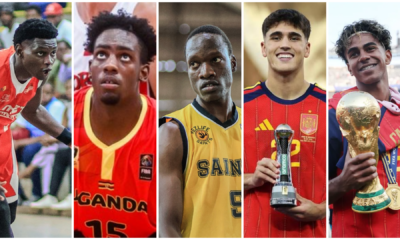



A ball bouncing on a concrete court in one corner of the world can eventually find its way to the biggest arenas on the planet. A child shooting alone after school can grow into a professional athlete. A player born thousands of miles away can one day find himself wearing the colours of a country connected to his roots.
That is the beauty of basketball. It creates connections that geography alone cannot explain.
When Brandon Davies announced his retirement from professional basketball, he began his farewell with a sentence that revealed the simplicity behind an extraordinary career.
“Just a kid from Provo with a dream to play professional basketball.”
Before the EuroLeague battles, before the NBA opportunity, before the packed arenas across Europe, Davies was simply a young player chasing a dream.
A dream that eventually took him around the world. And, for a memorable chapter, brought him to Uganda.
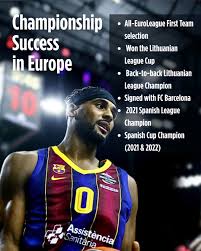
Davies’ retirement marked the end of a 13-year professional career that saw him compete at the highest level of international basketball. His journey took him through college basketball in the United States, into the NBA, and across some of Europe’s biggest basketball stages.
But every basketball career is made up of chapters. Some chapters are measured by trophies. Others by statistics. Others by the places and people that become part of the journey.
For Uganda basketball, the Brandon Davies chapter may have lasted only six games, six games that offered something far greater than box scores.
They offered a glimpse of the standards, professionalism and competitive mentality required to operate at the highest levels of the sport.
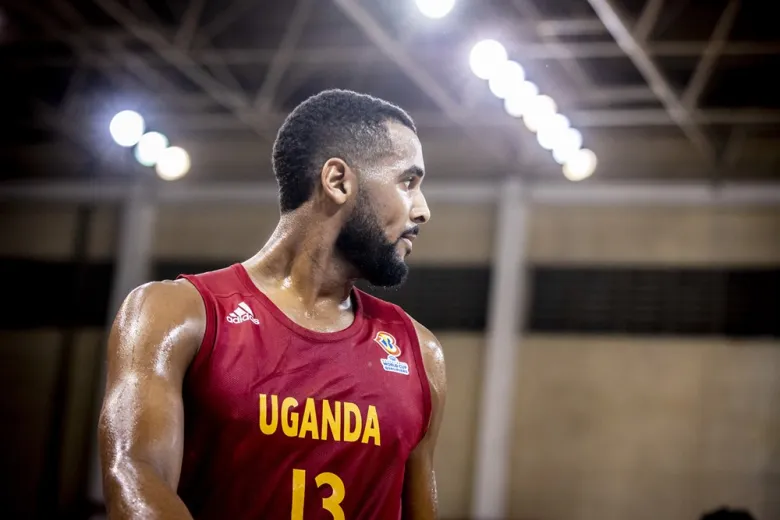
In 2019, Davies arrived in Kampala for the FIBA AfroCan Qualifiers as part of the Uganda Silverbacks squad.
Lugogo Arena has witnessed many important moments in Ugandan basketball history. It has been a place where young players announce themselves, where rivalries are built, and where basketball communities gather to witness something bigger than a game.
During that tournament, Ugandan fans got to see something special.
Davies was not simply a talented player wearing the national team jersey.
He was a professional. The difference was visible.
It was in the way he approached possessions. The way he competed. The way he impacted games beyond scoring.
Uganda’s opening game against Kenya ended in a 70-61 defeat, but Davies showed exactly what kind of player he was. Despite struggling offensively, finishing with 15 points, he controlled the paint with 21 rebounds.
Twenty-one rebounds.
It was the kind of performance that reminded everyone that impact in basketball is not always reflected by scoring numbers.
Against Egypt, one of Africa’s established basketball nations, Uganda fell 73-64, but Davies produced perhaps his most complete performance of the tournament. He finished with 23 points, eight rebounds, four assists, four steals and two blocks.
It was a display of an all-around player. A player who could score. A player who could defend. A player who could influence the game in multiple ways.
Uganda responded with victories against Tanzania and Rwanda. Davies contributed in both games, scoring 11 points with nine rebounds against Tanzania in a 74-54 win, before adding 18 points, nine rebounds, four assists and three steals in Uganda’s 77-71 victory over Rwanda.
Across the four AfroCan Qualifier games, Davies averaged 16.8 points, 11.8 rebounds and four assists.
Two years later, Davies returned to the Silverbacks for the FIBA Basketball World Cup 2023 African Qualifiers. By then, his reputation had grown even further internationally, but his approach remained the same.
Uganda faced Cape Verde in November 2021 and secured a memorable 77-74 victory. Davies delivered one of his best performances in a Silverbacks jersey, finishing with 27 points, 10 rebounds, three assists and three steals.
The following night against Nigeria, Uganda fell 95-69, but Davies again carried a significant offensive responsibility, scoring 22 points and grabbing six rebounds.
Across those two games, he averaged 24.5 points. Against some of Africa’s best competition, Davies showed why he had built a career around consistency and competitiveness.
But perhaps the most meaningful part of Davies’ retirement message was not about basketball statistics.
It was about identity.
He spoke about a mentality he called RAMB0.
“It was the version of me that embraced sacrifice, pushed through pain, silenced doubt, and did whatever it took to compete.”
That mentality explains much of his career.
Professional basketball is often presented through the glamorous moments—the contracts, the championships, the big performances.
But behind every career are sacrifices that fans rarely see.
The airports. The uncertainty. The pressure to constantly prove yourself. The willingness to start again in a new country, a new league, a new environment.
Davies understood that journey.
And for a brief period, Uganda became part of it. Six games may seem like a small contribution when measured against a 13-year professional career. But legacy is not always determined by length. Sometimes it is determined by impact. Brandon Davies did not spend a decade with the Silverbacks. He did not build his entire career in Uganda.
 But he left behind something valuable.
A standard.
A reminder.
A picture of what professionalism looks like.
For young Ugandan players watching from the stands at Lugogo Arena, Davies represented proof that basketball could take them places they had never imagined. That the game they played on local courts could connect them to the world. And some of those guys are now high performers in the same arena.
As Davies, a former Brooklyn Nets, Sixers, Žalgiris, Barcelona, Milano, Valencia and Partizan player, and EuroLeague legend closes one chapter and begins another, Uganda remains one of the many places woven into his basketball story.
He wrote:
“While my playing career has come to an end, I truly believe the next chapter is just beginning.”
For basketball, that chapter may continue in coaching, mentorship, leadership or simply sharing the lessons gained from a remarkable journey. But for Uganda, his chapter is already secure because he gave the Silverbacks and their supporters a glimpse of something bigger.
By Cucu Brian
The views expressed herein are only the views of the author. Brian is an ardent Ugandan basketball follower, a basketball junkie and the founder of Basketball256 LLC.
There is something strangely poetic about the number 19.
Not because it is magical. Not because history has ordained it as the age of greatness. But because, time and again, it seems to arrive at the precise moment when responsibility begins to outweigh permission.
On 19 July 2026, the sporting world offered an unlikely lesson.
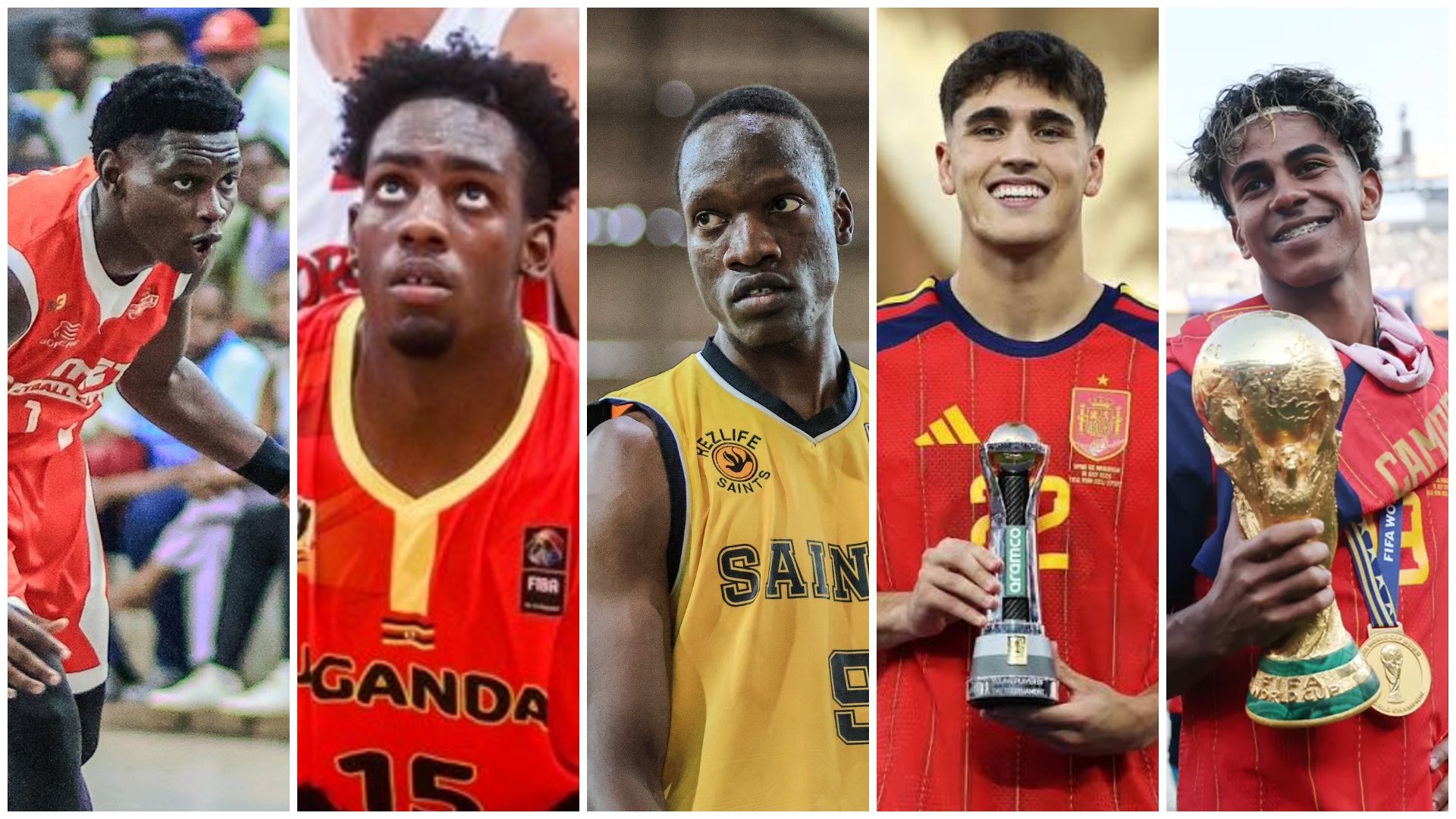
Across the Atlantic, football belonged to youth. Nineteen-year-old Lamine Yamal walked into a FIFA World Cup final sharing the global spotlight with 39-year-old Lionel Messi—a twenty-year age gap that symbolised football’s eternal relay race. One legend carrying the torch, another already reaching for it.
Yamal was not merely present. He was central to Spain’s triumph, instrumental in the move that produced the decisive goal in extra time. Beside him, another 19-year-old, Pau Cubarsí, walked away as the tournament’s Young Player. Think about that for a moment.
A teenager.
Playing centre-back.
Tasked with containing the finest strikers on the planet under the suffocating pressure of a World Cup tournament.
Football did not ask whether he was old enough.
It asked whether he was good enough.
An hour before the World cup final, nearly 7,000 miles away inside MTN Arena, Ugandan basketball quietly echoed the same message.
Nineteen-year-old Matthew Kisakye produced a game-high 20 points for Sommet BC in a winner-take-all playoff against RezLife Saints. Across the floor stood another teenager, Edrin Ekau, who answered with 17 points to propel RezLife into the club’s first National Basketball League semifinal. We need not to be reminded that Ekau was the NBL regular season leader in points and equally, the leader in points in the post-season thus far.
The box score recorded points.
History may eventually record something else.
Perhaps it recorded a changing of the guard.
Because this is not really about Kisakye or Ekau.
It is about what their performances force us to ask.
Why are we still treating youth as a promise instead of a present reality?
Notice what he did not say.
He never mentioned age.
Sport has never rewarded birthdays. It rewards readiness.
History agrees.
At 19, Arthur Kaluma was carrying Uganda to the AfroBasket.
Years earlier, Baale Fayed was already starting in an NBL Finals Game Seven for UCU Canons against the all-conquering City Oilers, carrying responsibilities that many veterans never experience.
Outside sport, the pattern becomes almost impossible to ignore.
At 19, Alexander of Macedon—history remembers him as Alexander the Great—was already commanding armies while learning to govern an empire he would soon build.
At 19, Bill Gates was laying the foundations of Microsoft, not because someone decided he was old enough, but because he had convinced the world he was capable enough.
Different centuries.
Different continents.
Different disciplines.
The same question.
What exactly is supposed to happen after 19 that makes someone suddenly ready? Perhaps Ugandan basketball has been asking the wrong question all along. We often ask whether young players are ready for big moments.
Maybe we should be asking whether big moments are ready for young players.
The evidence keeps accumulating.
Jimmy Enabu was once the fearless youngster challenging veterans before becoming the league’s standard bearer. Arthur Kaluma skipped the queue entirely and stepped onto the international stage.
Now Kisakye and Ekau are writing their own chapter.
Every generation eventually produces a group that refuses to wait its turn.
The danger is not that we give young players too much responsibility. The greater danger is that we ask them to wait until their courage has been coached out of them.
There is an old African proverb that says:
Ugandan basketball should heed that wisdom.
Young players do not merely need minutes.
They need belief.
They need coaches willing to live with mistakes.
They need clubs prepared to build around potential instead of renting experience.
They need a basketball culture that celebrates boldness as much as it celebrates longevity.
Because if Sunday taught us anything, it is this:
When the biggest games arrived, teenagers did not shrink.
They took the shots.
They guarded the stars.
They carried the expectations.
Maybe the future of Ugandan basketball isn’t waiting in academies or school tournaments. Maybe it has already checked into the starting five.
And perhaps the most provocative question of all is not whether Ugandan basketball is ready to hand the keys to its 19-year-olds.
It is whether those holding the keys are ready to let go.
By Cucu Brian.
The views expressed herein are only the views of the author. Brian is an ardent Ugandan basketball follower, a basketball junkie and the founder of Basketball256 LLC.

There is one image from Luanda circulating around Ugandan basketball circles over the last few days that may define Uganda’s FIBA World Cup Qualifying Window 3 more than any box score ever could. It shows Silverbacks and City Oilers forward Titus Lual guarding Egypt’s giant centre Hamad Abouelrish.
At 2.35 metres, Abouelrish is arguably the tallest player in international basketball today.
Outside meme-lovers caricature of it, It is an image of two athletes playing the same sport and arguably the same position—but in completely different physical realities.
Then there is Fayed Baale.
Standing at 1.73 metres (5’8″), Baale lit up Angola for 17 points and remains one of Uganda’s most electrifying guards. Remarkably, he is also among the shortest players in the current FIBA World Cup Qualifiers.
Those two images—the tallest and one of the shortest players in the competition—capture the question Uganda basketball can no longer avoid:
Does Size Matter?
The scoreboard from Luanda told one story.
The eye test told another.
Watching the Uganda Silverbacks battle Angola, Mali and Egypt during Window 3 of the FIBA Basketball World Cup African Qualifiers, one reality became increasingly difficult to ignore.
Uganda was often giving away size across multiple positions.
Not less talented.
Not less committed.
Simply… undersized.
And in basketball, that matters.
It is an uncomfortable conversation because nobody wants to reduce the game to height. Basketball has evolved beyond the era when simply having the tallest players guaranteed success. Shooting, pace, spacing, skill and decision-making now define the modern game more than ever before.
But size never disappeared.
It simply evolved.
Today’s international basketball demands players who are 6-foot-7 and can defend guards. Centres who can protect the rim and still sprint the floor. Wings with seven-foot wingspans who can switch every screen without creating mismatches.
Against Angola, Uganda spent much of the night battling Bruno Fernando around the basket.
Against Mali, the Silverbacks struggled to match the physicality of a deeper and longer rotation.
Against Egypt, Uganda competed brilliantly for forty minutes before the accumulated physical demands of the game seemed to favour the deeper, bigger team during overtime.
Three different opponents.
One recurring observation.
Uganda was often asking smaller players to perform oversized roles.
That raises a bigger question.
Is Uganda Producing Enough Size?
Uganda has wrestled with this question before.
More than a decade ago the Silverbacks attempted to add size through players like Sam Gombya and Marial Dhal. The experiment never fully matured, while Stanley Ocitti later became arguably Uganda’s most impactful modern power forward, playing a pivotal role in the team’s historic qualification for AfroBasket 2017.
Since then, however, Uganda has largely returned to building around guards.
Perhaps the issue isn’t that Uganda lacks tall people.
Perhaps the issue is that Ugandan basketball isn’t finding them early enough.
How many players taller than 6-foot-7 are currently in structured basketball programs?
How many secondary schools actively recruit exceptionally tall students into basketball rather than letting them drift into other sports—or no organized sport at all?
How many strength and conditioning programs are designed specifically around developing young post players instead of simply producing guards?
These questions matter because international basketball increasingly rewards countries that identify physical tools early and develop skills around them.
Can Uganda Manufacture Size?
No.
Height cannot be coached.
But length can be identified.
Strength can be developed.
Mobility can be trained.
Timing can be taught.
Skill can absolutely be built.
Countries with limited basketball traditions have dramatically improved by creating deliberate pathways for taller athletes. Uganda can do the same if the federation, schools, academies and clubs align behind a long-term vision.
That vision begins with recognizing that frontcourt players require different development. A 6-foot-9 teenager should not necessarily be trained exactly like a 6-foot point guard.
The Future Is Bigger—But Also Smarter
This should not become a search for height alone.
Uganda has always produced skilled guards. Over the decades, I can name but a few, Jimmy Enabu, Tony Drileba, Mark Okidi, Cyrus Kiviiri, Josh Johnson, Kassim Namgwere, to the current crop of guards. That identity should remain.
The next step is balance.
Imagine Uganda’s talented backcourt complemented by two or three homegrown forwards standing 6-foot-8 or taller, comfortable defending, rebounding and finishing above the rim.
That changes everything.
It changes defensive schemes.
It changes rebounding battles.
It changes transition opportunities.
Most importantly, it changes expectations.
My Conclusion
Window 3 exposed many things about the Silverbacks.
Execution can improve.
Turnovers must decrease.
Closing games remains a work in progress.
But perhaps the biggest lesson wasn’t tactical at all.
Window 3 suggested that Uganda’s greatest long-term challenge may not simply be Angola, Egypt or Mali. It may be matching their physical profile.
If Uganda wants to become a consistent contender in African basketball over the next decade, developing bigger, longer and more versatile frontcourt players cannot remain an afterthought.
The conversation shouldn’t be about whether size matters.
At this level, it clearly does.
The conversation should be about what Uganda is prepared to do about it.
By Cucu Brian.
The views expressed herein are only the views of the author. Brian is an ardent Ugandan basketball follower, a basketball junkie and the founder of Basketball256 LLC.

…To understand the sheer thrill Oks got from dominating his adversaries and contemporaries, one would have to understand the source of the nickname that he’d soon take on – The Big Aristotle. The Big Aristotle had been a nickname that Shaquille O’neal had given himself as a reference to the consistent greatness that won him the 2000 MVP award. Just like Shaq, Oks had won his MVP award in the year 2000.
One of Oketcho’s closest friends and teammate Isaac ‘Magalo’ Afidra told me that, “Oks would do everything that Shaquille O’neal did. The mannerism, the celebration after making a basket and the sheer force and dominance.”

Power in the early 2000s, Wilbrod Oketcho – standing, extreme right.
Oks and Afidra met in December of 1998 during the Abe Lincoln Tournament. The Abe Lincoln tournament had been a popular basketball showcase in Uganda that collected competing teams in East Africa in both senior and junior categories. Afidra narrates, he had first met Oks that December while playing for the Power Junior team at the tournament. He recalls that he was in his Form Four(U.C.E) vacation while Oketcho was in his Form Six (U.A.C.E) vacation. The junior team did not go past the quarter finals of the tournament but as was the tourney’s norm, teams could upgrade players from the junior team to the senior team and Oketcho was upgraded to the Power seniors team to play the semi finals against Rhinos.
“The Rhinos of then is not the Rhinos of now. That team really had distinguished players.”, Afidra told me. In the semi finals, a young Oketcho faced off with a Rhinos forward, an American Marine called Dr. Jay – Afidra recalls. Oks was way ahead of his time, instantly showing confidence exchanging trash talk with the experienced marine. “Give me the ball, this is light work”, Afidra remembers Oks saying.

Wilbrod Oketcho
Before then, Afidra had only heard about Oketcho from his brother Jesse who played for Power. Jesse had repeatedly spoken of a fearless kid from SMACK who played with the Bugolobi Bingos. In one tournament, while Bugolobi was playing against Makerere University, Oks had driven through their zone defense and dropped an emphatic dunk on their forwards.
“At that time, Makerere had some of the creme de la creme, players like Humphrey Hakiza. These were gifted players.” – Afidra told me.
In 1999, both Wilbrod Oketcho and Isaac Afidra would team up for Power. As rookies, they would test the heat, and the thrills of competing in the National Basketball league. Being on any roster in that era meant you’d have to face off with the mighty Falcons. Power verses Falcons was an epic rivalry.
“In those years, everything about basketball was Falcons. They were too organized. Falcons’ players were very disciplined, they had a very tactical coach in Ronnie Kaboha and Stephen Omony was literally unstoppable.”, Afidra told me of Falcons.
Stephen Omony is a legend and the undisputed G.O.A.T of Ugandan basketball. His Runnings with Wilbrod Oketcho would start while both players were in high school.
“Without a doubt we had an early running. I was at Kitante Hill School and he was at SMACK. I was the leader of my team and he was the leader of his. He had such a big fight in him and you could tell he didn’t want to lose.”, Stephen Omony told me.
The two players (Omony and Oketcho) had a fantastic relationship off the court but on the floor, it was always fierce competition. Omony reaffirms Afidra’s comment about Falcons’ superiority and discipline in the day, “We had things we were doing as a team that were different”. “Personally, I had a drive and resolve within me that I didn’t see in many other guys but when you compete, you can always see people that have that fire similar to yours .”, Omony says. I had a role to lead my team and so did he, Sometimes that calls for a bit of unfriendly things – Omony continued. Stephen Omony points out Marvin Banks Keronga (also a very close friend to Oks) as the other guy on the Power team that had a burning flame inside him.
Despite going unbeaten in the regular season, Oketcho and Afidra’s Power would lose to Falcons in the Finals of 1999. Afidra believes the result of those finals would have been different hadn’t it been for Oketcho tearing a ligament in the knee and Jesse having to move to the U.S ahead of the finals.
“I could see the frustration in them when they continuously competed and things not going their way. It was so intense some people misinterpreted it as hatred for each other but as far I’m concerned, It was an on-court thing.”, Omony told me about that 1999 finals between Falcons and Power.
Oketcho and Power would get restitution against Falcons with the dawn of a new millennium, the year 2000. Afidra recalls that 2000 wasn’t an easy year especially for Oketcho.
“He had to go through surgery on his knee and it was a very slow return. He joined us half way through the season”, Afidra remembers. I asked Afidra how a half healthy Oketcho could win MVP. He told me that he hadn’t seen such efficiency from a player until then.
“Oks knowing he was only recovering did only the basic stuff, He was a sure bucket in the blocks, he played good defense, locked down his opponents and set up his teammates. MVP just naturally came to him”.
Afidra remembers how hard they trained to win the league in 2000. They had learned from their slip ups from the year before. “We were fitter than any team in the league. We had to make amends.” Afidra recalls two weeks to the semi finals against Rhinos – they had no rims installed at YMCA, all they did was run hills and run on court. “The rims were only installed on a Thursday for a Friday practice. We ended up sweeping Rhinos on Saturday and Sunday in a best of three series.”
Omony acknowledges that the Power they faced in 2000 had changed a whole lot. ‘Oks and Afidra had gotten a whole lot better and Marvin had a fire in him’.
2000 Power Championship Team
Oketcho Wilbrod, Isaac Afidra, Julius ‘Shell’ Wapera, Stephen ‘Sengo’ Sengooba, Charlie, Elliot ‘Baddu’ Bagenda, Shaban Ali, Marvin Banks Keronga, Musa Malamu, Samuel Sebadduka, Martin Kindagaire.
Oks was a fierce competitor. Afidra remembers that ‘he would foul you so hard and turn to his teammates and argue with them about why they’re getting beaten easily’. He had this thing where he would extend his elbows after making a basket, whether you were his teammate or opponent, you didn’t want to be in the way of that, ‘Get out of my way‘, he would said. Oketcho created an aura of intensity starting from practice and pick up games – ‘It was always bloody. Oks and Marvin started the Power Intensity slogan still used to date ‘, Afidra tells.
“Oks never beat about the bush. Whether it was telling the lanky Julius ‘Shell’ Wapera to get stronger by going to the weight room or telling Sengo to quit playing like a girl.”

Afidra and Power won the league in the year of Oks’ passing -2008 in his honor.
For his legacy, Afidra will always remember Oketcho as a ‘true sportsman’, a ‘true competitor’, a father, big brother and a friend.
Stephen Omony will always remember Oks as a ‘happy guy who had so much positive energy to throw around.’ “His presence was always contagious and I can attest that he always pushed people around him to do and be better. You could tell that he was a smart and progressive guy who was going going to have a very impact-full life not only on the basketball court. I think he had just began expressing just who he was as a person.”
Rest in Power Wilbrod ‘Oks’ Oketcho.
By Cucu Brian| I respond to tweets, @Cucubrian | Also tag @Basketballug

-
 BLOG1 year ago
#LegendsUG: MONEY IN THE BANK WILBROD ‘OKS’ OKETCHO
-
 THOROUGH7 years ago
When Uganda dared Russia in a 1972 Basketball game & the humble roots of the game.
-
 BLOG6 years ago
Video: UCU Canons guard Bale Fayed talks to CeeBee about his NBL Rookie season and more.
-

 NBL2 years ago
Forgotten Cult: Erosion of the footprint of a budding basketball Culture.
-
 AFRICA5 years ago
Uganda Silverbacks Ishmail Wainright agrees to a two year deal with NBA’s Toronto Raptors.
-

 DIV I3 years ago
LIVINGSTONE, FUBA DIVISION 1 CHAMPIONS 2023.
-

 AFRICA5 years ago
Senegal blow out Uganda in Afrobasket Group D Opener
-
BLOG1 year ago
LEGENDSUG: THE BIG ARISTOTLE – THE OKS STORY PART TWO.