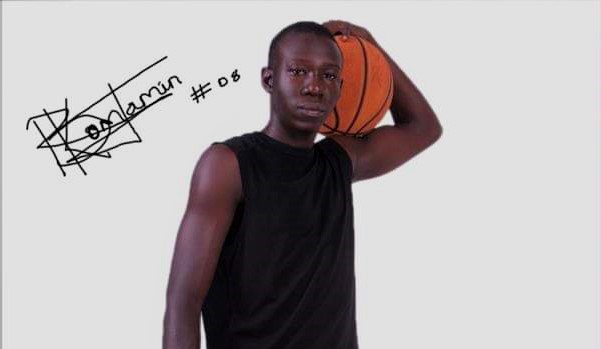
In 1972, in the middle of the Cold War, the Soviet military sent a team of all-stars to Kampala to compete in three goodwill basketball games against Uganda’s top players. The Soviets, who were hoping to curry favor with the leader of the new regime, General Idi Amin, didn’t know that the best of the three squads, the Ugandan national team, was at that time being coached by an American named Jay Mullen, A CIA spy under the cover of an African History researcher and teacher at Makerere University.
For decades, the Cold War was played on the field, the pitch, and the basketball court. Victories for individual athletes were seen as triumphs for superpowers, for capitalist or communist ways of life.
Mullen was the coach of the Ugandan national basketball team for six months under the reign of Idi Amin. During that short time, he would turn a team of amateurs — the first generation of Ugandan basketball players — into a proxy army against the USSR’s propaganda tour. For Mullen and the Soviets, this was not merely a basketball game. “I’m a competitive guy and, number one, I wanted to win,” he told Shaun Raviv. “Number two, I’m competing for the hearts and minds of the world, and if I could in some microscopic way derail this thing of theirs, I would’ve enjoyed that, and I almost felt an obligation to try.” If the Soviets were trying to impress Ugandan leaders by winning a basketball game, he would do everything in his power to make them lose.
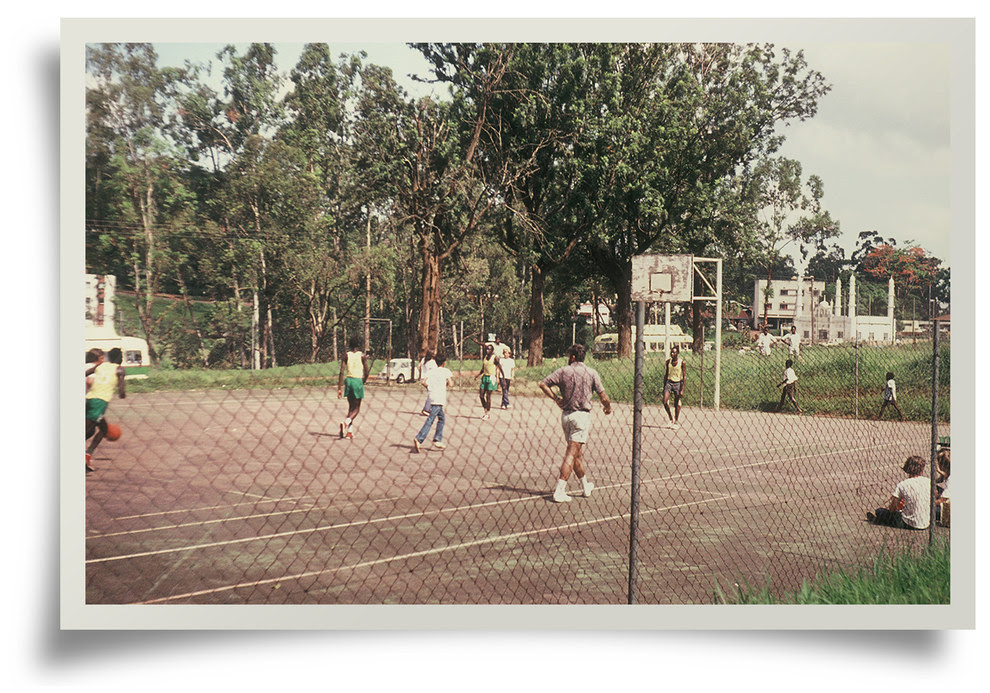
Jay Mullen refs a game at YMCA in 1972
Basketball had come to Uganda only a few years earlier, in the 1960s, through Peace Corps volunteers and missionaries. Those playing in the early 1970s were true pioneers of the sport in Uganda. Cyrus Muwanga was one of them.
“I started playing basketball probably when the first Ugandans played the game,” Muwanga, now a retired hand surgeon in County Durham, England, told Shaun Raviv. As a young boy, he learned the sport from Americans who taught at his school. He and his friends would play on a grassy field or packed dirt lot.
“It was so rough, at first we thought that we’re not supposed to bounce the ball,” Muwanga said. “We’d just run.” But learning to dribble on a rough surface, which they did for two or three years before moving to a proper court, proved to be an advantage: “When you actually move to a smooth court, it’s quite easy.”
Muwanga and his schoolmates also became good shooters because they were initially playing on backboard-less netball hoops. Accuracy is key when only a swish gets you a bucket.
When Muwanga finished high school, he had to choose which college to attend for his A-levels. His father wanted him to go to the school that was the best academically. “I chose the school with a good basketball court,” Muwanga said in an interview with Shaun Raviv, following with the long, deep laugh that he attached to every basketball-related memory.
The Aga Khan School, where Muwanga took his pre-university courses, would compete against a Catholic school 15 miles down the road called St. Mary’s College Kisubi, which had three proper basketball courts. One of the St. Mary’s players was a cocky, tall drink of water named Hilary Onek.
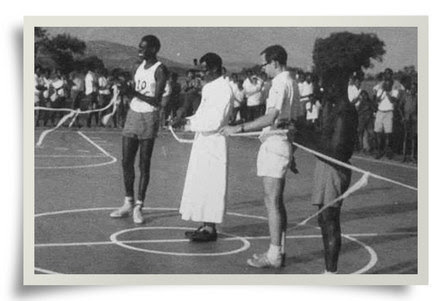
Lanky Hillary Onek at SMACK
As a younger kid, Onek had never even heard of basketball. “I didn’t know anything about it,” he told Shaun Raviv from his office in Uganda, where he was a member of parliament. But at Kisubi, he found out about this American game where you shoot a ball through a metal hoop. His teachers singled him out for instruction because of his height. Soon, he was dominating. “I could out-jump all of them,” Onek said. “I was probably the strongest player on the team.” Onek also had an older classmate named James Okwera, a great athlete and basketball star despite the fact that he didn’t start playing until he was 16. With Cyrus Muwanga holding court at Aga Khan, competitions between the schools were fierce. “When Aga Khan played Kisubi, it was a war,” Muwanga said.
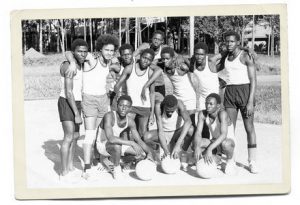
SMACK boys Basketball Team in early 1970s
“Aga Khan came second to us a lot of the time,” Okwera told Shaun Raviv. “But they had some really good players, and my friend Cyrus was one of them, so whenever we were playing them, it was always a very tense rivalry.” In his last year at the school — during a somewhat more relaxed, if still politically unstable, pre-coup period in Uganda — the two teams played for the national school championship, with Kisubi coming away with a one-point victory. The players from both schools pushed each other to improve, and by the time they were moving on to university studies, Onek, Muwanga, Okwera, and their friends were taking the game seriously.
In the 1970s, playing ball at the courts in Kampala in his spare time, Mullen gained a reputation as an athlete: for his pickup skills, but also because he’d been a runner at the University of Oregon, the same school as track star Steve Prefontaine. Mullen told Shaun Raviv the reputation was undeserved, since he was a middling track athlete at best and an average basketball player. “Merely knowing how to dribble made him a hot prospect in Uganda,” he said.
As a referee for Makerere University’s intramural games, Mullen was known for his ability to handle the raucous basketball crowds. He also played in a recreational league that included men from the police and the army, along with students from the university. One of the players in the league was the head of the basketball council, James Adoa — a man who Mullen and others describe as the father of Ugandan basketball.
Playing together sparked a friendship that would lead to Mullen’s coaching gig. One day, Adoa invited him to a gathering of the basketball council at the YMCA. Adoa made announcements about scheduled games with international teams, including an exhibition game against the Russian team, meant to boost relations between the two countries. Then, to the American’s surprise, he told the council that he wanted Mullen to be the new national coach. “It was the first I heard of it,” Mullen told Shaun Raviv. He was honored, but didn’t put much weight on the selection, at least at first. “I thought it as much a social gesture of appreciation as anything,” he said. He knew his friends from the league could use someone to set up proper offensive sets, so he accepted.
Mullen and Adoa, had their choice of the country’s basketball talent. They scouted pickup courts at the YMCA, Makerere University, the police barracks, and even Luzira Prison, where the guards played within a barbed-wire perimeter. But the boys from Aga Khan and Kisubi had by then become men and university students, and were the country’s best players.
In this era, when the first basketball tournaments were held in the region, the Ugandans were champions in East and Central Africa. “We were beating all the teams around us,” Onek told Shaun Raviv. “Kenya, Tanzania, Burundi, even Congo. We were running down all of them.” They won despite the fact that they were all either in school or working full-time, and could only get together on an ad hoc basis. “If there was a game, the team would be formed, and then it would dissolve until the minister of sports or someone said, ‘Now we got another [opponent],’” Mullen said. “Then we’d put the team together again and practice for a while.” For the Soviet game, they went into “residential training” for about 10 days, practicing at least twice a day and sleeping at the university.
One of the team’s forwards, William Okalebo, was so talented that he had once dominated a high school game while wearing only one shoe. (Mullen, who refereed that game, would lend Okalebo his own sneakers when they faced the Soviets.) Onek was only a few inches over 6 feet, but he could jump through the roof. Cyrus Muwanga could get the ball up the court, and forward Okwera was a sharpshooter. Guard Ivan Kyeyune was as fast as anything and could outleap most players.
But the Ugandans faced a huge deficit in age and experience compared with their Soviet opponents. The Ugandans would be playing CSKA Moscow — one of the best teams in European history, and still a top team today. The visiting CSKA squad had won the previous four USSR League championships and two of the past four Euroleague trophies. It was an international basketball powerhouse, long affiliated with the Soviet army and a feeder for the USSR’s national team, including the one that would beat America’s best in highly controversial fashion in the Olympics weeks later. The Ugandans would be playing the 1995-96 Chicago Bulls of Europe. Neither the players nor coaches were prepared to see their opponents in the flesh.
The CSKA team landed in Uganda to great fanfare on Aug. 19, 1972. Arriving with a group of Soviet ambassadors that included some of the USSR’s biggest soccer stars, the players were greeted at Entebbe Airport by representatives from the Uganda Armed Forces and the National Council of Sport. “The people of Uganda have been waiting eagerly to see them,” announced a captain from the Ministry of Defence. “You will like the way we play basketball,” the head of the Soviet athletic tour told a Ugandan reporter.
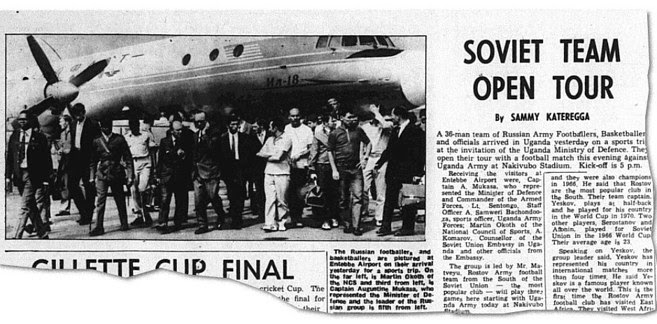
Soviet Team at Entebbe Airport in 1972
First were the warm-ups against the Ugandan prison and army teams — the blowouts that so enraged Mullen as he sat in the stands. The police and guards were roughed up and thoroughly outclassed by the Soviets, who Mullen would later describe as playing like “maulers and sadists.” “The Russians were so far superior to those two teams that they were putting on a kind of Harlem Globetrotters show and making fools out of the Ugandans,” Mullen said. Witnessing how little they cared about humiliating the Ugandan players electrified Mullen’s desire to subvert their foreign relations effort, to show that the Soviets weren’t all-powerful by beating them on the court. More importantly, he cared about his players’ pride. He didn’t want to see them torn to shreds like the other Ugandan teams.
The Ugandans had to adjust their goal from beating the Russians to not getting run out of their own gym in utter embarrassment. Because their opponents played such a physical style of basketball, Mullen had to prepare his men to get pushed around. He changed the team’s routines, priming them for rough contact with bigger men than they were used to seeing on the court. He had them hit each other as they shot layups, and take vicious screens and hacks of all kinds. But practice was one thing. If Mullen’s players were going to stand a chance against the Soviet military all-stars, they would need something more than hard work. They’d need subversion.
During the game’s opening ceremonies, the Ugandan army band played both the Ugandan and Russian national anthems. Ugandan cabinet members and Soviet officials shook hands with the players before retiring to the VIP section.
Lugogo Stadium, home to the country’s lone indoor court, was the size of a large American high school gym, Mullen remembers, and shaped like an aircraft hangar, with dimly lit incandescent bulbs for the night game. Most of the country’s Russian population was in the stands, but Mullen hired a guy with a flatbed truck to bring students from the university so the crowd at Lugogo Stadium would be for the Ugandans.
The floor must have shaken as the Soviet and Ugandan fans filled the elevated tiers of seats on both sides of the maple wood court. The students trucked in by Mullen brought half a dozen drums and were banging them with all their might. “It was quite a big atmosphere,” Muwanga said.
Photographs from the game don’t seem to exist, but James Okwera remembers the crowd being in the thousands, and that, because it was early in Amin’s time, the military had a particularly big presence. Okwera also remembers being intimidated by the noise while getting ready in the locker room. “Five-thousand people would make an awful racket,” he said. “It was quite daunting.”
When the ref blew the opening whistle, Mullen was relieved to find the Red Hulk, Petrakov who he describes as the biggest man he had ever seen despite having seen some pretty big guys playing in America and Africa – sitting on the bench. The Ugandans began the game playing way above their heads, invigorating the crowd. A gap-toothed teenager named Teso stole rebounds from the stronger Soviets. Okwera hit three jumpers in a row. The team was executing the plays Mullen and James Adoa had drawn up, and they weren’t succumbing to the Soviets’ size or strength. At the end of the first quarter, Uganda was up five points. Goddamn, thought Mullen. We might win this thing.
“It was quite embarrassing for the Russians,” Muwanga told Shaun Raviv. “I think they thought they were just going to get a walkover, just toss us down to nothing. They hadn’t banked on the fact that, while we didn’t have the height, we had the speed and dribbling skills to outmaneuver them.”
The Ugandan team could switch from zone to man-to-man and matched up its best dribblers with the Russians’ slowest guys to take away their size advantage. “We all knew what our limitations were,” Okwera told Shaun. “We knew we were never going to be able to properly compete with that caliber of team that was so well prepared and had all the resources they needed.”
The Ugandan lead didn’t last long. A few minutes into the second quarter, the Soviets started wearing out the locals, and Ugandan politics may have played a part. Both the referees were Pakistani, and Mullen suspected they might have had a bias against his team due to the infamous act Amin had just carried out against the local Asian community. Earlier that month, Amin had announced that all non-citizen Asians would have to leave the country in 90 days.
Meanwhile, the Russians questioned every whistle against them. With both sides shouting in their ears, the refs became intimidated and their calls inconsistent, and the game took a nasty turn. “It was the roughest game I ever saw,” Mullen told Shaun.
A crew-cut Soviet guard taunted a player named Willie Muganda by holding the ball out for him to try to grab. But Muganda was super quick and slapped the ball out of his hands, and both players tumbled across the floor. Muganda, whose shoulders had been built up from years of pulling nets out of the lake as the son of a fisherman, flipped the Soviet guard right over his hip and flat onto his back. He took offense at being tossed around and took a swing at Muganda. The refs threw him out of the game. Another CSKA player was ejected when he punched a Ugandan player while fighting for a rebound. The goodwill game had turned into a violent battle.
By the end of the second quarter, the Russians has a 12-point lead, and the roughness continued after halftime. Mullen had noticed that the Soviets’ best scorer was a bit of a hothead, and assigned Muwanga to guard him and make him lose his temper. So during one play, Muwanga plowed into him. The Ugandan fans were happy to see aggression from their team, and the drums and cheers from the capacity crowd became deafening.
That’s when the tension came to a head, with the Soviet coach complaining that the game was getting too rough. “Of course it was,” Mullen, clearly a biased witness, told Shaun Raviv, “because his guys were beating the hell out of my guys.” Standing nose to nose, the Soviet coach and Mullen began yelling at each other through a bewildered translator. Eventually the two coaches sat down, each feeling a bit foolish at screaming what was received as gibberish by the other.
Perhaps Muwanga’s hard foul and the mutually incomprehensible shouting match had been the last straws. Despite holding an insurmountable lead, in the fourth quarter, the Russian coach finally called on his secret weapon; Petrakov was checking in. Kneeling at the scorer’s table, he was still almost as tall as the referee.
A couple of possessions went by without incident. But then a Ugandan player made a bad pass that was stolen by a CSKA player. The Soviet saw Petrakov waiting ahead of everyone down the court and sent a lob pass to the great mass of man. He rose and slammed the ball through the hoop with all the power drawn from his redwood-thick arms, and snapped the rim right off the backboard.
“It hung there by a bolt,” Mullen said. “Everybody’s standing there just stunned.”
“We had no replacements,” Muwanga recalled to Shaun Raviv, pulling out a laugh. “Lugogo Stadium only had one set of rims.”
The drumming stopped. The cheering dissolved. The stadium was silent. “Everybody was wondering, What the hell happens now?” Mullen said. “It was more of a bewildered quiet than anything.”
Uganda was a poor country. And now the only indoor sports arena in the country was one hoop short. The game was over with time to spare. There would be no final buzzer. No Russian victory dance.
The Ugandans didn’t win. The Soviet team was too big, too polished, too experienced, and the Ugandans too raw, getting by on 99% heart. When the rim came down, the score reflected the difference in the teams’ skill levels. (The Uganda Argus reported that the Soviets had 87 points, but the Ugandan score in the Library of Congress’s archived edition is too blurry to read. It looks closest to 33.)
After the CSKA game, the national team would travel to Alexandria, Egypt, to play in qualifying matches for the Pan African Games. The team didn’t even have tracksuits when they arrived. They were quarantined for two nights when it turned out two of the players didn’t have the proper vaccinations. The Ugandans were a group of amateurs, and were surprised to hear that some of their far-superior opponents from Egypt and Somalia played basketball as their jobs. They were creamed in Alexandria. “But it was a proud moment for us,” Cyrus Muwanga said, “representing our country.”
Editors Remarks:
It was one of those late nights writing blog articles for Basketball256 when i got a unique notification for an email. On reading the email,It was a renown free lance journalist Shaun Raviv who was asking for information about Ugandan basketball and about people he needed to interview for a story he was pursuing for BuzzFeedNews. Particularly, he asked about Hon. Hillary Onek and the late James Adoa. Of course Hon. Onek was the Minister of Energy and a member of parliament from Gulu at the time and I wasn’t quite aware of his role and contribution to basketball in Uganda during it’s early days – Of course I was aware he was a towering figure. I had only known of the late James Adoa from the James Adoa Memorial Tournament for High schools which i once played in. I wonder where that went anyways!
In my response, I mentioned how rather difficult bureaucrats can be tough to catch for interviews but i pointed way for Shaun to the NCS and shared contacts with the then FUBA President, Ambrose Tashobya. I was more than confident that Shaun Raviv had gotten all the help from that side because a couple months later, he was kind enough to share the content of his story.
Shaun had followed an epic encounter of Ugandan basketball through the eyes of a History Professor in Oregon, USA called Jay Mullen who had been the coach for the Uganda National team for six months during which Uganda played an exhibition game with the ‘mighty’ Russians then USSR on the hinges of the cold war. As I learned a few days ago while recounting on Shaun Raviv’s story, Professor Mullen had succumbed to a heart attack in July of 2016 just several months after telling his story to Shaun Raviv. A very remarkable man I read. May his soul rest in peace.
Jay Mullen in 2015
So i recount this story which is the work Shaun Raviv without the epic sensationalization and dramatization that surrounds the politics of the time and the tales of James Bond-like Espionage. I extract what I consider very critical tales that everybody that’s connected to Ugandan Basketball should know.
I consider it some stroke of serendipity sharing this amazing tale of Ugandan basketball but mostly with a heavy heart about the lack of documentation of the game. I believe a lot of people need to be acknowledged for their commitment to the continuing growth of the game.
Cucu Brian | brian@basketball256.net | Twitter: @Cucubrian


Must See